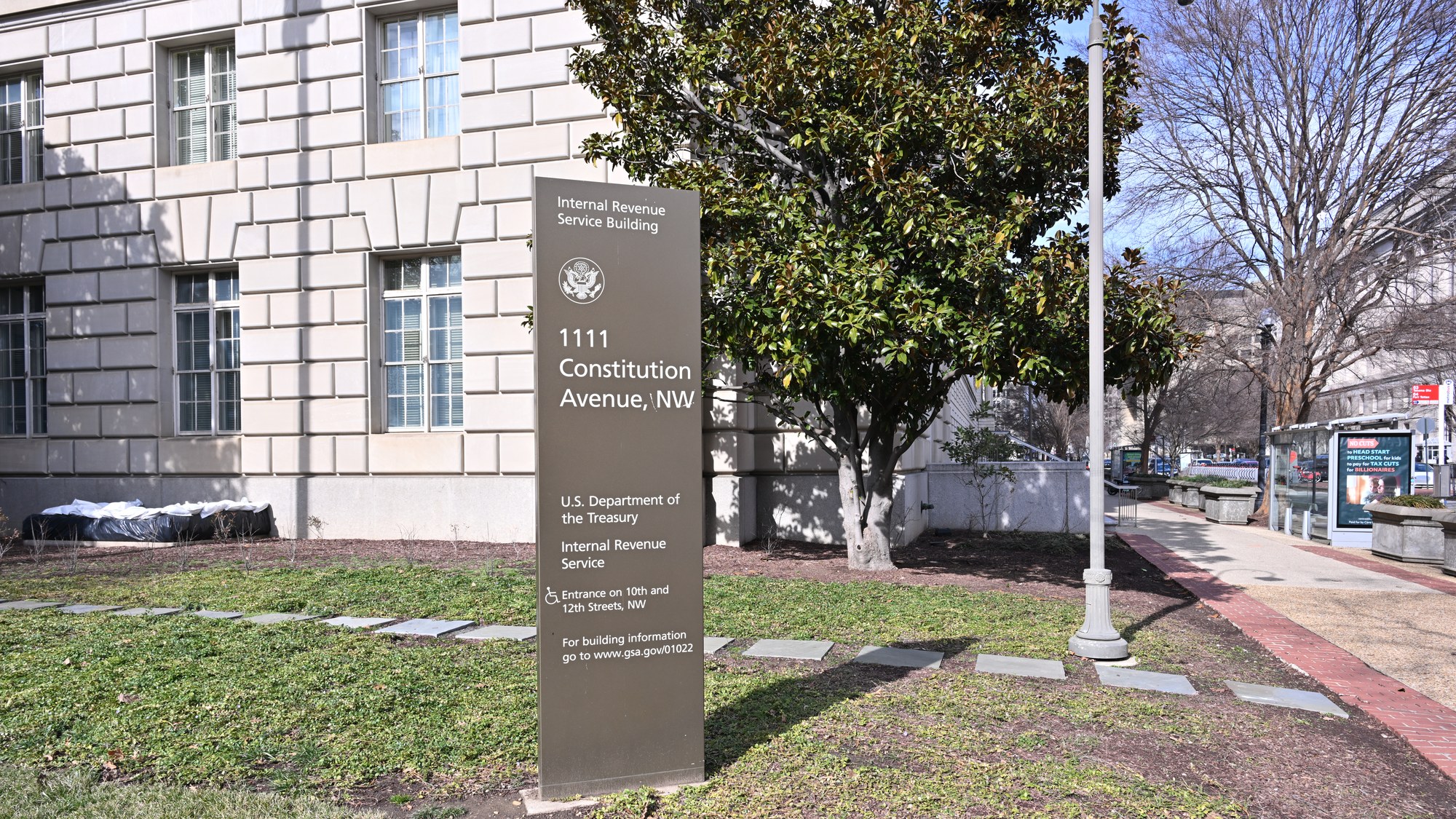
An estimated $116 billion to $304 billion in tax fraud drains the federal government every year, according to a new review from the Government Accountability Office, a range equal to roughly 2 percent to 6 percent of what taxpayers owed the IRS for tax year 2022. GAO’s report, released September 25, credits the IRS with stopping $88 billion in invalid refund payments between 2018 and 2024, yet concludes the agency still has no coordinated strategy for fighting fraud and no office responsible for building one.
When a refund gets flagged for identity verification: GAO’s review does not track what happens after an individual return is flagged, and The IRS Refund Recovery Kit’s notice decoder is built for exactly that gap. Decode what the refund notice actually means →
How large GAO says the fraud gap has grown
The GAO report puts the annual loss from tax fraud at $116 billion on the low end and $304 billion on the high end, a range the agency calculated as 2 to 6 percent of total federal tax owed in 2022. The review was conducted jointly by GAO’s Forensic Audits and Investigative Service, led by Director Rebecca Shea, and its Center for Statistics and Data Analysis, led by Chief Statistician Jared B. Smith. The figures describe money the government pays out to someone who was never entitled to it, or never collects at all, a category GAO treats as distinct from the broader tax gap caused by simple filing errors or unreported income.
A refund-screening program with a mixed record
The IRS’s principal defense against that loss is the Return Review Program, an automated system that screens returns before refunds go out the door. GAO credited the program with stopping $88 billion in invalid and potentially fraudulent refund payments from 2018 through 2024, evidence the screening catches a meaningful share of attempted fraud before money leaves the Treasury. Yet GAO’s central finding is that the IRS has never turned that operational success into an actual strategy. The agency, GAO wrote, “has not developed an antifraud strategy or designated an antifraud entity to mitigate fraud risks in a strategic and coordinated manner.” GAO made two recommendations addressing that gap: build a documented, agency-wide antifraud strategy, and designate a specific entity to coordinate fraud-risk management activities. The IRS “partially agreed” with both, and both remain open as of the report’s release.
What a legitimate refund runs into along the way
For an individual filer, the system GAO examined mostly shows up as a delay. The IRS’s own refund tracker, Where’s My Refund, moves a return through three stages, return received, refund approved, and refund sent, and ordinarily allows checking within 24 hours of e-filing a current-year return. A return flagged by the agency’s Taxpayer Protection Program follows a different and slower path: the IRS mails one of three identity-verification letters and halts the refund until the taxpayer responds, either online, by phone, or in person at a Taxpayer Assistance Center. The IRS states that resolving a flagged case generally takes about 120 days, though the same page acknowledges its identity-theft caseload backlog has, at times, stretched to an average of 580 days. That gap between the advertised timeline and the agency’s own admitted backlog is precisely the kind of coordination failure GAO’s report says an antifraud strategy would need to address.
The fraud federal prosecutors are already pursuing
Some of the loss GAO is describing already has a criminal enforcement track separate from the IRS’s internal screening. The Justice Department’s Tax Division prosecutes stolen identity refund fraud through a dedicated advisory board and coordinated task forces working with U.S. Attorneys’ offices nationwide. The division points to the 2013 filing season as a benchmark: the IRS estimated that year that more than 5 million returns were filed using stolen identities, seeking roughly $30 billion in refunds, of which the agency stopped or recovered about 81 percent. GAO’s new estimate suggests that scale of exposure has not meaningfully shrunk over the past decade even as filing volume and fraud tactics have changed. DOJ’s Tax Division coordinates that enforcement through a national advisory board, expedited investigation and prosecution procedures, and task forces concentrated in high-crime areas, and it shares prosecution data back with the IRS specifically so the agency can block fraudulent claims before they pay out. Taxpayers who want to add protection on their own account, rather than wait for the IRS to build the strategy GAO is asking for, can request an Identity Protection PIN, a six-digit code the IRS says blocks anyone else from filing a return under that Social Security number.
Where the recommendations stand now
The IRS did not dispute GAO’s underlying loss estimate in its formal response to the report. It agreed, at least partially, that a documented antifraud strategy and a designated coordinating entity would help, without committing to a timeline for either. That partial agreement leaves open exactly which office inside the IRS, criminal investigation, taxpayer services, or a new unit altogether, would end up owning the strategy GAO wants written down. GAO’s forensic audits team, the same office that has spent the past several years documenting the Return Review Program’s results, now has two open recommendations sitting on the IRS’s desk, with no public target date attached to closing either one.
The paperwork trail behind a stalled refund
GAO’s report does not track what happens after an individual refund gets flagged, and the IRS’s own numbers show that resolution can take far longer than the agency’s advertised timeline. A taxpayer caught in that process is left to match each notice against the right next step, and if the refund never arrives, to open a formal trace on their own.
The IRS Refund Recovery Kit walks through the refund-trace steps for filing Form 3911 and includes a refund status tracker spreadsheet for logging each notice and deadline as it arrives.
See the refund-trace steps in The IRS Refund Recovery Kit.
This article was produced with AI assistance and checked against the primary sources linked above.