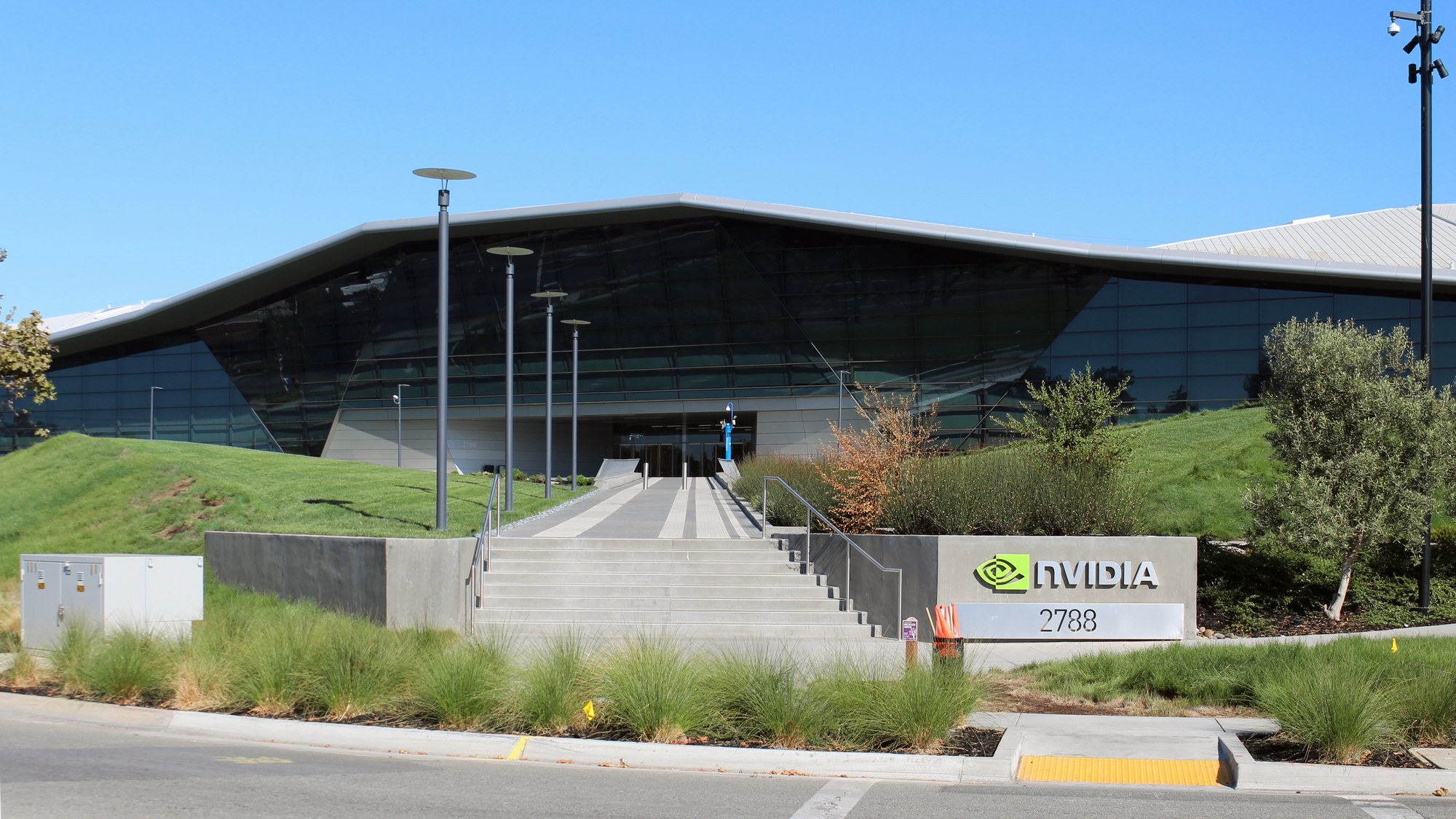
Nvidia’s board added $150 billion to the company’s stock buyback program on Sept. 28, raising the total remaining authorization to $235 billion, according to the company’s release. The company said it expects to execute the total remaining program through fiscal year 2028. Nvidia shares rose about 1.7% on Monday, a session in which the Dow fell 347 points.
What the release says about the $150 billion increase
In its announcement on GlobeNewswire, Nvidia said its Board of Directors “has authorized an additional $150 billion under the company’s existing share repurchase program,” increasing the total remaining amount authorized to $235 billion. The NVIDIA Newsroom copy of the release carries the same wording, including the dateline of Sept. 28.
The September release does not state how much of the earlier authorization was unspent. Nvidia’s second-quarter results release, dated Aug. 26, put the remaining authorization at $99.0 billion at the end of that quarter and said the company returned approximately $26.0 billion to shareholders in the quarter through repurchases and cash dividends. By subtraction, $235 billion after a $150 billion increase implies roughly $85 billion was left before the board acted, about $14 billion below the quarter-end figure. That gap is arithmetic on published numbers, not an Nvidia disclosure of purchases since quarter-end.
For scale, the same release reported revenue of $96.2 billion for the quarter. At the $26.0 billion pace of shareholder returns that quarter, $235 billion would last about nine quarters, though that figure includes dividends and the company has given no purchase schedule, so the comparison shows size rather than a forecast of timing.
The company expects to work through the program by fiscal 2028
The timing sentence in the release reads: “The company expects to execute the total remaining program through fiscal year 2028.” An authorization is permission to repurchase shares, not an obligation to do so, and the release gives no schedule beyond that fiscal-year horizon. Because Nvidia reported its second quarter of fiscal 2027 in August, fiscal year 2028 is the year after the current one, which implies a program that can run for well over a year. It does not say whether purchases will come on the open market or by other methods, and it does not give a share count.
Chief Executive Jensen Huang tied the decision to the business and to returning capital to shareholders. The release quotes him: “NVIDIA’s growth is being driven by a once-in-a-generation platform shift to AI and accelerated computing. Our cash generation gives us the capacity to invest in the technologies that advance this transformation and return capital to shareholders. This authorization reflects our confidence in the long-term opportunity ahead.”
Shares rose 1.7% on a down day for the Dow
A market wrap published by TV News Check listed Nvidia up 1.7% on Monday, when the S&P 500 fell 59.72 points to 7,683.69 and the Nasdaq Composite lost 248.34 points to 26,820.38. BBN Times put the gain at 1.68% and connected it to the additional $150 billion authorization. The TV News Check wrap tied the broader decline to a jump in bond yields, with the 10-year Treasury yield at 5.23% at the close after a brief touch of 5.27%. The release makes no forecast about the share price.
A 1% federal excise tax applies to buybacks
Buybacks carry a federal cost that dividends do not. The IRS Form 7208 page says the Inflation Reduction Act established a stock repurchase excise tax under section 4501 equal to 1% of the fair market value of stock repurchased during the tax year. It applies to certain publicly traded corporations or their specified affiliates and took effect for repurchases occurring after 2022. Applied to the full $235 billion, 1% would be $2.35 billion, an upper-bound illustration since the tax is measured on actual repurchases in a year and the release does not say how much will be bought back in any one year.
Buybacks and dividends reach shareholders differently
A repurchase pays nothing directly to a shareholder who keeps the shares, while a dividend does. The IRS Topic 404 on dividends says dividends can be classified as ordinary or qualified, that ordinary dividends are included in ordinary income, and that qualified dividends are taxed at lower capital gain rates. Payers send a Form 1099-DIV for distributions of at least $10. The September release contains no dividend text, so the announcement changes the size of the company’s repurchase capacity, not what holders receive in cash. Nvidia’s August results release lists a quarterly cash dividend of $0.25 per share, payable Oct. 1, 2026 to shareholders of record on Sept. 10, which is the cash payment holders actually receive. At that rate the dividend comes to $1.00 per share over four quarters, computed from the release’s quarterly figure and assuming the rate stays unchanged from one quarter to the next.
Required distributions and the order of retirement withdrawals
Retirees who hold stocks in taxable, traditional and Roth accounts must decide which account to draw from and when, and required distributions add a schedule that has to be calculated each year.
The Retirement Tax & Withdrawal Planner includes the account withdrawal order and an RMD schedule calculator for laying out a year of withdrawals.
Look up which retirement account to draw from first →
This article was produced with AI assistance and checked against the primary sources linked above.