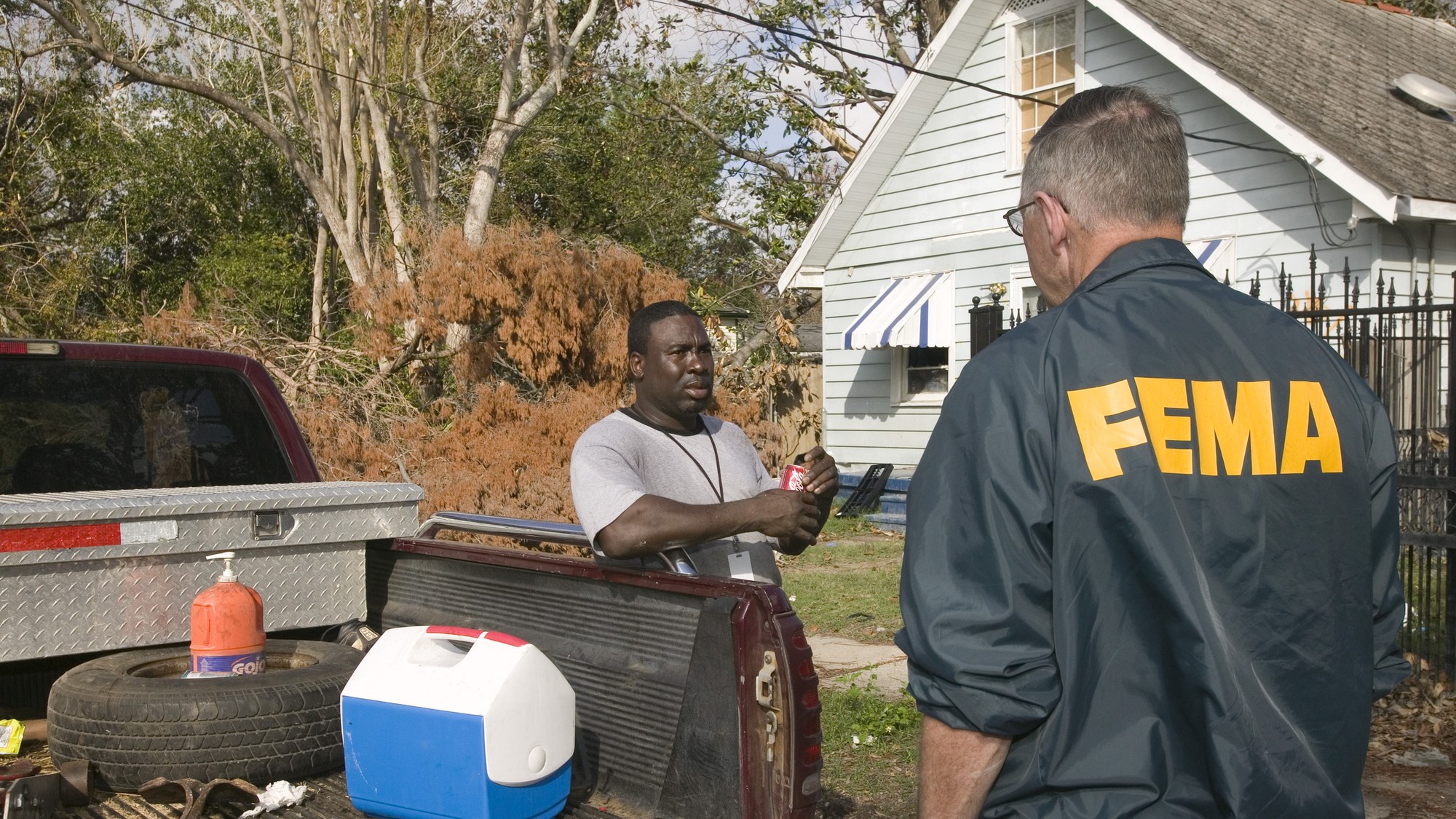
The most the Federal Emergency Management Agency can provide any one household under its Individuals and Households Program is $44,800 for housing assistance, plus a separate $44,800 for other needs assistance, for a single emergency or major disaster. FEMA published the figures in a Federal Register notice on Sept. 29. They are not a new cap for a coming year. The notice applies them to declarations made on or after Oct. 1, 2025, and ties them to a 2.9 percent rise in the Consumer Price Index.
A Sept. 29 notice records limits that took effect a year earlier
FEMA Administrator Cameron Hamilton signed Federal Register notice 2026-19854, docket FEMA-2026-0001, which cites section 408 of the Stafford Act, 42 U.S.C. 5174. The notice states that the maximum amount of Individuals and Households Program assistance for any single emergency or major disaster is $44,800 for housing assistance and $44,800 for other needs assistance.
The notice gives October 1, 2025 as its effective date and says the amounts apply to “emergencies and major disasters declared on or after October 1, 2025.” The document was published nearly a year after that date. A search of the Federal Register listing and the web turned up no separate amount for a coming fiscal year, so $44,800 is the ceiling in force for declarations since Oct. 1, 2025, not a preview.
Housing assistance and other needs assistance are separate ceilings
The two caps do not draw from one pool. Under FEMA’s program description, housing assistance covers “funds for temporary housing while you are unable to live in your home, such as rental assistance, or reimbursement for hotel costs,” and a temporary housing unit when rental assistance cannot be used. Other needs assistance covers “uninsured or under-insured disaster-caused expenses and serious needs, such as repair or replacement of personal property and vehicles,” plus moving and storage, medical, dental, child care and funeral costs.
Housing costs and non-housing costs after a declared disaster are therefore measured against two ceilings, each $44,800, and spending in one category does not reduce room in the other. The notice sets maximums only. It does not state an average or typical award, and the sources read give no such figure.
The 2.9 percent CPI adjustment behind the figure
The notice explains that the amounts reflect an “increase in the Consumer Price Index for All Urban Consumers of 2.9 percent for the 12-month period, which ended in August 2025.” The inflation reference period closed in August 2025, more than a year before the notice appeared.
FEMA issued related notices on the same day. A separate serious needs assistance notice sets that award at $790 for any single emergency or major disaster, with the same Oct. 1, 2025 applicability and the same 2.9 percent adjustment. A third, on disaster grant amounts, raises the Public Assistance small project threshold, which applies to public bodies rather than households, to $1,093,800.
The eligibility conditions FEMA lists and its three ways to apply
FEMA lists the conditions on its program page: applicants must complete an application, confirm they are a United States citizen, non-citizen national or qualified alien, pass an identity verification check and have unmet needs after insurance and other disaster assistance. Those conditions apply only where a disaster declaration covers the applicant’s area.
Applications go through DisasterAssistance.gov or its mobile app, by phone at 1-800-621-FEMA (1-800-621-3362), or in person at a FEMA Disaster Recovery Center. The DisasterAssistance.gov site directs visitors to select a state to see whether a county is in a declared area. The pages read do not say whether applying carries any cost, and the agency’s notice contains no such statement either.
What a ceiling does not say about a payment
A cap is an upper bound on what the program can pay for one declared event, not a promise of any amount. FEMA’s program page conditions help on “unmet needs, after receiving assistance from insurance benefits or other forms of disaster assistance services,” so a household with insurance that covers a loss may see the program cover little or nothing of it. The notice adds that each maximum applies to “any single emergency or major disaster,” which means a separate declaration is measured against its own ceiling.
The notices also leave one relationship unstated. The $790 serious needs award and the $44,800 other needs ceiling appear in separate documents, and nothing in the text read explains how the two interact. A household looking at a specific award would need FEMA’s own determination for that answer.
The notice appears in the Federal Register as 91 FR 61429, document number 2026-19854, published Sept. 29, 2026. For questions about its contents, the document lists Zachary Usher of FEMA’s Recovery Directorate, 500 C Street SW, Washington, DC 20472, at (202) 212-1000, as the agency’s point of contact on the notice.
Benefit programs that need an application of their own
Older Americans often have to apply for benefit programs one at a time, and several of them turn on income limits. The kit covers 11 named programs, from Medicare Savings Programs to SSI after 65, and does not include disaster assistance.
The Benefits Checklist is a 69-page guide to those 11 benefit programs that includes the 2026 income limits and a 50-state phone directory, and a printable tracker comes with the download.
Download The Benefits Checklist and see the 2026 income limits →
This article was produced with AI assistance and checked against the primary sources linked above.