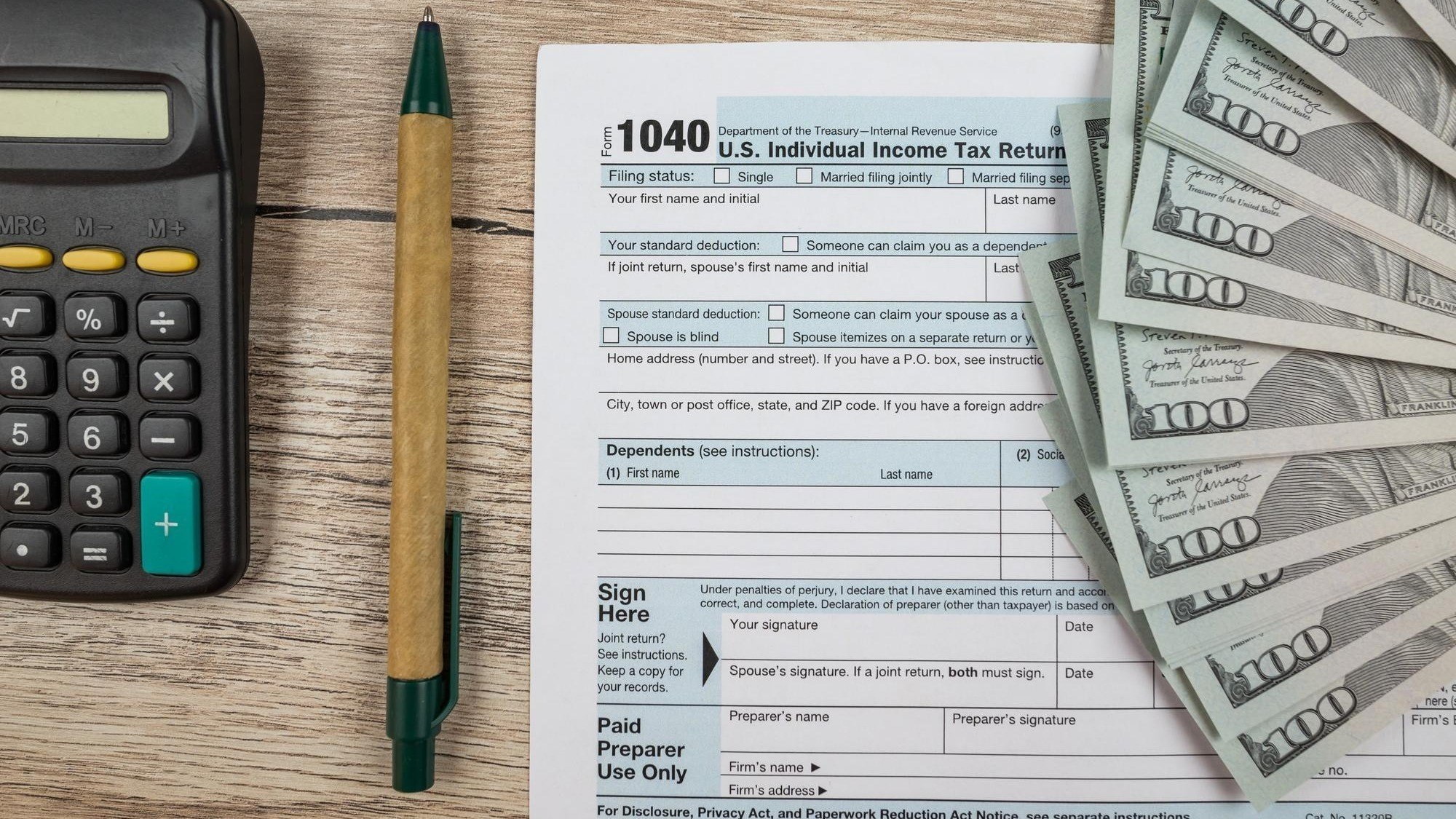
Workers deciding whether a job counts as a tipped occupation now have a fixed list to check. Final Treasury and IRS regulations name more than 70 separate occupations, grouped into eight categories, that customarily and regularly receive tips, running from bartenders to water taxi operators. The list decides who can use the deduction for qualified tips created by the 2025 law, which caps the write-off at $25,000 a year.
The regulations were announced on April 10, 2026 as IR-2026-49, after the Treasury Department and the IRS weighed hundreds of public comments on the proposed version. The deduction covers tax years 2025 through 2028.
The eight categories in the final list
The IRS announcement, IR-2026-49, organizes the occupations under the Treasury Tipped Occupation Code system, a three-digit scheme in which each hundred-series is one category. The eight are:
- 100s, Beverage and Food Service
- 200s, Entertainment and Events
- 300s, Hospitality and Guest Services
- 400s, Home Services
- 500s, Personal Services
- 600s, Personal Appearance and Wellness
- 700s, Recreation and Instruction
- 800s, Transportation and Delivery
The IRS says the list contains “more than 70 separate occupations of tipped workers, from bartenders to water taxi operators.” It does not publish a single exact total in the announcement, so “more than 70” is the figure the agency itself uses. The release adds that visual artists, floral designers and gas pump attendants were incorporated into the framework.
Why the Federal Register text matters as much as the press release
The operative text is in the final rule published in the Federal Register on April 13, 2026 at 91 FR 19026, which sets the effective date at June 12, 2026. The rule’s preamble records 322 written comments on the proposed regulations, and the IRS announcement notes a public hearing on October 23, 2025.
The occupation test is historical as well as categorical. Under the IRS’s guidance on the tips deduction, issued March 5, 2026, the deduction applies to individuals in occupations that customarily and regularly received tips on or before December 31, 2024. A worker whose job is not on the list cannot reach the deduction through that route, however large the tips.
Each occupation in the rule’s table carries one of those three-digit codes. The Federal Register text refers, for example, to TTOC 102 for wait staff and TTOC 201 for gambling dealers, which is how a job title on a tip-reporting form is matched to the list. The announcement does not say how many occupations sit in each category, so no per-category count is reported here.
Qualified tips, and the service-charge exclusion
Being in a listed occupation is only the first test. The IRS announcement says a qualified tip must be paid in cash or an equivalent medium, which it lists as a check, credit card, debit card, gift card, token or mobile payment. It must come from a customer or a tip-sharing arrangement, be voluntary and not subject to negotiation, and be reported on a Form W-2, 1099-NEC, 1099-MISC, 1099-K or Form 4137.
Non-modifiable service charges are the exclusion that catches the most obvious cases. The IRS gives the example of a restaurant’s automatic 18 percent charge on a large party: because the customer cannot decline it, the amount is not a qualified tip. The Federal Register rule states that “automatic gratuities, such as service charges, are not qualified tips for purposes of the deduction.” The same rule says a point-of-sale system that lets a customer reduce the tip to zero can still produce a voluntary tip.
The $25,000 cap and the income limit
The IRS’s summary of the 2025 law’s deductions, last updated July 25, 2025, sets the maximum at $25,000 a year, per individual, for tax years 2025 through 2028. For self-employed workers the deduction cannot exceed the net income from the tip-earning business. It phases out when modified adjusted gross income exceeds $150,000, or $300,000 for joint filers.
Married taxpayers must file jointly to claim it, and a Social Security number must appear on the return. Workers in a specified service trade or business under section 199A are excluded. The Federal Register rule reserves that part of the regulation for future guidance and points to IRS Notice 2025-69 for transition relief.
What the IRS says about refunds already flowing
The IRS published Schedule 1-A on March 2, 2026 as IR-2026-28, the form on which the deduction for qualified tips is calculated for tax year 2025, alongside the deductions for overtime, car loan interest and seniors. The IRS tips guidance says the deduction is open to filers whether they claim the standard deduction or itemize.
IRS Chief Executive Officer Frank J. Bisignano said in the announcement: “Taxpayers are already benefiting from No Tax on Tips since the IRS already is issuing refunds to eligible workers.” The deduction was first available on 2025 returns, so the list and the qualified-tip definition apply to returns for a year that has already ended.
For the 2026 tax year and beyond, the regulations give tipped workers and their employers a settled reference instead of a proposal. The record behind it is the Federal Register rule effective June 12, 2026, and the IRS announcement of April 10, 2026.
Reading an IRS notice about a refund
An IRS notice about a held, reduced or offset refund usually names a cause in terms that do not say what to do next. Each cause has its own response and its own deadline.
The IRS Refund Recovery Kit is for taxpayers who have received a refund notice and need to know what it means, and it includes a notice decoder and a refund status tracker spreadsheet.
Open the notice decoder to read what an IRS refund notice says →
An AI tool helped draft this piece, and each rule, date and figure was matched to the IRS and Federal Register pages linked above.