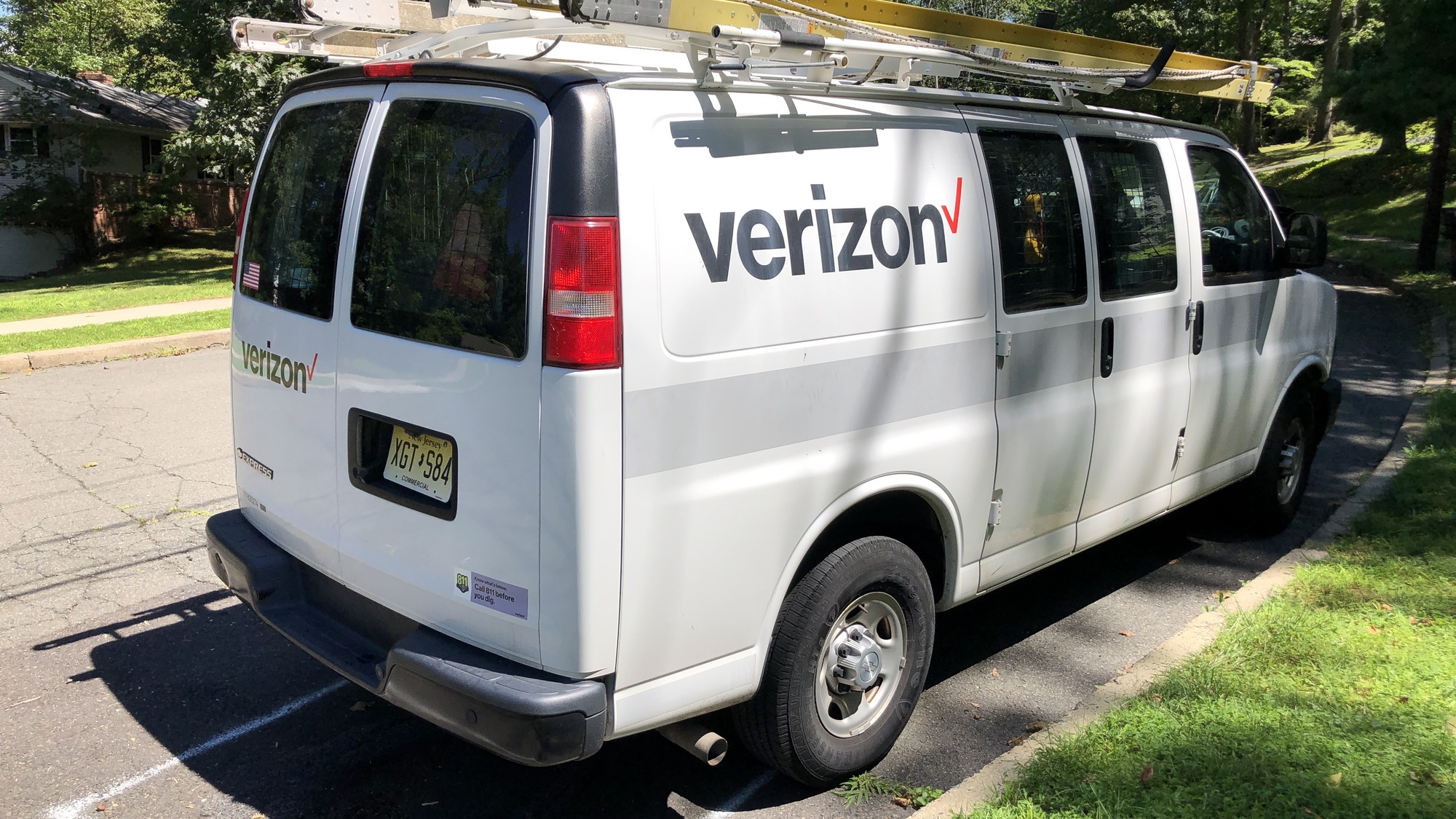
A line on Verizon Wireless bills labeled the Regulatory Charge moves from 21 cents to 26 cents a month on November 1, 2026. The company states the change on its own surcharges page, and the amount is set per line rather than per account. Verizon lists the charge among surcharges it describes as its own, not as a tax or a fee imposed by a government.
Five cents a line, repeated twelve times a year
The wording on Verizon’s surcharges page is specific: “Effective November 1, 2026, the monthly Verizon Wireless Regulatory Charge for voice-capable devices will increase from $0.21 to $0.26 per line.” The increase is five cents, which is about 24 percent of the old amount.
Over a year the arithmetic is small for one phone. At 21 cents the charge totals $2.52 across twelve months, and at 26 cents it totals $3.12, a difference of 60 cents per line per year. Those totals are computed from the two monthly figures Verizon publishes; the company does not state an annual number.
The effect grows with the line count because the charge is applied to each line separately. An account with four lines would see the monthly Regulatory Charge go from 84 cents to $1.04 in total, an extra 20 cents a month and $2.40 over twelve months. The page describes the amount as a flat figure per line, not a percentage of the plan price.
Voice lines are named first, but data-only devices are covered too
The opening sentence of the notice refers to voice-capable devices, and that is the phrase that leads the announcement. A question-and-answer entry on the same page widens it: “The increase applies to both voice-capable and data-only devices, except 5G Home Internet and LTE Home Internet.”
Read together, the two statements mean that a voice line and a data-only device can each carry the higher charge, while the two home internet products are excluded. The page does not list which specific data-only devices are in scope, so the category as Verizon words it is the most precise description available.
That reading matters for a household with a mixed set of lines. Every voice-capable or data-only line on an account, other than the two home internet products, would see the five-cent rise, based on Verizon’s own description.
What Verizon says the charge pays for
Verizon’s explanation of the Regulatory Charge is brief. The same page says it “helps defray various government charges we pay including government number administration and license fees.” The wording puts the cost on the company’s side: Verizon pays those government charges, and the Regulatory Charge is how it recovers part of them from customers.
The phrase “helps defray” is also a limit. Verizon does not say the charge equals what it pays, and the page does not give a total for the government charges it refers to or say what share of them the 26 cents recovers. The only numbers attached to the charge are the old and new monthly amounts and the effective date.
A Verizon charge that is not a tax
The surcharges page states “These surcharges are Verizon charges, not taxes or government imposed fees.” Verizon presents them as its own charges. A related entry for its Administrative and Telco Recovery Charge says the same thing about that line: “This is a Verizon wireless charge and is retained by Verizon.”
The page separates this from a different category. The Federal Universal Service Charge, and the State Universal Service Charge where one applies, is described as helping “recover charges imposed on us by the government to support universal service.” That wording ties those lines to a government requirement, whereas the Regulatory Charge is described as defraying government charges that Verizon pays itself. The Administrative and Telco Recovery Charge is described as helping cover E911, wireless number portability, property taxes and network costs.
The distinction affects how the increase is read. The move from 21 to 26 cents is a decision Verizon announced for its own charge. It is not the pass-through of a new government rate, and nothing on the page attributes the change to a rule or an order.
One line among several on a bill
The Regulatory Charge is one entry in a group of charges that the page lists together, alongside the universal service lines and the Administrative and Telco Recovery Charge. The page, in the form read for this article, gives the old and new Regulatory Charge amounts and no dollar amounts for the other surcharges, so the notice cannot be used to calculate the full surcharge total on any account.
What the notice does establish is narrow. One line item, applied per line each month, rises by five cents on a named date, and the company that charges it says it is not a government tax. The page carries no separate revision date, and the only date it attaches to the change is November 1, 2026.
Every figure and quotation above comes from Verizon’s surcharges page, the company’s own statement of the charge, the effective date and the lines it covers.
Homeowners and renters with relief applications to file
Property-tax relief comes in several forms, and each has its own form, its own office and its own renewal date. Homeowners and renters who work through them one by one often lose track of which filings are due and which have already lapsed. Heating, cooling and home-repair help adds more programs that open on separate schedules.
The Senior Property Tax & Home-Cost Relief Kit is built for homeowners and renters facing a property-tax relief application, exemption, freeze or circuit-breaker deadline, or looking for heating, cooling and home-repair help; it sets out the 5 kinds of property-tax relief and the circuit-breaker credit that includes renters, and it includes an application log and renewal calendar.
Get every property-tax relief renewal date onto one calendar →
This article was produced with AI assistance and checked against the Verizon surcharges page cited above.