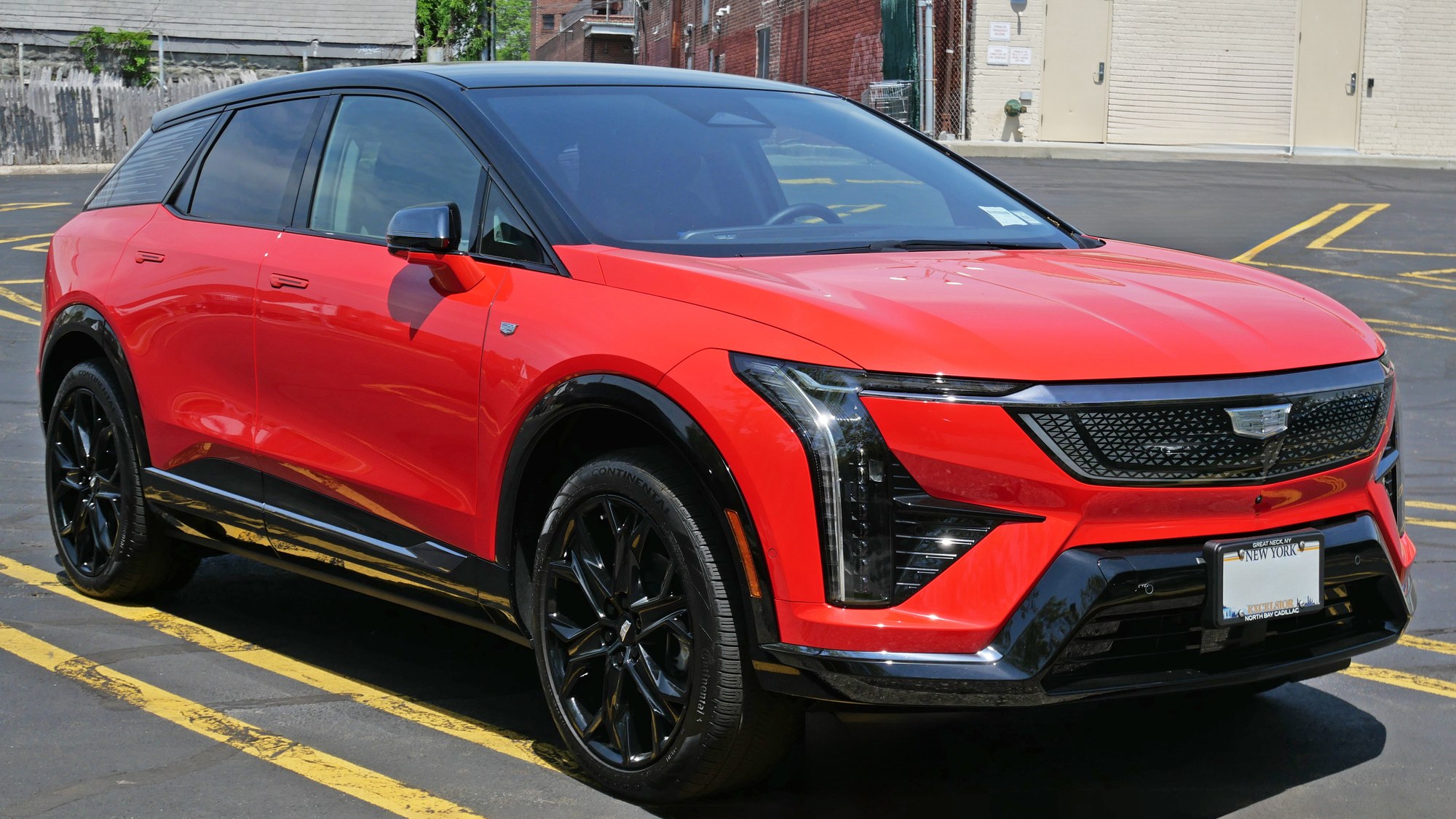
Two roof rail air bag modules come out of each affected pickup and two new ones go in, with the owner billed nothing, under a General Motors recall that federal records tie to 1,559 trucks. GM filed the campaign, numbered 26V611000, with the National Highway Traffic Safety Administration on September 24, 2026. The remedy is a straight swap of parts at a dealership.
Both modules, not just one side
NHTSA’s record for the campaign states that dealers will replace both roof rail air bag modules at no cost. The wording matters for anyone pricing the repair in the abstract. A roof rail air bag deploys along the side of the cabin, so the recall covers the pair rather than a single unit. The record names no repair-cost dollar figure, and no estimate of the value of the parts or labor appears in it, so the only number attached to the owner’s side of the ledger is zero.
The trucks in the campaign are 2016 Chevrolet Silverado 2500 and 3500 and GMC Sierra 2500 and 3500 pickups, along with 2016 and 2017 Chevrolet Silverado 1500 and GMC Sierra 1500 pickups. The campaign therefore spans two brands and both the heavy-duty and light-duty versions of the pickups.
What 1,559 counts and what it does not
The figure of 1,559 is the field NHTSA labels “Potential Units Affected.” It is an estimate of the population that could carry the part, not an inspection result. It is not a count of trucks confirmed to have a failed inflator, and it does not say how many of the vehicles will show a fault. A truck inside the population receives the replacement because it falls within the build range, not because a defect was found on it.
The reason for the recall, as the record puts it, is that the end caps on the roof rail air bag inflators may detach from the inflator, or the inflator sidewall may rupture. NHTSA’s description of the consequence is that a detached end cap or a rupture can let compressed gas escape and project the end cap or fragments into the cabin, which raises the risk of injury to occupants. The agency’s filing frames both outcomes as possibilities, which is the same posture as the population estimate.
A mailing date that is not a deadline
The record gives November 9, 2026 as the date owner notification letters are expected. That date marks when GM intends the mailing to go out. It does not close anything. Nothing in NHTSA’s record sets a last day to bring a truck in, and the free replacement is described without an end date. Owners who see the letter arrive later than November 9, or never see it at all, are not described anywhere in the record as losing the remedy.
The timing also runs the other way. The record says the remedy is already available at dealers, and that vehicle identification numbers became searchable on NHTSA.gov on the day the campaign was filed, September 24. An owner does not have to wait for the mailing to learn whether a particular truck is included.
Who answers the phone at GM
NHTSA’s record lists two customer lines for the campaign. Chevrolet owners are directed to 1-800-222-1020, and GMC owners to 1-888-988-7267. GM’s own reference number for the recall is N262569920, the identifier that a service advisor will ask for when scheduling the work. The record carries no notes beyond those details, and it does not describe a loaner vehicle, a rental reimbursement or a parts-shortage delay.
That silence is worth reading precisely. A record that is silent on rental cars does not rule out a dealer offering one, and it does not promise one either. The only commitment in the filing is the replacement of both modules at no cost, delivered through a dealer, for trucks in the stated model years.
What the federal filing commits to
Three facts in the NHTSA campaign record for 26V611000 carry the whole story: the population is 1,559 potential units, the remedy is a no-cost replacement of both roof rail air bag modules, and owner letters are expected on November 9, 2026. Everything else in circulation about the recall, including repair estimates quoted by third parties, sits outside that filing.
Refund and settlement paperwork, kept in one place
Plenty of households carry a pile of money-back paperwork at once: store refunds that never arrived, settlement payments that were promised, checks that sat in a drawer past the date printed on them, and state accounts holding property nobody has searched for. Each of those comes with its own office, its own form and its own clock, and they are rarely tracked together.
The Settlement & Refund Recovery System is a 36-page guide with a 5-tab Excel tracker pre-filled with all 51 state unclaimed-property offices and a claim log and payment tracker, built for people chasing refunds, settlement payments, expired checks and unclaimed property.
This article was produced with AI assistance and reviewed against the NHTSA campaign record cited above.