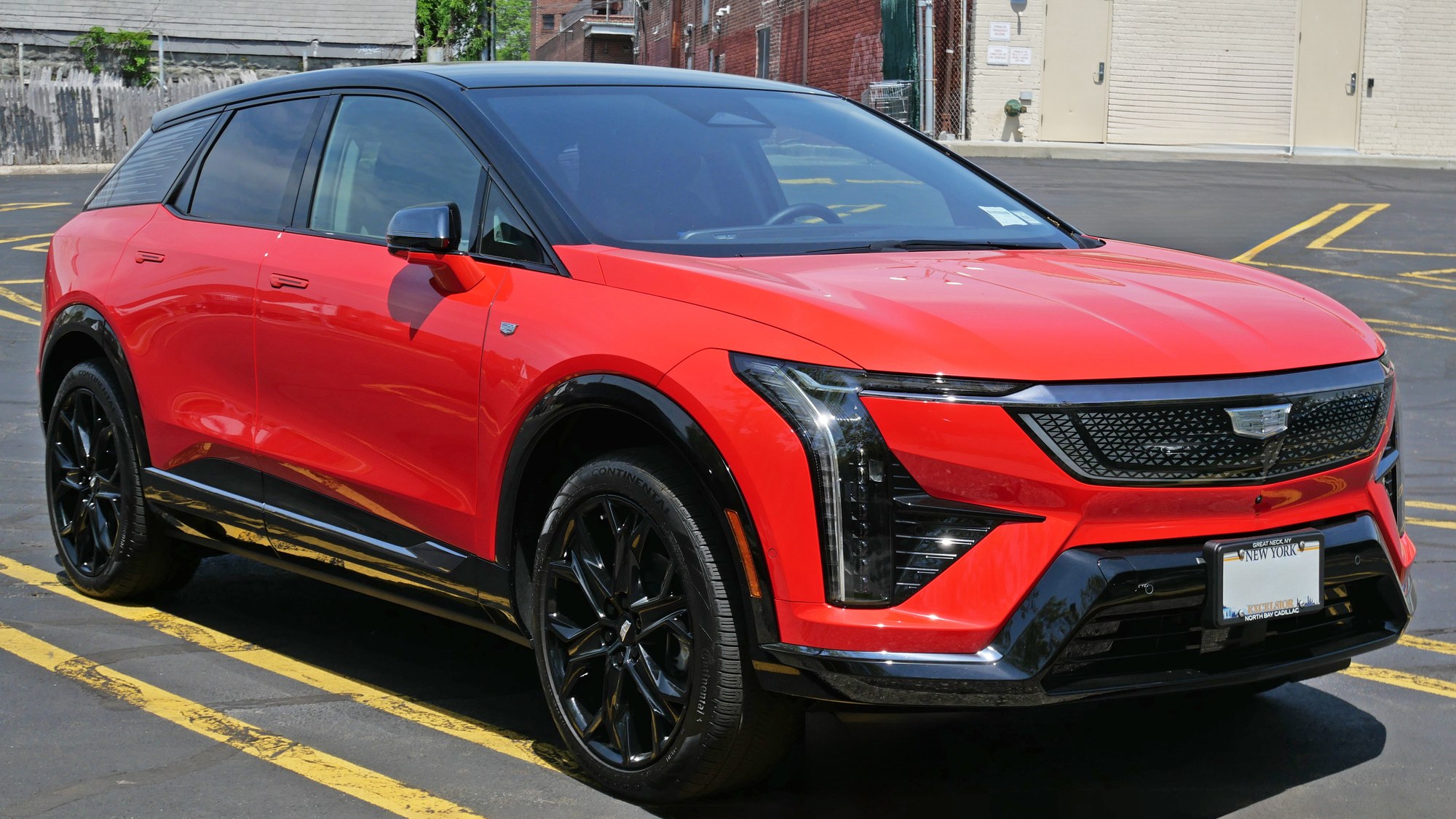
A software file, not a replacement part, is the entire repair in a General Motors recall of Cadillac OPTIQ electric crossovers, and the update can arrive over the air or at a dealership at no cost. NHTSA’s record for campaign 26V612000, filed September 24, 2026, lists 29,347 vehicles in the affected population.
Two ways the update reaches a car
The agency’s filing states that the body control module software will receive updates at no cost through dealers or over-the-air updates. The record lists the two channels side by side and does not rank them. An OPTIQ that is set up to receive wireless updates can take the new software without a service visit, while a car that cannot, or an owner who prefers a technician to do it, goes to a dealer. In both cases the word “free” attaches to the update itself.
That is a narrower thing than a free repair in the usual sense. The record describes no parts replacement, no labor charge to dispute and no stated dollar value for the work. The body control module, the computer that manages functions such as the windows, stays in the car and receives new instructions.
The window behavior behind the recall
The affected models are the 2025, 2026 and 2027 Cadillac OPTIQ. According to NHTSA, the front windows may fail to detect an obstruction and reverse direction when closed with the express-up function on the key fob, a condition the filing says violates Federal Motor Vehicle Safety Standard 118, the rule governing power windows. The consequence NHTSA records is that a closing window that does not reverse as expected can pinch a passenger before retracting, raising the risk of injury.
The trigger described is specific: the fob’s express-up command. The record does not describe the same fault arising from the window switches inside the cabin, and the software update is aimed at the fob-initiated closing behavior that the filing describes.
What 29,347 stands for
The count is NHTSA’s “Potential Units Affected,” an estimate of how many vehicles fall inside the recall population. It is not a tally of cars on which a window has been seen to fail, and the record does not say how many have. Cars in the population are covered because of their model year and build, which is also why the same filing can cover three model years of a single nameplate.
Reading “at no cost” on a software recall
The record’s availability entry repeats the same promise in shorter form: free of charge by dealer or over-the-air update. Because the remedy is code, the phrase covers the update and nothing else the record does not name. It does not mention charging, towing, rental or any other cost, and it does not attach a dollar value to the work, so the filing supports only the narrow claim that receiving the software costs the owner nothing.
The campaign was received by NHTSA on September 24, 2026, and the manufacturer on the filing is General Motors, LLC, the parent of the Cadillac brand. The OPTIQ nameplate appears for three consecutive model years, 2025 through 2027, which makes the population a single product line rather than a mix of vehicles.
Letters in November, contacts now
NHTSA lists November 9, 2026 as the date owner letters are expected. The record sets no deadline for taking up the update, and the mailing date is not a cutoff. Cadillac customer service is listed at 1-800-458-8006, and GM’s reference number for the recall is N262567230.
The filing leaves some practical points open. It does not say how long an in-dealer installation takes, whether the over-the-air update is already live for every vehicle in the population, or whether owners must accept the update within a set period. Those details, if they exist, sit with GM and its dealers rather than in the federal record.
The record’s three commitments
The NHTSA campaign record for 26V612000 fixes the terms: a population estimate of 29,347 vehicles, a body control module software update at no cost by dealer or over the air, and owner letters expected on November 9, 2026.
Unclaimed property, searched state by state
Money can sit in state-run accounts for years without the person it belongs to knowing, and each state keeps its own office and its own search page. A household that moved between states, changed names or closed old accounts can have entries in more than one place.
The Settlement & Refund Recovery System is for people chasing refunds, settlement payments, expired checks and unclaimed property, and it solves the problem of keeping all of those searches and follow-ups organised in one workbook instead of scattered notes.
The Settlement & Refund Recovery System includes a 5-tab Excel tracker pre-filled with all 51 state unclaimed-property offices and a source vault of 12 official places money sits.
Search all 51 state unclaimed-property offices from one tracker workbook →
AI assistance was used in drafting; the figures and remedy language were confirmed against the NHTSA safety recall report for this campaign.