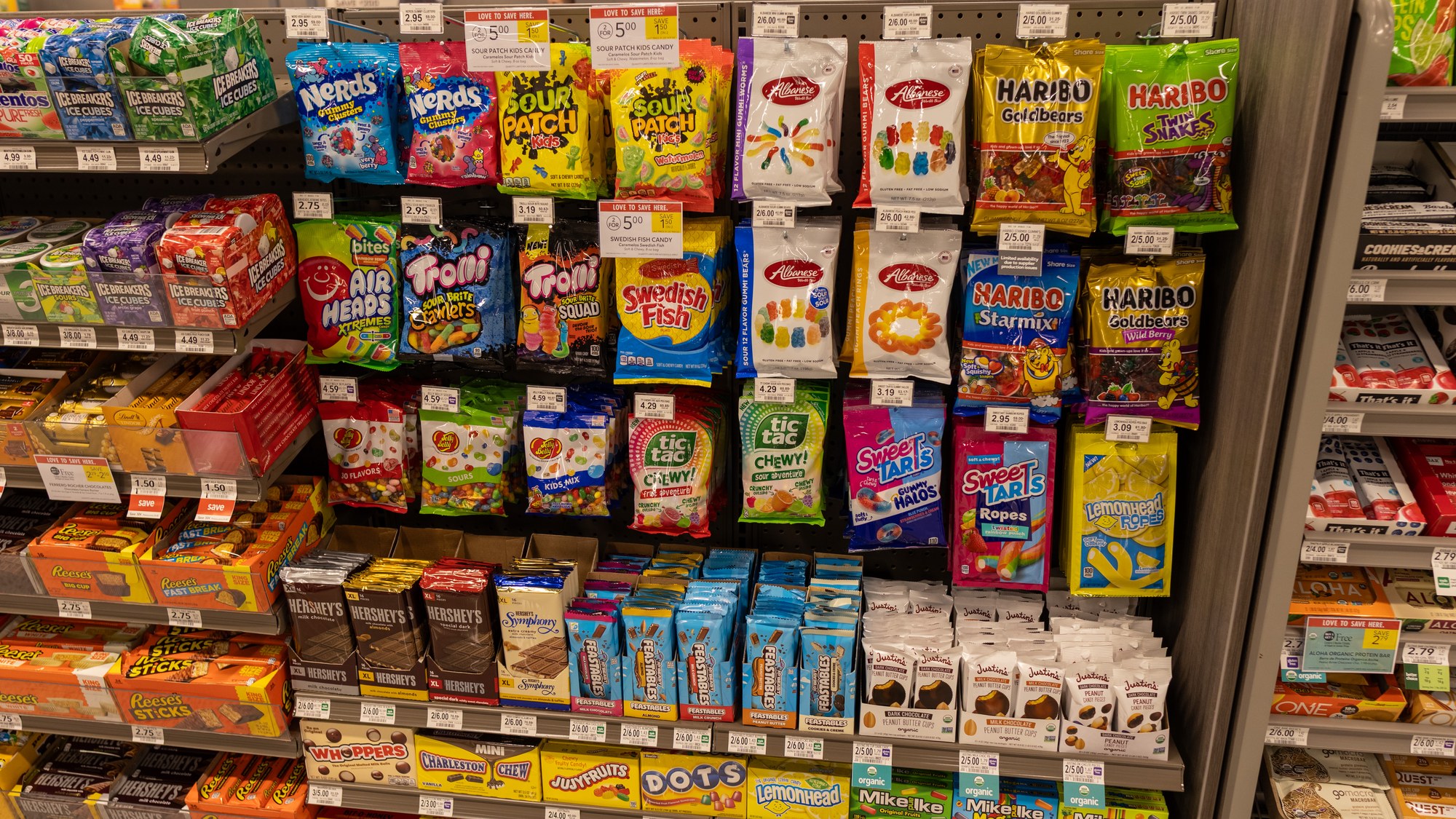
Montana, North Dakota and South Carolina are scheduled to stop SNAP benefits from paying for candy on November 1. The U.S. Department of Agriculture’s food restriction waiver table, updated October 2, lists November 1, 2026 as the target implementation date for all three, and candy appears in each state’s list of restricted items.
That puts the three on a list that already carries candy limits in Texas, Florida, Indiana and Idaho. Indiana’s target date was January 1, Idaho’s February 15, Texas’s April 1 and Florida’s April 20, all in 2026. Montana’s list also covers high-sugar beverages, energy drinks and prepared desserts. North Dakota’s covers sweetened beverages and energy drinks, and South Carolina’s adds energy drinks, soft drinks and sweetened beverages to candy.
For a household that uses SNAP in one of those three states, the question is what changes at the register and when. The answer is set by the state’s own waiver: candy leaves the list of items benefits can buy on the target date, along with the drink categories each state chose. Two of the three dates have already moved once, so the November 1 start is worth confirming with the state before a shopping trip rather than assuming.
Three states change what SNAP benefits can buy on November 1, and every state on the list keeps its own separate renewal and reporting dates. The SNAP & Medicaid Renewal Organizer includes 51 state packs and a renewal and reporting calendar, so a household’s SNAP dates stay on one page while the purchase rules change around them.
Keep SNAP renewal and reporting dates on one calendar with the Renewal Organizer →
South Carolina and North Dakota were pushed back to November
South Carolina’s project had been scheduled to begin August 31, and North Dakota’s waiver was due to start September 1. Newsweek reported on August 31 that USDA told both states to postpone while it responds to a federal court decision and runs a public notice process, and that both moved to November 1.
In South Carolina’s case, a local news report said USDA asked the state Department of Social Services to hold off so the federal agency could publish a notice in the Federal Register and review the comments it receives. The same report says diet and zero-sugar drinks remain allowed under South Carolina’s project, so the beverage limit there is aimed at sugared drinks and energy drinks rather than every soft drink on the shelf.
The court decision is Aragon et al. v. Rollins et al., No. 1:26-cv-00861 in the U.S. District Court for the District of Columbia. On June 22, 2026, the court ordered that USDA’s approval of four waivers be vacated and that their implementation may not proceed. USDA’s table names those four states as Colorado, Iowa, Tennessee and West Virginia. Montana, North Dakota and South Carolina are not among them.
The four states already on the list
Texas is the longest-running example. USDA’s Texas page shows the waiver approved August 4, 2025, effective April 1, 2026 for two years, excluding sweetened drinks and candy. USDA modified the state’s definition of sweetened drinks on February 25, 2026.
Idaho’s page shows approval on June 10, 2025, an implementation date of February 15, 2026 and an exclusion of “soda” and “candy.” Florida’s entry lists soda, energy drinks, candy and prepared desserts, and Indiana’s lists soft drinks and candy.
States with November dates that do not include candy
Not every November 1 entry is about candy. Ohio’s row, also dated November 1, lists sugar-sweetened beverages and fountain drinks, and Virginia’s waiver page covers sweetened beverages only. Nebraska is listed for December 1, 2026, with candy added on March 1, 2027.
Candy limits are also on the table for later dates elsewhere. USDA lists Kansas and Missouri at February 15, 2027, and Nevada at February 1, 2028. Arkansas, Louisiana and Oklahoma carry candy limits with target dates that fell earlier in 2026: July 1 for Arkansas, February 18 for Louisiana and February 15 for Oklahoma.
Checking the restricted-item list for a state before November 1
The table on USDA’s waiver page is the first stop for the list, because each state has its own definition of candy and of the drinks covered. Each state also has its own page under the waivers, with the start date and the term, which for Texas and Montana is two years. Montana’s waiver page shows the state’s request dated March 31, 2026 and USDA’s approval on May 19, 2026, for restrictions on high-sugar beverages, energy drinks, candy and prepared desserts. The approval letter on that page gives September 30, 2026 as its effective date, while the main table, updated later on October 2, lists November 1, 2026 as the target. Montana’s approval runs two years, the same term USDA gave Texas, so households there are looking at a restriction meant to last well beyond the holiday season, not a short trial. Candy is named in the state’s entry alongside the drink and dessert categories.
Households can use that page together with notices from their state SNAP office. The practical check is to read which product categories are named in the state’s entry, write down the start date and compare it with the usual shopping list.
Renewal and reporting dates run on their own schedule and are not changed by a purchase restriction. USDA’s table lists the target implementation date of each waiver, and the court’s June 22 order in Aragon shows that a date on that table can still move before it arrives.
Nov. 1 changes what SNAP buys, not renewal dates
The detail households miss is that a purchase restriction moves no renewal or reporting date, and those dates still have to be met in every state on USDA’s list. The SNAP & Medicaid Renewal Organizer lays out a renewal and reporting calendar and 51 state packs, so a household in Montana, North Dakota or South Carolina has its own dates written down before November 1. The organizer also covers the SNAP work-rule time limit and who is exempt.
Get your state’s SNAP pack and reporting calendar from the Renewal Organizer →
This article was produced with AI assistance and reviewed by The Financial Wire’s editorial team.