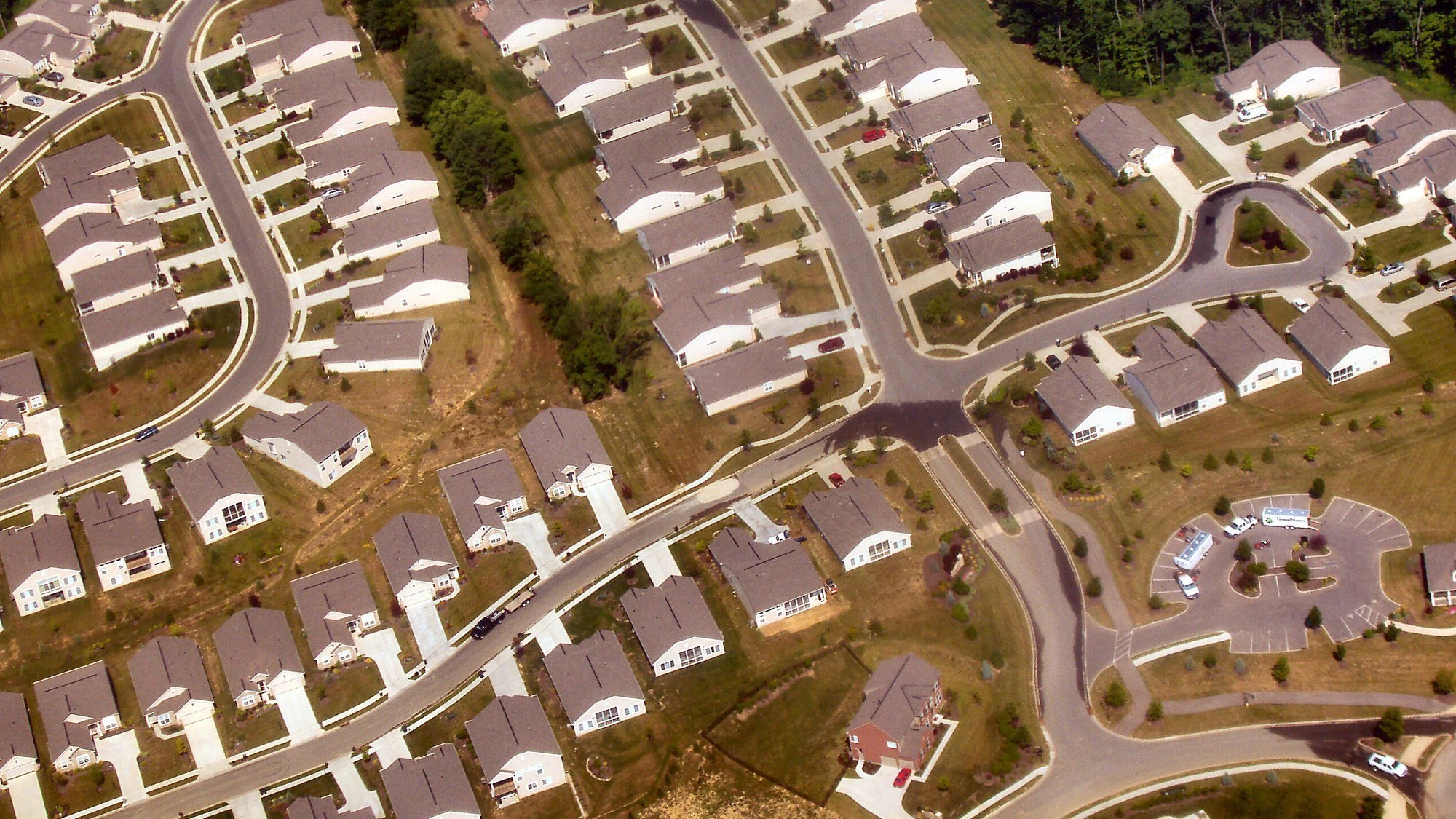
HUD opened FHA mortgage insurance to build-to-rent home communities on October 14, effective immediately. Developers of rental neighborhoods made up of single-family homes, duplexes or triplexes can now use two of the Federal Housing Administration’s multifamily loan programs. The change lowers a financing barrier for builders of a kind of housing that few renters can find today.
What HUD changed on October 14
The announcement, HUD No. 26-085, is titled “HUD Makes It Easier to Build More Housing.” It says build-to-rent properties are now eligible under Section 221(d)(4), the FHA program for new construction, and Section 223(f), the program for acquiring or refinancing recently developed rental communities. Qualifying properties are treated the same as traditional multifamily rental developments, subject to requirements in a mortgagee letter linked from the announcement.
HUD defines build-to-rent as multifamily rental properties made up of single-family homes, duplexes or triplexes. They can be site-built or manufactured homes. The agency notes separate work on removing chassis requirements in its manufactured housing programs.
Will more rental homes near me change what I pay?
That is the question for renters, and for retirees who sell a family home and plan to rent. The National Multifamily Housing Council describes build-to-rent communities as purpose-built rental homes that serve young adults, households working toward homeownership, downsizing seniors, and military service members and veterans. The trade group’s release covers an April tour of one such community in Commerce City, Colorado, by HUD Secretary Scott Turner.
The October announcement does not say how many communities will be built, where, or at what rent. It also does not mention rent subsidies, vouchers or affordability requirements. FHA insurance protects the lender, not the tenant, so it lowers the risk of a construction loan without setting a price for the people who will rent the finished homes.
Free retirement updates: Social Security and Medicare change every year, and nobody sends you a memo. The free Retirement Money Brief breaks down what changed and what to do. Bonus when you subscribe: our free Property Tax & Utility Relief Finder.
Get the free newsletter and the relief finder →
We may earn a commission from links on this page.
What HUD says the supply will do for rents
Turner framed it as a supply measure. “America needs more affordable housing,” he said, adding: “We’re eliminating barriers to spur development, expand rental options, and improve housing affordability.” Joe Gormley, who is overseeing the FHA and the Office of Housing, said that expanding housing supply, including new rental housing, “is essential to improving affordability.”
The Bureau of Labor Statistics reported on October 14 that its shelter index rose 3.2 percent over the 12 months ending in September, and 0.4 percent in September alone on a seasonally adjusted basis. Rent of primary residence rose 0.2 percent in September, and owners’ equivalent rent rose 0.3 percent. Prices for all items rose 3.7 percent over the year.
The announcement does not touch the monthly rent on any existing home. What it changes is how a builder can finance new ones, and that is where future rents begin. Those are the numbers new supply is meant to move. The BLS release does not break out rent for single-family rentals or for any one metro, so a household’s own rent can run well above or below the national figure.
Build-to-rent also faces a policy fight. In its April release, the National Multifamily Housing Council said that as Congress considers the 21st Century ROAD to Housing Act, it urges members in both parties to remove the language it says is effectively ending build-to-rent. The October HUD change does not address that bill.
How the two FHA programs work for builders
FHA multifamily insurance works by backing the loan, which lets lenders offer terms they might not otherwise offer. Section 221(d)(4) covers new construction, so it matters for communities that are still empty land. Section 223(f) covers acquisition or refinancing of communities that were recently developed.
Lender Dwight Capital, in a summary of HUD’s earlier changes effective January 8, 2025, lists the market-rate terms for both programs as a 1.15 debt service coverage ratio and a loan-to-cost or loan-to-value of 87 percent, up from 85 percent. Those are figures from the earlier rule change. The October announcement does not restate loan limits or minimum project size.
The announcement also cites Executive Order 14376, “Stopping Wall Street from Competing with Main Street Homebuyers.” HUD does not explain in the release how the order connects to the FHA change, and it lists a press contact at (202) 402-3815.
What to watch in a local market
The practical signs will be building permits and lender announcements in a given metro, and those could take months to appear. A renter who sees a community of detached rentals going up nearby may be looking at a project that could now be financed through FHA, though HUD has not said which projects will use it.
For households on a fixed income, the open question is whether more rental homes pull monthly rent down, and by how much in a particular county. HUD’s announcement and the BLS shelter index are the two published measures that will show it, one for supply and one for cost.
Paying rent while new homes go up nearby?
HUD’s change can add rental homes over time, but it sets no rent and the BLS shelter index is still rising 3.2 percent a year. Households on a fixed income carry that cost now, while the new supply is still on paper.
The Benefits Checklist turns from the supply question to the cost question. It scans 11 benefit programs, with the 2026 income limits for each, including heating help and property-tax breaks that cut housing costs. It adds a 50-state phone directory, so the right local office is a call away.
Scan 11 benefit programs for housing-cost help with the checklist →
More Financial Reading
- 21 Ways to Stretch a $2,087 Social Security Check
- 15 Places to Find Your Share of the $4.25 Billion States Give Back
- 17 Medicare Money Moves Now That Part D Caps at $2,400
This article was produced with the assistance of AI and reviewed by the editorial team.