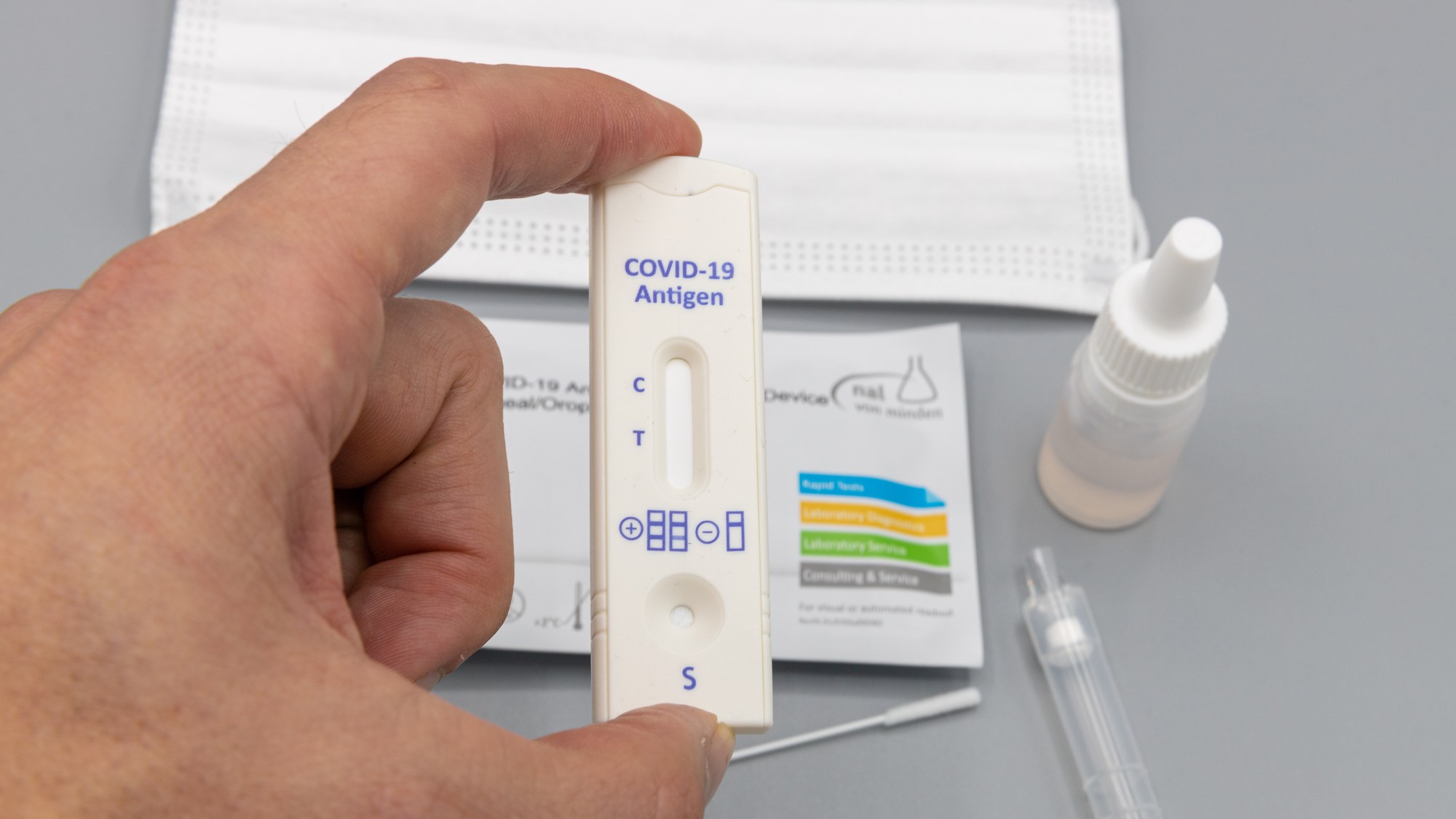
A claim for a COVID test can name a lab, a date and a doctor, and none of it has to be real. That is what federal prosecutors in Maryland say happened with at-home COVID tests billed to Medicare, Medicaid and the federal employees’ health plan. A grand jury in Greenbelt has indicted Marc Aaron Potash, 57, of Rockville, in a scheme federal officials put at more than $100 million.
The indictment, returned October 9, is an accusation. Potash is presumed innocent until proven guilty, and no court has ruled on the charges.
A lab on paper, tests in the mail
Potash founded and runs Tiero, LLC, a company in Gaithersburg, Maryland, according to the U.S. Attorney’s Office for the District of Maryland. Prosecutors say that from January 2022 to May 2026 he and others billed insurers for at-home, self-administered COVID tests that were not what the claims described.
To get a lab certification for Tiero from the Maryland Department of Health, the indictment alleges, Potash and others sent false emails, letters and paperwork saying the company’s providers did on-site testing at a lab. The claims that followed carried false dates of service, a fake place of service and a phony rendering provider. In reality, prosecutors say, the group mailed over-the-counter tests to insured people across the country.
The U.S. Attorney’s office puts the total of false and fraudulent claims at more than $100 million. Insurers paid more than $50 million to Tiero.
Tests in the mail and claims in a person’s name
The detail that matters most to a policyholder is where the claim lands. A test that arrived in a mailbox could be billed as a lab visit that never took place. The statement would show a service on a date, in a place and by a provider that the person never saw. Anyone with Medicare, Medicaid or federal employee coverage, the three programs named in the indictment, can look for exactly that.
The question the case leaves for readers is whether COVID tests were billed in their name that they never ordered. Medicare’s advice is to compare the dates and services on a personal calendar with the statements, and to open a secure Medicare.gov account to see Original Medicare claims as soon as they are processed, the agency says.
Retirement deadlines, in your inbox: Miss an enrollment or claim deadline and the money can be gone. Join the Retirement Money Brief and we’ll send you our Scam & Identity-Theft Action Card as a welcome gift.
Get the Brief + the scam action card →
We may earn a commission from links on this page.
A charge that does not match a real visit can be reported to the Department of Health and Human Services inspector general online or at 1-800-HHS-TIPS. The office asks for the business name and contact details, a short account of what happened and any billing records. Medicare takes calls at 1-800-MEDICARE (1-800-633-4227). People on Medicare Advantage or a drug plan can also call 1-877-772-3379.
Medicare adds a few ground rules. It will not call to sell anything or visit a home, and beneficiaries should share their Medicare card and Social Security information only with a doctor or a trusted counselor such as a State Health Insurance Assistance Program. People who get a suspicious bill can also call the provider’s office first, since receipts and statements sometimes simply contain mistakes.
Medicare also points to IdentityTheft.gov for anyone whose case looks like medical identity theft rather than a billing error.
Thirteen counts and what prosecutors say the money bought
The indictment has 13 counts: one of conspiracy to commit health care fraud, seven of health care fraud and five of conducting transactions in criminally derived proceeds. Each carries up to 10 years in federal prison.
The money counts name specific purchases. Prosecutors allege Potash bought a Range Rover, a Mercedes-Benz and a property in Beallsville, Maryland, for $4 million. They also cite two transfers of more than $4 million and more than $8 million. The release describes both transfers only as security transfers.
Kelly O. Hayes, the U.S. Attorney for Maryland, announced the case. Assistant U.S. Attorneys Megan McKoy and Joshua Rosenthal are prosecuting. The FBI’s Washington field office, the HHS inspector general and the inspector general of the Office of Personnel Management investigated. The release credits the case to the administration’s Task Force to Eliminate Fraud, which Vice President J.D. Vance chairs, and notes that the Justice Department created its National Fraud Enforcement Division on April 7.
What happens next in Greenbelt
An indictment starts the case. It does not decide it. The release says actual sentences are usually below the maximum, and that a federal judge decides after weighing the sentencing guidelines and other factors. No trial date has been announced.
The release does not say how many people received tests, which insurers paid most of the claims, or whether anyone else will be charged. It lists no other defendants.
What it does give is a pattern that a policyholder can check against paper: a lab, a date and a provider on a claim for something that arrived in the mail. Whether any COVID test on a given statement was ordered by the person it is billed to is the open question, and only that person can answer it.
Spot a COVID test on a statement that never came to your door?
A claim can carry a lab, a date and a provider that never existed, and the first sign for a policyholder is often a single line that does not match any visit. Anyone who finds one can start with the free reporting routes, then lock down what a scammer could reuse.
No kit covers COVID test billing itself, so the turn is to the job that follows when a scam has someone’s information. The Senior Fraud Defense & First-Hour Recovery Kit includes the free credit-freeze steps and a first-hour plan, and Part 3 lays out what each report does so the right call is made first.
Get the credit-freeze steps and report guide in the Senior Fraud Defense kit →
More Financial Reading
- 15 Steps to Stop the Scams That Took $7.7 Billion From Seniors
- 21 Ways to Stretch a $2,087 Social Security Check
- 21 Ways Retirees Can Raise $1,000 Fast Without a Job
This article was produced with the assistance of AI and reviewed by the editorial team.