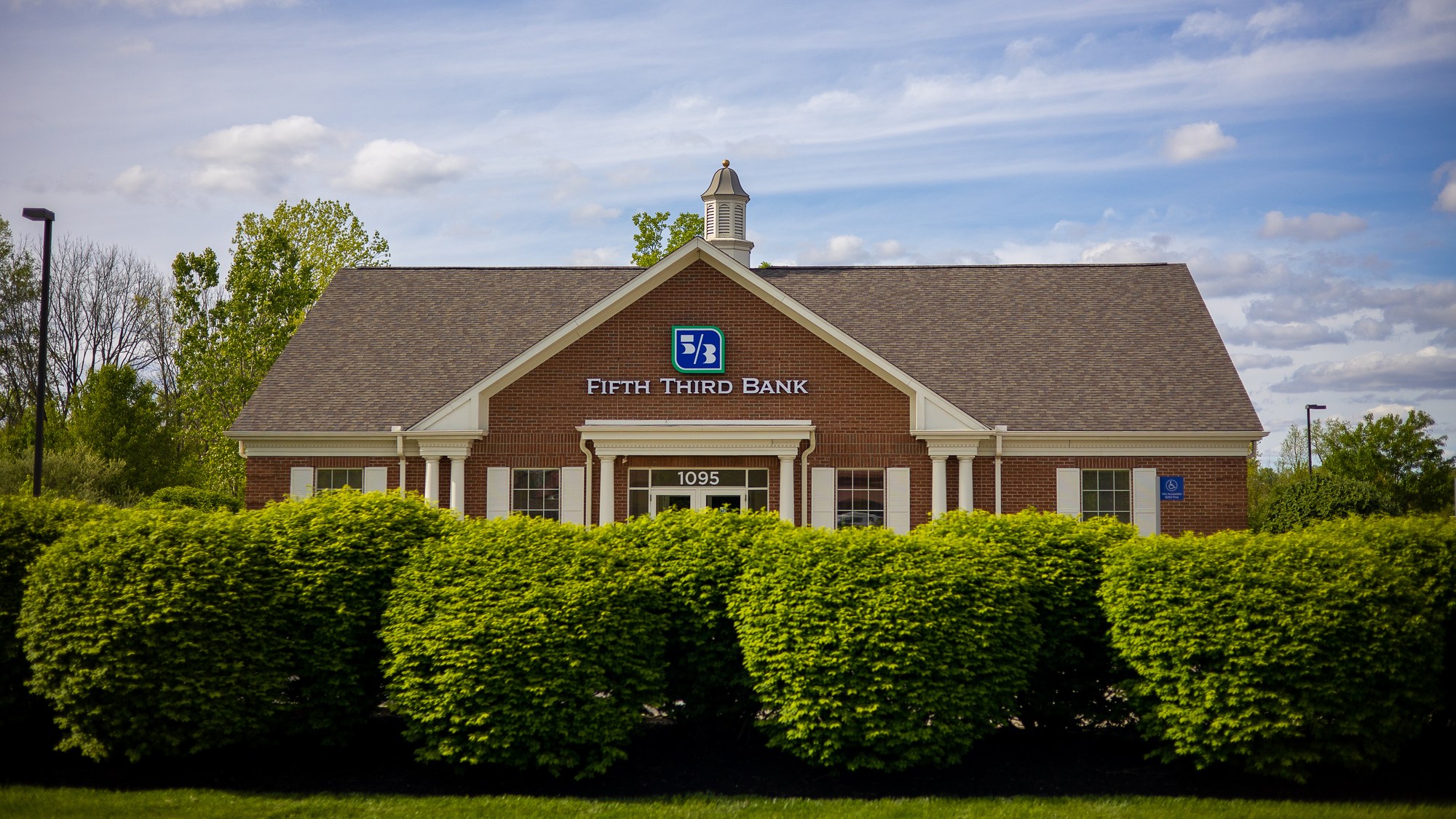
Fifth Third Bancorp ended September with 1,429 banking centers, down from 1,500 at the end of June, a net loss of 71 locations in one quarter. The bank also reported 2,549 ATMs, 99 fewer than the 2,648 it had in June. Both counts come from the bank’s third-quarter earnings release, issued October 19, which names no locations.
A quarter-end count that fell 5% in three months
The drop follows a year of growth. Fifth Third reported 1,102 banking centers at the end of September 2025, and its second-quarter release put the count at 1,489 in March and 1,500 in June. The September figure is still 30% above a year earlier, while the 71-center decline from June works out to 5%.
For customers, the practical question is whether the branch they use is still open. Neither earnings release lists closed locations, so anyone with a Fifth Third or former Comerica account who has not received a notice from the bank has to ask which location now serves the account. The figures are period-end totals, so they show the net change, not how many centers closed or opened.
What changed this year: Social Security and Medicare change every year, and nobody sends you a memo. The Retirement Money Brief breaks down what changed and what to do. Bonus when you subscribe: our 2026 Government Check Reality Tracker.
Get the Brief and the check tracker →
We may earn a commission from links on this page.
Michigan offers the clearest picture of where branches went. Michigan Public reported on June 2 that Fifth Third would close 75 Michigan branches on September 3 and 4, 55 of them former Comerica locations and 20 Fifth Third banks. The $10.9 billion Comerica purchase was completed in February, the report said, and Comerica had 143 Michigan branches against Fifth Third’s 163 before the deal.
Steve Davis, Fifth Third’s Michigan region president, told the outlet the overlap was planned for. “In a number of cases, literally they share parking lots, so this was always part of the strategy,” he said. He said most customers will see immediate benefits, citing closer branches and wider ATM access. The earnings release gives no state-by-state split.
Spence says the Comerica conversion is finished
Chief Executive Tim Spence said in the third-quarter release that the bank “completed the systems conversion with strong client and banker retention.” He added: “Most importantly, the business is growing.” In July, Spence had said the conversion was scheduled for Labor Day weekend and that integration “remains on track.”
WOOD-TV in West Michigan reported on September 8 that Fifth Third moved 600,000 customers onto its platforms over the holiday weekend and converted 293 Comerica banking centers to the Fifth Third name. A Fifth Third spokesperson confirmed to the station that the branch consolidation is complete.
The bank chose closings using historical use, location, traffic patterns and the age of the facility, the station reported, and most closing branches have another Fifth Third location within one mile. Fourteen of the Michigan closings were in West Michigan. The station did not publish a list of the closed branches in the same article.
Profit rose as the network shrank
Fifth Third earned $866 million in the third quarter, up from $801 million in the second quarter and $649 million a year earlier. Net income available to common shareholders was $828 million. Total revenue on a tax-equivalent basis was $3.28 billion, against $2.31 billion in the third quarter of 2025.
Period-end deposits were $239 billion, up 2% from June. Average deposits were $238.3 billion, compared with $164.8 billion a year earlier, a 45% increase. The quarterly dividend was 42 cents a share, up from 40 cents in both the second quarter and the year-earlier quarter.
Costs eased as the integration advanced. Noninterest expense was $2.05 billion, down 3% from June, and merger-related charges were $215 million in the quarter and about $1.04 billion so far this year, which the release calls consistent with the integration timeline. The efficiency ratio improved to 62.4% from 64.3% in the second quarter.
One line in the release points back to the branches. Other real estate owned, a category that here includes buildings a bank no longer plans to use, was $81 million at September 30, up from $24 million in June. It includes $74 million of “branch-related real estate no longer intended to be used for banking purposes,” a total the release ties primarily to the Comerica acquisition.
Comerica customers saw products change as well. The release says Comerica deposit products were “simplified into more modern interest checking products.” It does not list the new account terms or fees, so a former Comerica customer who notices a different account name on a statement has to rely on the bank’s own notice for the details.
ATMs followed the same direction as branches. Fifth Third had 2,549 at September 30, down 4% from June but 17% above the 2,184 of a year ago. Between the branch and ATM counts, the bank’s physical footprint is smaller than in June and larger than before Comerica joined it.
Fifth Third has not said which 71 net locations are gone nationwide, or whether more consolidation is coming; the release describes the conversion as done. For a customer, the answer sits in a notice or a call to the bank. The open question is whether the branch that handled a deposit last year still does.
Is your Fifth Third or former Comerica branch still open?
Fifth Third’s release gives counts of banking centers and ATMs but no addresses, so a customer learns a branch is gone when the trip fails or a notice arrives. A closed branch can mean a longer drive, a different ATM and a changed checking account, all on a fixed monthly income.
The branch question is about convenience; the money question underneath is which help programs a household has never applied for. The Benefits Checklist scans 11 benefit programs, including SNAP, heating help and property-tax breaks, with the 2026 income limits and a 50-state phone directory. It does not cover Fifth Third accounts; it finishes the related job of finding help with household costs.
Scan 11 benefit programs and keep the printable application tracker with the Benefits Checklist →
More Financial Reading
- 21 Ways to Stretch a $2,087 Social Security Check
- 15 Places to Find Your Share of the $4.25 Billion States Give Back
- 15 Ways Retirees Are Tapping a Record $14.9 Trillion in Home Equity
This article was produced with AI assistance and edited for accuracy against the sources linked above.