Dow has now paid 461 consecutive dividends since 1912, counting payments made by the company or its affiliates. The newest is 35 cents a share, payable Friday, December 11, to holders of record on Monday, November 30. The Midland, Michigan, chemical maker declared it October 15.
The 461st, and the one that halved the others
The count comes from Dow’s own wording: “This marks the 461st consecutive dividend paid by the Company or its affiliates since 1912.” The streak has survived the cycles of a commodity business for more than a century. It has not survived them at full size.
Dow’s July 2025 announcement set the dividend at 35 cents, the 456th in the series, payable September 12, 2025. The company described the move as a 50% adjustment, which puts the earlier payout at 70 cents, and tied it to a “prolonged industry downturn.”
Jim Fitterling, the chief executive at the time, said Dow wanted to keep a competitive dividend while earnings were lower. The October declaration repeats the 35-cent rate. It arrives five payments after the 456th.
At 35 cents a quarter, a share pays $1.40 a year. A holder with 300 shares collects $105 on December 11 and $420 across four quarters. Under the old 70-cent rate the same 300 shares would have paid $840 a year.
What changed this year: Social Security and Medicare change every year, and nobody sends you a memo. The Retirement Money Brief breaks down what changed and what to do.
Get the Retirement Money Brief →
We may earn a commission from links on this page.
A quarter that swung back to profit
Dow’s second-quarter report, dated July 23, showed net sales of $12.1 billion, up 20% from $10.1 billion a year earlier. Operating EBIT, the company’s measure of operating earnings, was $1.6 billion. In the second quarter of 2025 it was a loss of $21 million.
Net income was $802 million, against a loss of $801 million a year before. Diluted earnings were 99 cents a share, compared with a loss of $1.18. Operating earnings per share were $1.44, compared with a loss of 42 cents.
The release quoted Karen S. Carter, Dow’s chief executive, saying, “Market conditions were supportive this quarter.” The company also reported that cash from operations in continuing businesses was $1.324 billion, compared with an outflow of $470 million in the second quarter of 2025.
Prices, not volume, drove the jump. Local prices rose 20% across the company in the quarter, while volume slipped 1%. In Packaging and Specialty Plastics, prices rose 30% and volume fell 4%. Packaging and Specialty Plastics, the largest unit, had sales of $6.385 billion, up 27%, and operating EBIT of $1.278 billion, compared with $71 million a year earlier.
The other two units were mixed. Industrial Intermediates and Infrastructure earned $246 million, after a $185 million loss, on sales of $3.166 billion. Performance Materials and Coatings earned $133 million, down from $152 million, even though its sales rose 11% to $2.361 billion.
What 35 cents costs the company
Dow paid $253 million to shareholders in the second quarter and $505 million in the first half. Measured against second-quarter operating earnings of $1.44 a share, a 35-cent dividend takes about 24%. Measured against reported earnings of 99 cents, it takes about 35%.
A year earlier the company was losing money in the same quarter, so there were no earnings to measure the dividend against. Cash flow told the same story. Operating cash flow for the six months was $2.448 billion, enough to cover the $505 million in dividends nearly five times over.
The balance sheet still carries weight. Dow reported long-term debt of $17.151 billion at June 30 and cash of $3.973 billion. Capital spending was $632 million in the quarter, down from $662 million. For the first six months, spending was $1.135 billion against $1.347 billion a year earlier.
Management says its self-help program, called Transform to Outperform, should “ramp significantly throughout the remainder of this year and into 2027.” Dow now expects about $200 million more benefit from it this year, bringing in-year self-help benefits to more than $1.3 billion.
Cash coverage was wide. Second-quarter operating cash flow of $1.324 billion was about five times the $253 million paid in dividends. Net income available to common stockholders was $721 million, so the dividend took about 35%% of that figure.
The company said in 2025 that it wanted to keep a competitive dividend while earnings were lower. The first-half dividend total of $505 million is the number to set against the $1.40 annual rate per share, and the $1.324 billion in quarterly cash flow shows the gap that has opened.
The calendar is long. From the October 15 declaration to the November 30 record date is 46 days, and the cash arrives 11 days after that on December 11. The whole stretch from declaration to payment is 57 days.
A company built around materials
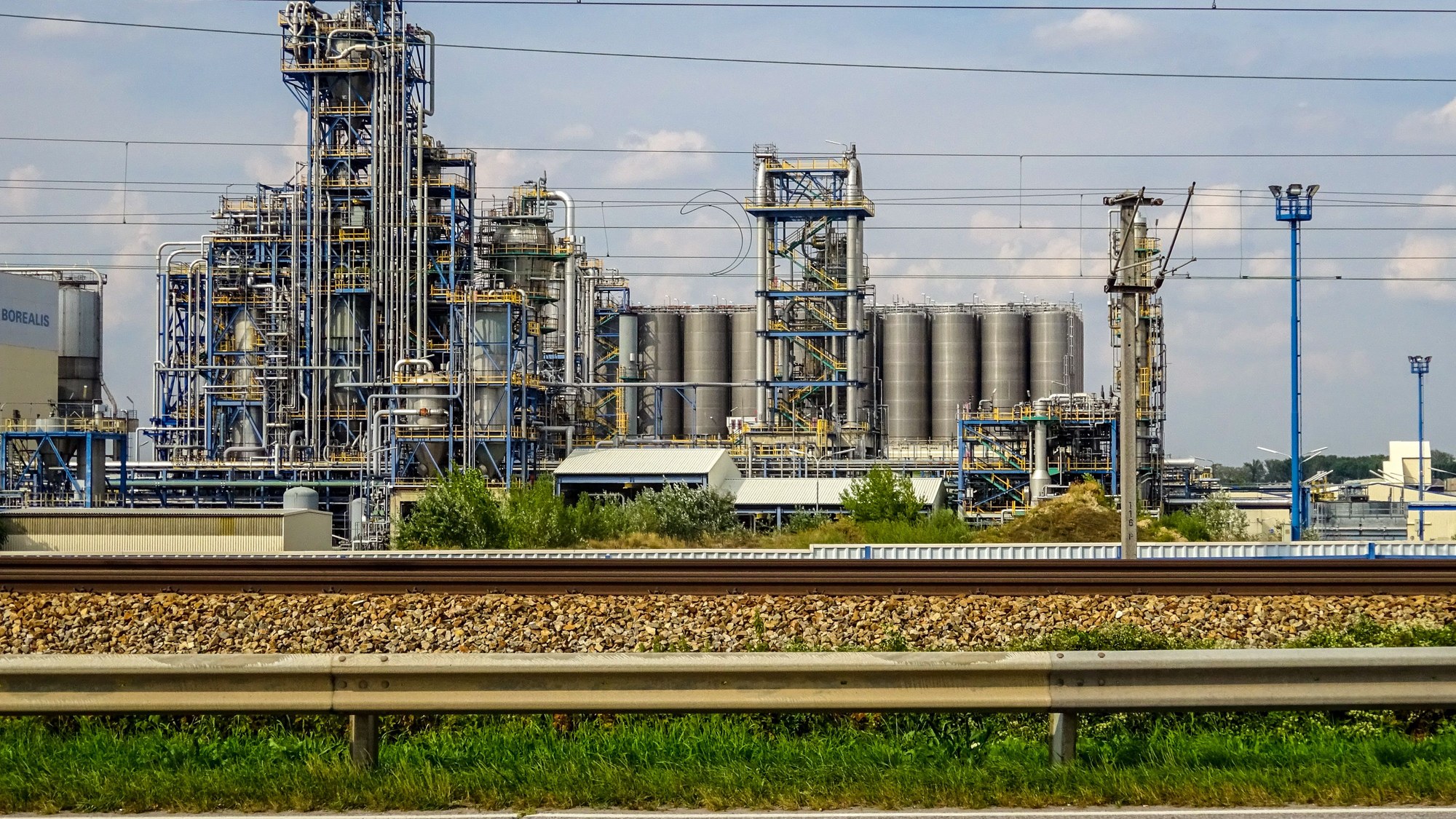
Dow describes itself as one of the world’s leading materials science companies, serving packaging, infrastructure, mobility and consumer markets. It operates manufacturing sites in 29 countries. At year-end 2025 it employed approximately 34,600 people.
Sales in 2025 were approximately $40 billion. The quarterly dividend, at $1.40 a year per share, is the part of that business that reaches individual investors directly. Dow’s stock trades on the New York Stock Exchange under the symbol DOW.
Is 35 cents a quarter still enough to plan around?
The 70-cent payout that became 35 cents is a reminder that a dividend is income only for as long as a board votes for it. A retiree who built a budget around the old rate lost half of that line overnight, and a hundred years of payments did not stop it.
The Benefits Checklist looks at the other side of household income. It covers 11 benefit programs, including Medicare Savings Programs and Extra Help, with the 2026 income limits and a 50-state phone directory, so a household can compare what the programs pay against what a dividend has become.
Get the Benefits Checklist to compare 2026 income limits program by program →
More Financial Reading
- 21 Ways to Stretch a $2,087 Social Security Check
- 15 Places to Find Your Share of the $4.25 Billion States Give Back
- 15 Ways Retirees Are Tapping a Record $14.9 Trillion in Home Equity
This article was produced with AI assistance and edited for accuracy against the sources linked above.