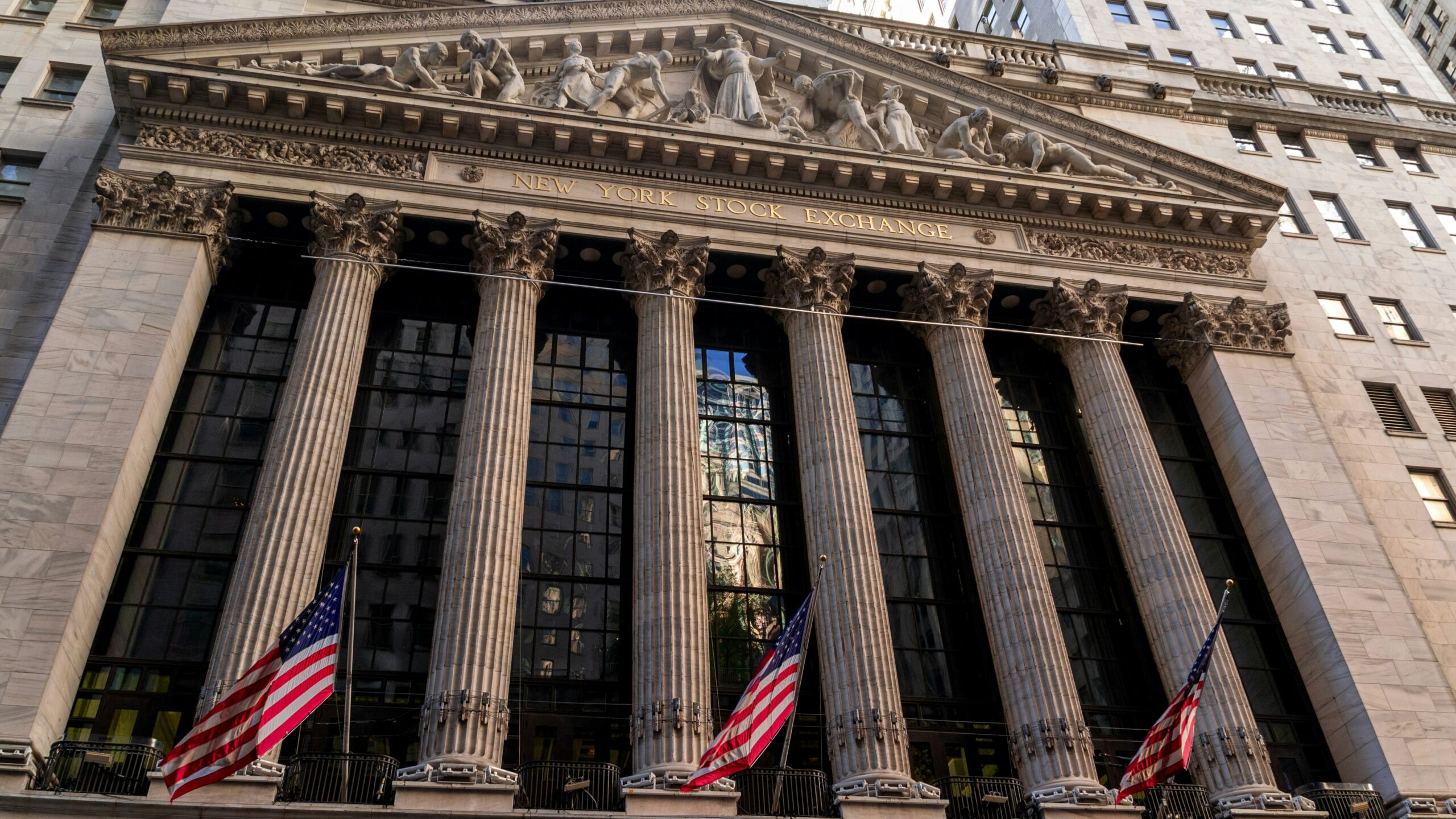
The Dow Jones Industrial Average fell 652.82 points, or 1.2 percent, on Friday, October 23, to close at 52,215.16, the steepest drop among the major U.S. indexes. The Associated Press reported that climbing oil prices, a 10-year Treasury yield near 5 percent and a sharp slide in American Express shares weighed on Wall Street. The S&P 500 and the Nasdaq composite also finished lower.
Oil sets the tone for stocks
Brent crude, the global oil benchmark, rose 3.1 percent to settle at $116.72 a barrel, its highest level since June 2022, the AP said. It had been under $97 at the start of October. The AP ties the surge to the U.S. war with Iran, which it says has severely cut the world’s oil supply.
Those costs reach households quickly. The Bureau of Labor Statistics reported on October 14 that consumer prices rose 3.7 percent in the 12 months ended in September. Gasoline was up 34.2 percent over that span and rose 9.1 percent in September alone on a seasonally adjusted basis. For anyone living on a fixed monthly income, the question is how long fuel and energy bills stay this high.
Retirement deadlines, in your inbox: Miss an enrollment or claim deadline and the money can be gone. Join the Retirement Money Brief and we’ll send you our 2026 Retirement Tax, RMD & Medicare Deadline Calendar as a welcome gift.
Get the Brief + the deadline calendar →
We may earn a commission from links on this page.
Nearly three of every four stocks in the S&P 500 fell on Friday. Energy was the exception. Chevron gained 2.9 percent and ConocoPhillips rose 3.6 percent, according to the AP. Caterpillar, one of the 30 Dow components, dropped 2.4 percent.
American Express and the big banks take the hit
American Express lost 3.7 percent even though it reported a quarterly profit that beat forecasts. The AP said the company also announced its first major job cuts in roughly a decade. Investors sold the shares anyway, which made the card issuer one of the heaviest drags on the Dow.
Other financial stocks fell with it. JPMorgan Chase and Citigroup each slid 1.5 percent, and Capital One lost 1 percent. The declines were smaller than American Express’s, but they came on a day when the S&P 500 as a whole gave up 39.75 points, or 0.5 percent, to 7,623.68.
Technology was uneven. The AP listed Micron up 2.5 percent, Intel and Advanced Micro Devices each up 1.7 percent and Microsoft up 0.7 percent. The Nasdaq still fell 53.52 points, or 0.2 percent, to 25,955.34, after giving up a modest gain earlier in the session.
A Treasury yield at the 5 percent line
The AP put the 10-year Treasury yield at 4.99 percent, up from 4.96 percent late Thursday. The Treasury Department’s daily par yield curve for October 23 shows the 10-year at 5.00 percent, the 2-year at 4.69 percent and the 30-year at 5.33 percent. A day earlier those readings were 4.96, 4.65 and 5.29.
Rates are high because the Federal Reserve raised its benchmark rate at its last meeting. The Fed’s September 16 statement lifted the target range by a quarter point to 3.75 to 4 percent on a 12 to 0 vote. The AP says Wall Street expects the Fed to hold steady at its meeting next week and leans heavily toward another hike in December.
Inflation is the reason. The AP describes U.S. inflation as stubbornly well above 3 percent, and it expects the Fed’s preferred gauge, the personal consumption expenditures index, to show a 3.7 percent annual rate for September. The Fed’s goal is 2 percent.
Earnings add to the pressure. Alphabet, Microsoft and Amazon all report next week. Angelo Kourkafas, senior global strategist at Edward Jones, said in a research note that investors appear increasingly focused on the economics of AI. The AP says questions are growing over whether lofty AI valuations hold up against heavy borrowing and high interest rates.
One rough day inside a mixed week
The weekly scorecard is less grim than Friday’s headline. The Dow still finished the week up 212.75 points, or 0.4 percent, according to the AP’s index table. The S&P 500 lost 35.76 points on the week, or 0.5 percent, its second straight weekly loss, and the Nasdaq lost 184.69 points, or 0.7 percent.
Small companies did best. The Russell 2000 rose 2 percent on the week, or 54.53 points, even after it slipped 8.13 points, or 0.3 percent, on Friday to 2,775.90. The index is up 11.8 percent for the year.
For the year, the Dow is up 4,151.87 points, or 8.6 percent. The S&P 500 is up 11.4 percent and the Nasdaq composite is up 11.7 percent. Friday’s slide of 652.82 points took a visible bite out of the Dow, but it left the three large indexes with gains for 2026.
People who hold stock funds in a 401(k) or IRA can read the market’s risks in plain language at Investor.gov, the Securities and Exchange Commission’s investor education site. Next week brings the Fed decision, the inflation reading and three of the largest technology earnings reports. Friday’s close is the starting point for all of them.
Will higher fuel bills outlast this sell-off?
Oil at $116.72 and consumer prices up 3.7 percent show up on a fixed income as gas, heating and grocery bills, whatever the Dow does next week. Several programs that cover those costs, including Extra Help, Medicare Savings Programs and heating assistance, pay out only after an application is filed.
The Benefits Checklist covers 11 benefit programs retirees most often miss, with the 2026 income limits and a 50-state phone directory. A printable tracker comes with the download, so each application and its follow-up date sit on one page.
Get the 11-program benefits checklist with the 2026 income limits →
More Financial Reading
- 21 Ways to Stretch a $2,087 Social Security Check
- 15 Places to Find Your Share of the $4.25 Billion States Give Back
- 15 Steps to Stop the Scams That Took $7.7 Billion From Seniors
This article was produced with AI assistance and edited for accuracy against the sources linked above.