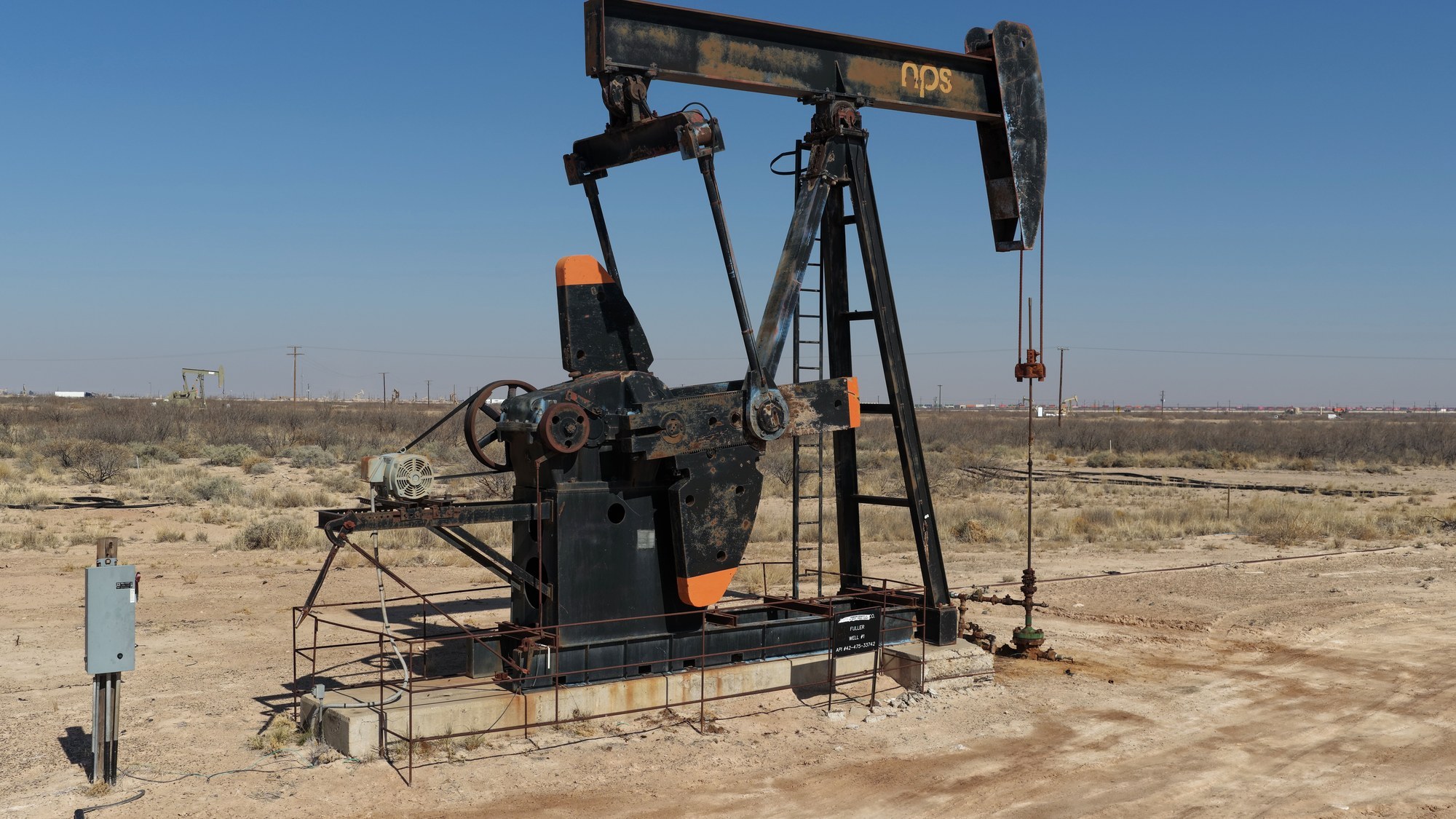
Brent crude, the global oil benchmark, settled at $116.72 a barrel on Friday, October 23, after rising 3.1 percent in a single session. The Associated Press said it was the highest settlement since June 2022. Brent had been under $97 at the start of October.
From under $97 to $116.72 in three weeks
According to the AP, the U.S. war with Iran has severely cut the world’s oil supply and pushed up the cost of gasoline, food and clothing.
The U.S. benchmark climbed too. West Texas Intermediate rose 3.8 percent to $103.27 a barrel, according to the news site BBN Times, which attributed the figure to Kiplinger. The financial site TradingKey likewise reported WTI rising above $100 a barrel on Iran concerns.
Pump prices are the number most households watch. AAA’s national average for regular gasoline stood at $4.2926 a gallon on October 23, against $4.3271 a week earlier and $4.4744 a month earlier. A year ago it was $3.0713. The question now is whether Friday’s jump in crude pushes those prices back up.
What changed this year: Social Security and Medicare change every year, and nobody sends you a memo. The Retirement Money Brief breaks down what changed and what to do. Bonus when you subscribe: our Property Tax & Utility Relief Finder.
Get the Brief and the relief finder →
We may earn a commission from links on this page.
Diesel is higher still. AAA’s tracker listed the national average at $6.3172 a gallon on Friday, compared with $6.3261 a week earlier, $6.5217 a month earlier and $3.6315 a year earlier. Both fuels sit below their levels of a month ago but far above where they stood a year ago.
What the Fed’s own minutes say about energy
The Federal Reserve has already named oil as an inflation driver. The minutes of its September 15 and 16 meeting, released October 7, say geopolitical developments pushed up crude oil and refined fuel prices. Many participants said the longer energy prices stay high, “the greater the risk that cost increases in certain sectors could lead to broader price pressures.”
The Labor Department’s numbers show how far prices have moved. The September consumer price index, published October 14, shows gasoline up 9.1 percent for the month and 34.2 percent over 12 months. The broader energy index rose 5.2 percent in September and 20.4 percent over the year. Overall prices were up 3.7 percent from a year earlier.
The Fed raised its benchmark rate by a quarter point to a range of 3.75 to 4 percent at that September meeting, and the minutes say most participants saw another increase as likely to be appropriate by year end. The AP reports that Wall Street expects the Fed to hold rates at its meeting next week and leans heavily toward a hike in December. The Fed’s September 16 statement itself said uncertainty remained elevated owing in part to geopolitical developments, and it described inflation as elevated.
The minutes add that participants “had not seen sufficient progress on lowering inflation in recent months” and generally saw the risks to inflation as tilted to the upside. Several also said the policy rate looked either not restrictive or only mildly restrictive. Energy is one of the cost pressures the Fed is watching as it weighs the next move.
Stocks and bonds reacted to the same number
The Dow Jones Industrial Average fell 652.82 points, or 1.2 percent, to 52,215.16 on Friday. The S&P 500 dropped 0.5 percent to 7,623.68 for its second straight weekly loss, and the Nasdaq composite lost 0.2 percent to 25,955.34. Nearly three of every four S&P 500 stocks fell. Energy producers moved the other way, with Chevron up 2.9 percent and ConocoPhillips up 3.6 percent, the AP said.
Bond yields moved up with crude. The 10-year Treasury yield climbed to 4.99 percent from 4.96 percent, according to the AP, which puts U.S. inflation stubbornly above 3 percent against the Fed’s 2 percent goal.
Where households can get help with energy bills
The federal Low Income Home Energy Assistance Program, known as LIHEAP, can help pay heating or cooling bills and covers emergency energy-crisis services. Eligibility depends on income, and each state and territory sets its own rules. USAGov explains the steps on its energy bills page.
Applying takes three steps: answer a few questions to see whether a household might qualify, find the state or territory LIHEAP office, then apply. Some offices take applications online and others require a visit in person. USAGov’s general help line is 1-844-USAGOV1, or 1-844-872-4681.
A second program targets the cause of high bills rather than the bills themselves. The Weatherization Assistance Program pays for home improvements that cut energy costs. Eligibility is based on income, and households that receive Supplemental Security Income or Temporary Assistance for Needy Families may qualify. Applicants contact their state weatherization office.
Utility shutoff rules vary by state. USAGov says they can depend on the weather, a customer’s age, disability status and the utility provider, and it links to a state-by-state list of disconnection policies. Brent’s climb from under $97 to $116.72 makes the winter heating season the next test of household budgets.
Facing a bigger heating bill this winter?
Brent at $116.72, gasoline up 34.2 percent in a year and diesel near $6.32 a gallon all feed into household bills. Heating help and weatherization are opt-in programs, and a missed application means paying the full price.
The Benefits Checklist covers 11 benefit programs, including heating help and free weatherization in Part 4, along with the 2026 income limits and a 50-state phone directory. The printable tracker that comes with the download keeps each office’s number and application date together.
Get the Benefits Checklist, with heating help and a 50-state phone directory →
More Financial Reading
- 21 Ways to Stretch a $2,087 Social Security Check
- 15 Places to Find Your Share of the $4.25 Billion States Give Back
- 15 Ways Retirees Are Tapping a Record $14.9 Trillion in Home Equity
This article was produced with AI assistance and edited for accuracy against the sources linked above.