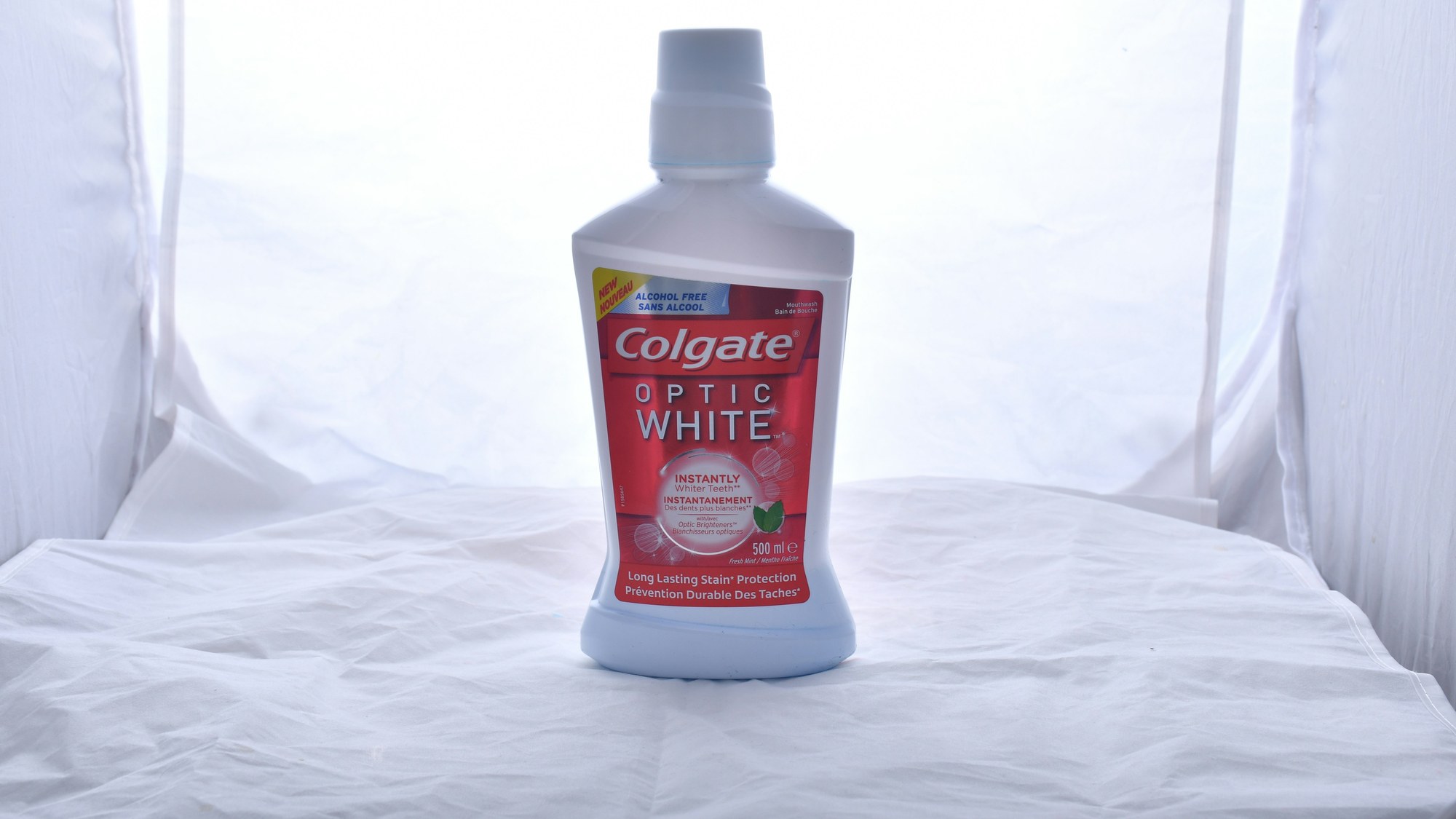
Colgate-Palmolive booked $5.37 billion in net sales in the third quarter, up 4.6% from a year earlier, and it is paying shareholders 53 cents a share on Nov. 13. The payment goes to those who were on record Oct. 20, according to the company’s dividend announcement of Sept. 17.
Because the record date is behind us, the people who hold the right to this check are already settled. A shareholder who owned the stock on Oct. 20, in a brokerage account or a retirement account, should see 53 cents a share on Friday, Nov. 13. Anyone who buys now will wait for the next declaration.
Stay ahead of government payment news: Miss an enrollment or claim deadline and the money can be gone. Join the Retirement Money Brief and we’ll send you our 2026 Government Check Reality Tracker as a welcome gift.
Get the Brief + the check tracker →
We may earn a commission from links on this page.
What did Colgate actually sell, and for how much?
The third-quarter results, released Oct. 30, put net sales at $5,369 million, against $5,131 million in the third quarter of 2025. Organic sales, which strip out currency and acquisitions, grew 3.6%, a figure that includes a 0.2% drag from lower private label pet food sales. The results also show pricing adding 2.0% to the quarter.
Earnings per share on a GAAP basis were $0.94, up 3% from $0.91. The company’s base business earnings per share, a non-GAAP measure, were $0.97, up 7%.
How much has Colgate paid shareholders this year?
Through nine months, Colgate paid $1,308 million in dividends, close to the $1,300 million of a year earlier. It also spent $927 million repurchasing shares, up from $804 million, so buybacks rose while the dividend bill barely moved.
Both numbers cover nine months, not the third quarter alone. Net cash from operations for the period was $2,913 million, compared with $2,745 million a year earlier.
Put side by side, dividends of $1,308 million and buybacks of $927 million come to $2,235 million, about 77% of the $2,913 million generated by operations. That ratio is a calculation from the company’s reported figures, not a number Colgate published, and it leaves roughly $678 million of operating cash for everything else.
Is the 53-cent payment part of a long run?
The company’s announcement says Colgate has “paid uninterrupted dividends on its common stock since 1895.” It does not state how many years in a row the amount has gone up, and it names no executive.
The math on a 53-cent payment is simple: 100 shares pay $53, 250 shares pay $132.50 and 1,000 shares pay $530. Four payments at the same size would total $2.12 a share over a year, a figure drawn from the declaration and not stated by the company.
What does Colgate expect for the rest of 2026?
The company narrowed its full-year outlook. Net sales are now expected to rise 4% to 5%, tighter than the earlier 2% to 6% range, and base business earnings per share growth is projected at 5% to 7%. Organic sales growth is expected to land broadly in line with the nine-month pace, and the company expects gross profit margin to rise.
The company also said GAAP earnings per share should grow by a double-digit percentage for the year. A narrower range gives holders a clearer picture of the final quarter, though a forecast is not a payment, and the only dividend declared in the sources is the 53-cent one.
Chairman, President and CEO Noel Wallace said, “Our growth momentum continued, delivering another strong quarter of broad-based top- and bottom-line growth.”
Where does the dividend show up on a tax form?
The IRS says every taxable dividend is ordinary income, with the payer reporting any qualified portion, taxed at lower capital gain rates, on Form 1099-DIV. The form is issued for distributions of $10 or more, and anyone with more than $1,500 in taxable ordinary dividends also files Schedule B with the return.
What is the safest home for 53 cents a share on Nov. 13?
The Colgate payment is small per share but adds up across a few hundred shares, and it arrives as cash on a Friday with no instructions attached. People who rely on payments like this can end up with several small balances spread across accounts.
“Make Your Savings Pay You” is an 11-page guide to insured places for money that cannot be put at risk. It explains Treasury bills from $100, which are free of state and local income tax, and a ladder so money comes due on a schedule.
Turn the Nov. 13 Colgate payment into a Treasury bill ladder with the savings guide →
This article was produced with AI assistance and edited for accuracy against the sources linked above.


