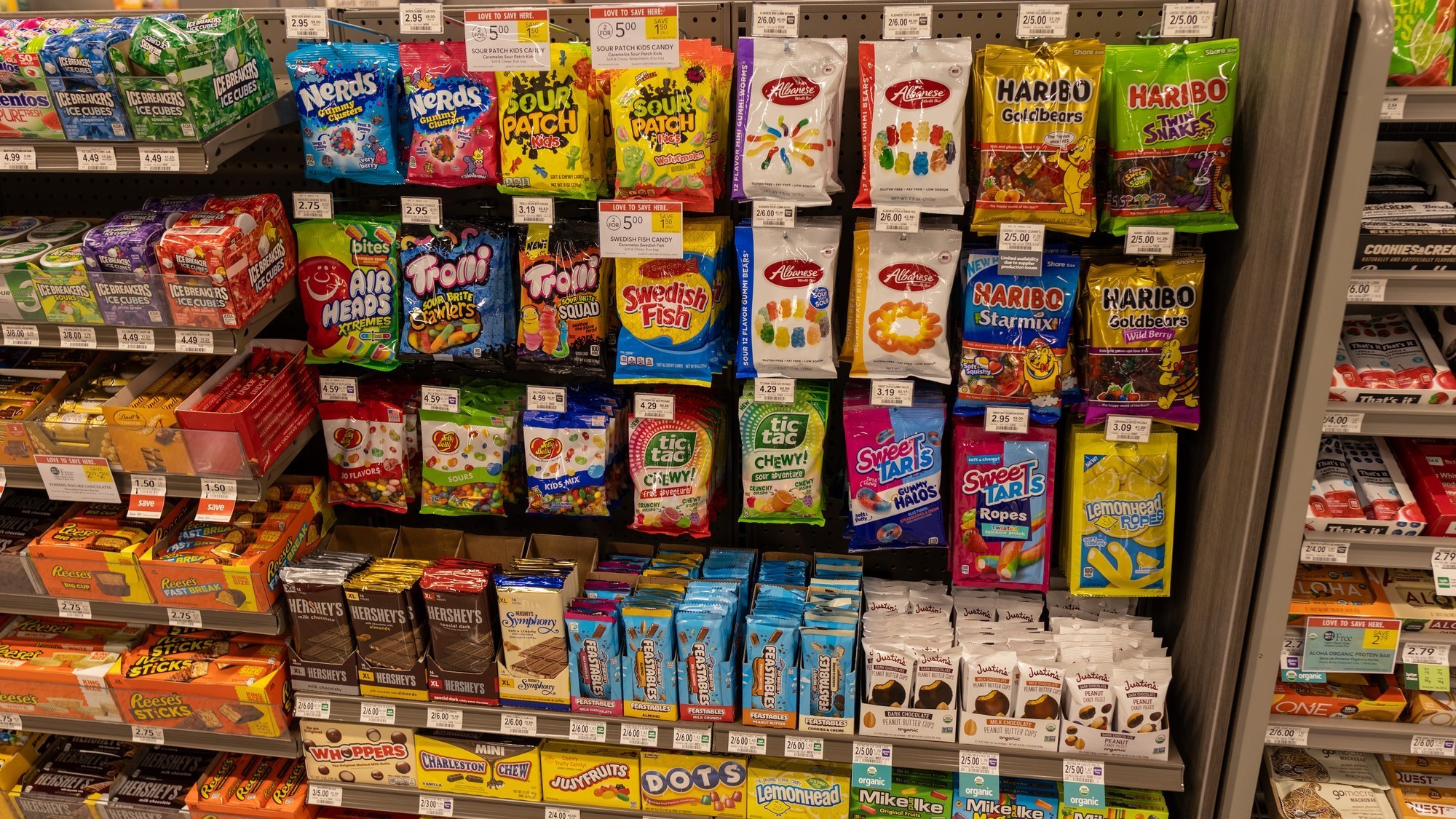
Hershey raised prices by about 11 points in the third quarter while the amount of product it sold fell by about 10 points, the company said in its Oct. 29 earnings release. Net sales reached $3,275.5 million, or about $3.28 billion, up 3.0% from a year earlier. The quarter ended Sept. 27.
Hershey says organic, constant-currency sales grew 0.8%, “driven by net price realization of approximately 11 points.” Volume “declined approximately 10 points reflecting elasticity impacts in North America Confectionery and International.” In plain terms, the chocolate maker charged more per item and sold fewer items.
A “point” here is one percentage point of sales. Price added about 11 and volume took away about 10, which is why total organic growth ended up under 1%. Anyone who buys candy for a household, a Halloween bowl or a grandchild’s stocking is paying the higher price that produced that sales figure.
Elasticity is the term for shoppers buying less when prices rise. Hershey’s own release uses it to explain the volume decline in both its candy business and its international business.
Retirement deadlines, in your inbox: Miss an enrollment or claim deadline and the money can be gone. Join the Retirement Money Brief and we’ll send you our 2026 Government Check Reality Tracker as a welcome gift.
Get the Brief + the check tracker →
We may earn a commission from links on this page.
Where did shoppers pull back?
North America Confectionery, the candy business, took a price increase of about 13 points. Volume fell about 11 points, which Hershey attributes to “price elasticity and normal quarter-to-quarter shipment variability.” Segment sales were $2,656.5 million, up 1.6%, according to the release as carried by Finviz.
International was weaker. Sales fell 7.5% to $226.4 million, or 9.7% on an organic basis, with price realization of about 4 points and volume down approximately 14%. The segment posted a loss of $30.0 million. Hershey says volume there was also affected by shipment timing and planned portfolio optimization.
Did salty snacks make up the difference?
North America Salty Snacks sales rose 22.3% to $392.7 million, but about 20 points of that came from the LesserEvil acquisition. Organic sales in the segment rose 2.3%. Volume rose about 1 point on demand growth and retailer inventory replenishment, and net price was roughly a 1-point benefit.
Segment income in salty snacks fell 17.9% to $47.4 million, a 12.1% margin. The candy segment earned far more: $949.7 million, up 66.2%, on a 35.8% margin.
How did Hershey’s profit jump on flat volume?
Net income was $580.8 million, up 111.8%, and diluted earnings per share were $2.88. Adjusted earnings per share were $2.64, up 103.1%. Hershey says tariff refunds it received in the third quarter lifted reported gross and operating margins, along with net price realization, productivity savings and lower net commodity costs.
The company’s adjusted earnings outlook includes about $0.22 per share from third-quarter tariff refunds and $0.03 from the second quarter. It says the outlook “does not include potential future tariff refunds.” For nine months, net sales were $9,167.0 million, up 6.6%, with net income of $1,473.6 million.
Costs rose elsewhere in the company. Unallocated corporate expense climbed 10.3% to $213.1 million, which Hershey says was driven mainly by capability and technology investments.
What does Hershey expect for the rest of 2026?
Hershey now expects net sales growth of about 5% for the year, compared with its earlier range of 4.5% to 5%. It trimmed the organic growth forecast to about 3% from a range of 3% to 3.5%. Projected adjusted earnings per share are $8.58 to $8.74, with growth of 36% to 38.5%, and projected reported diluted earnings per share are $8.00 to $8.26.
The outlook also assumes a tax rate of about 25%, interest expense of about $200 million, capital spending of about $450 million and about $100 million in savings from its Agility & Automation program.
Kirk Tanner, Hershey’s president and CEO, said, “Our third-quarter results show steady progress on our 2026 priorities.” He added that “our second-half demand creation initiatives are gaining momentum, even as consumers grow more cautious.”
Paying more at the checkout for the same bag of candy?
When a company raises prices about 11 points and shoppers buy about 10 points less, the household feels it in the grocery total, not in a headline. Prices that rise at the shelf are one more reason to look at the bills that can be lowered by asking.
“Senior Discounts Worth Asking For” covers utility rates for seniors, low incomes and medical needs, and the car insurance mature-driver course discount. It includes a savings log for tracking what asking is worth each year.
This article was produced with AI assistance and edited for accuracy against the sources linked above.


