New Mexico voters decide Tuesday, Nov. 3, on three general obligation bond questions worth about $393 million in all ($393,131,780), including up to $21,582,213, or about $21.6 million, for senior citizen facilities. The other two questions cover up to $19,324,188 for libraries and up to $352,225,379 for higher education, special schools and tribal schools, according to the Secretary of State’s list of 2026 ballot questions. Each asks whether the state may issue bonds and levy a general property tax to repay them.
The three questions come from House Bill 248, the 2026 Capital Projects General Obligation Bond Act. Each is decided separately by a majority of the votes cast on that question. If one fails, only its bonds are left out of the act, and the questions that pass still stand.
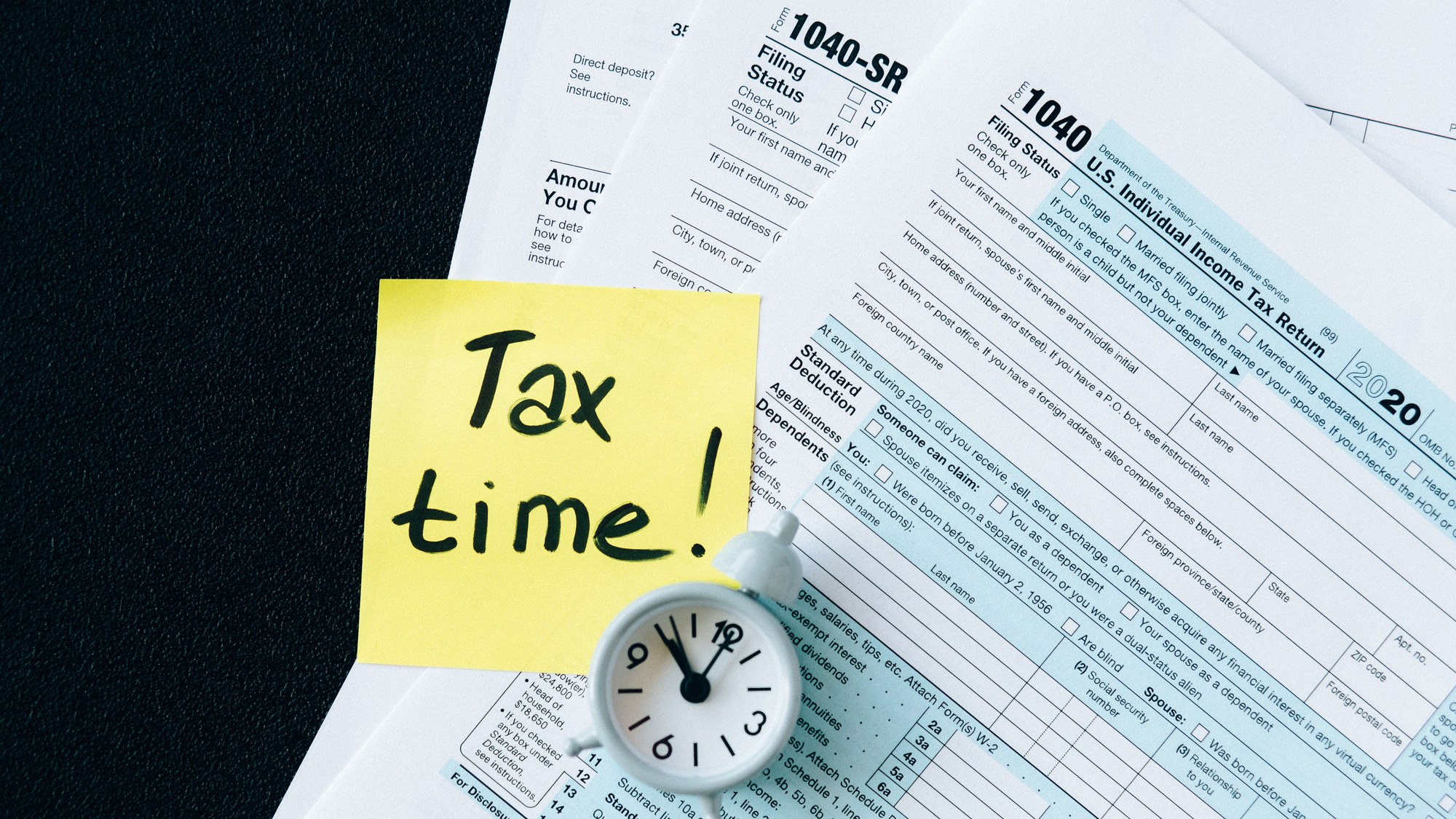
For homeowners and renters alike, the question is how the bonds get paid for. The bill imposes an ad valorem property tax on all property in the state that is subject to state property taxation, and the money covers interest and a sinking fund for principal. The bill gives no per-household cost, so what a given property owner would pay is not spelled out in the text.
Stay ahead of government payment news: Miss an enrollment or claim deadline and the money can be gone. Join the Retirement Money Brief and we’ll send you our 2026 Government Check Reality Tracker as a welcome gift.
Get the Brief + the check tracker →
We may earn a commission from links on this page.
What would the senior center bonds pay for?
Bond Question 1 covers improvement, construction and equipment projects for senior citizen facilities, and the bill’s project list runs to 60 items. The largest is $3,000,000 for the Cibola Loop multigenerational center in Albuquerque, followed by $2,600,000 for the Ruidoso community center, $1,500,000 for the Highland Meadow senior center in Valencia County and $1,000,000 for improvements at the Barelas senior center in Albuquerque. Smaller items include $250,000 for vehicles and improvements at the Quemado senior center in Catron County.
Other items pay for meal equipment and vehicles, such as $750,000 for vehicles at the CASA kitchen in Albuquerque and $350,000 for vehicles at the Pueblo of Isleta elder center. The project list adds up to $21,256,250, a little under the $21,582,213 cap printed on the ballot.
Where do the library and college dollars go?
Bond Question 2 is for library resource acquisitions at academic, public school, public and tribal libraries across the state, up to $19,324,188. The bill’s project list splits $19,000,000 into $6,000,000 each for non-tribal public libraries, academic libraries and public school libraries, and $1,000,000 for tribal libraries.
Bond Question 3 is the largest, at up to $352,225,379 for capital improvements and acquisitions at higher education institutions, special schools and tribal schools. The biggest line is $116,000,000 for the University of New Mexico school of medicine in Albuquerque, followed by $55,000,000 for a new multidisciplinary academic facility at New Mexico State University in Las Cruces and $40,000,000 for a mineral science and engineering complex at New Mexico Tech in Socorro. The list also includes $9,000,000 for the Thomas C. Donnelly library and annex at New Mexico Highlands University in Las Vegas.
The bonds must be issued within 30 months of the election. Ballotpedia’s news report says the House passed the bill 65-0 and the Senate 38-0 in February and that Gov. Michelle Lujan Grisham signed it March 10, and that general obligation bonds are repaid from a statewide property tax.
How does a bond question get repaid?
General obligation bonds are repaid with state funds, which in this case means revenue from the statewide property tax. The bill requires principal payments to begin within two years of issuance, and interest on the bonds is exempt from state and local taxation.
A yes vote authorizes the bonds and the property tax levy for that question. A no vote does not. The ballot treats each of the three as its own decision, so a voter can approve one and reject another.
What else is on the New Mexico ballot?
The same Secretary of State document lists four constitutional amendments alongside the bonds. Amendment 1 would let bills the governor does not act on become law and require veto messages. Amendment 2 would remove the requirement that school elections be separate from partisan elections. Amendment 3 would create nominating committees for university regents, and Amendment 4 would tie legislative pay to median household income.
Does a statewide property tax levy change your home costs?
The bonds are repaid through a property tax on property across New Mexico, and the bill gives no figure for what that means for one household. That leaves the rest of a homeowner’s property bill as the part a household can still work on.
The Keep-It Starter Bundle puts nine guides in one download, one for each money leak. Cut Your House Costs covers every senior property-tax break and equity options, and the bundle adds guides on the retirement tax bill, Medicare costs and savings that earn nothing.
Get the nine-guide bundle with the senior property-tax break guide for homeowners →
This article was produced with AI assistance and edited for accuracy against the sources linked above.