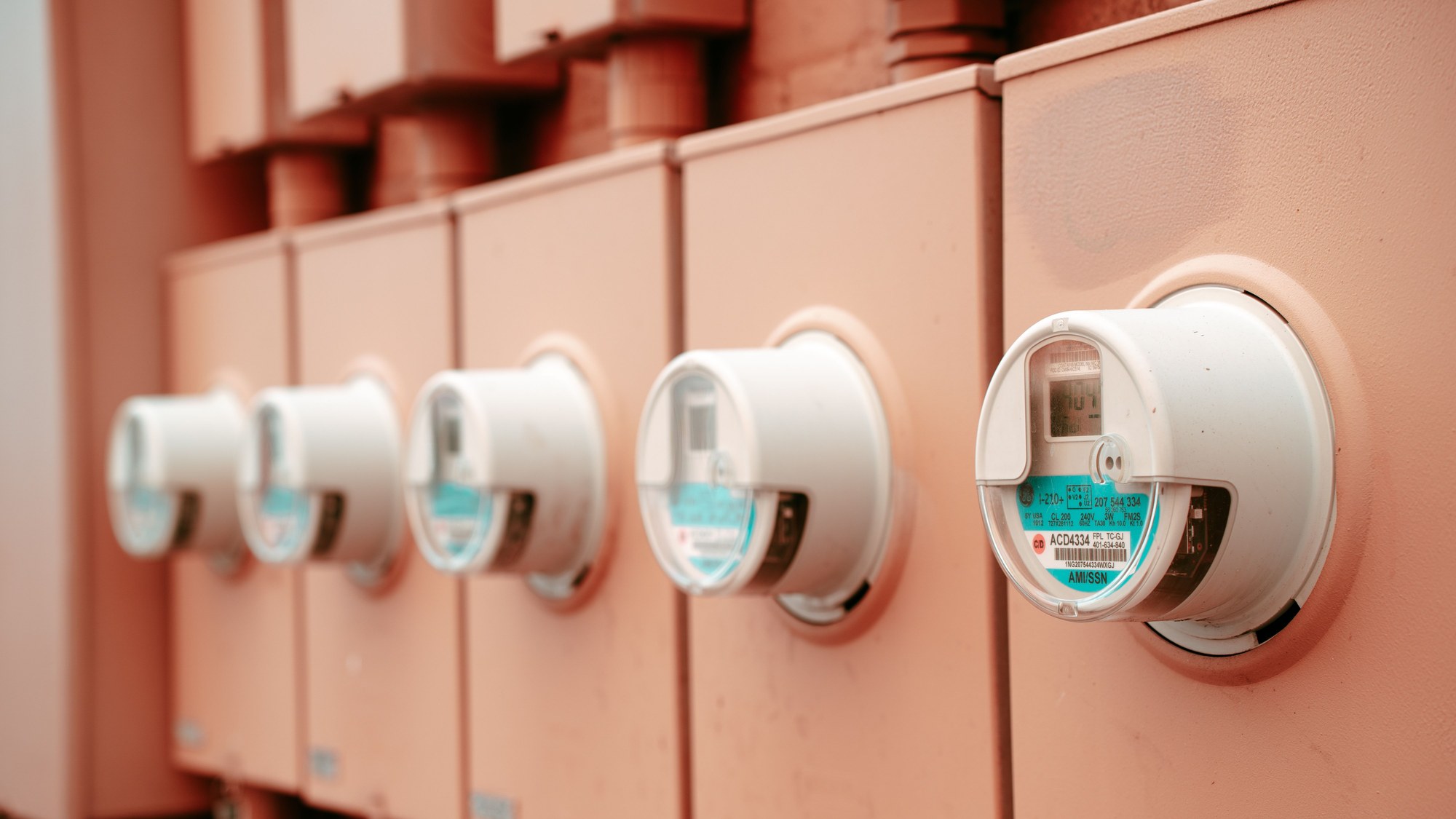
Duke Energy Florida says residential customers who use 1,000 kilowatt-hours a month will pay $33 less on their January 2027 bills than they did in January 2026, with a further $10 cut arriving in March. The utility announced the lower rates Nov. 3, saying the Florida Public Service Commission approved its request. Part of the reduction comes from a tax strategy that lets the company skip a base-rate increase that had been scheduled for 2027.
The $33 figure applies to a household using 1,000 kilowatt-hours a month, the usage level the company quotes for residential customers. A home that uses far more or far less will see a different change, because most of a bill moves with usage. Anyone on Duke Energy Florida service should compare the January bill with the same month a year earlier, since that is the comparison the company made.
Stay ahead of property tax and utility bill news: Miss an enrollment or claim deadline and the money can be gone. Join the Retirement Money Brief and we’ll send you our Property Tax & Utility Relief Finder as a welcome gift.
Get the Brief + the relief finder →
We may earn a commission from links on this page.
Is the $33 a drop from last January or from last month?
It is a year-over-year number. The company’s Nov. 3 announcement compares January 2027 with January 2026, and the gap is $33 at 1,000 kilowatt-hours. The same announcement says rates fall by about 95 cents between December 2026 and January 2027, which is a month-over-month figure and a much smaller one.
Duke’s September filing described that month-to-month change differently. When the company first asked regulators for lower rates, WFTV reported a 71-cent decrease from December 2026 to January 2027 for the same usage level. The filing also projected cuts of about 0.8% to 3.6% for commercial and industrial customers, a range the November announcement widened to 0.9% to 3.8%.
What does the extra $10 in March actually do?
The March reduction is $10 per 1,000 kilowatt-hours for residential customers, on top of the January change. Duke describes it as temporary. The company says it applies the cut every March through November, the months when electricity use is often highest, to take some of the pressure off summer-season bills.
Because it is tied to usage, the $10 is a per-1,000-kilowatt-hour rate rather than a flat credit. A household that runs the air conditioner hard in a Florida summer will use more than that benchmark and can see a larger effect, while a household that uses less will see less.
How does a utility skip a rate increase?
Duke points to what it calls an “innovative tax strategy.” The company says it recently put the strategy in place and that it helps avoid a base-rate increase that was scheduled for 2027. Melissa Seixas, Duke Energy Florida’s state president, said the company is “committed to delivering real, tangible value for the essential service we provide.”
The scheduled increase traces back to a 2024 settlement. The Florida Public Service Commission unanimously approved that settlement in August 2024. It raised base rates by $203 million in 2025 and $59 million in 2026, and it set no base-rate increase for 2027, with Duke planning to use about $50 million in anticipated federal tax credits to offset the need for one.
In its September filing, Duke said the tax strategy was expected to move roughly $50 million in customer savings into 2027. Falling fuel costs also help, the company said at the time, while spending to strengthen the grid is rising slightly, though not enough to cancel the savings. Fuel and base rates are separate pieces of the same bill, which is why a company can cut one while another line creeps up.
Seixas said in September that the company was “glad to start 2027 with a rate decrease” and would stay focused on “smart, disciplined investments.” The November announcement adds that Duke plans to keep investing in renewable energy and in infrastructure upgrades meant to reduce outages and speed restoration after storms.
Who is covered, and what help is there when the bill is still too high?
The lower rates cover Duke Energy Florida’s residential, commercial and industrial customers. The utility serves about 2 million customers across a 13,000-square-mile territory, according to the company’s description in its September filing.
For households still struggling with the bill, the company lists free home and business energy assessments, flexible payment plans and energy-efficiency and financial assistance programs. Duke directs customers to its help page, which is organized by service location, so a Florida customer has to pick their area to see the Florida options. Calling the company directly is the other route. The 2024 settlement also bars Duke from disconnecting service for nonpayment when the projected temperature is 95 degrees or higher, or when the heat index is forecast to reach 105 or higher.
A lower rate does not guarantee a lower bill in every month. Usage and the fuel line still move the total, and a $33 drop in January does little for a household whose bill spikes in July. People on a fixed income can use the lower January rate as a prompt to review the whole account: the payment date, the budget-billing option if Duke offers it to them, and whether an energy assessment is worth scheduling before summer.
Will your Duke Energy Florida bill really fall by $33 in January?
The $33 holds only for a household using 1,000 kilowatt-hours a month, and a bill that is lower in January can still jump in the summer months that follow. Anyone who accepts the new rate without asking about payment plans, budget billing or a help program leaves those options unused.
101 Phone Scripts to Lower Your Bills gives 101 calls, word for word, for every company a household pays, including a section on electric, gas and water payment plans, budget billing and help programs. The scripts are short enough to read straight off the page, and a call log records who answered and what was agreed.
Get the call scripts for electric payment plans and budget billing →
This article was produced with AI assistance and edited for accuracy against the sources linked above.