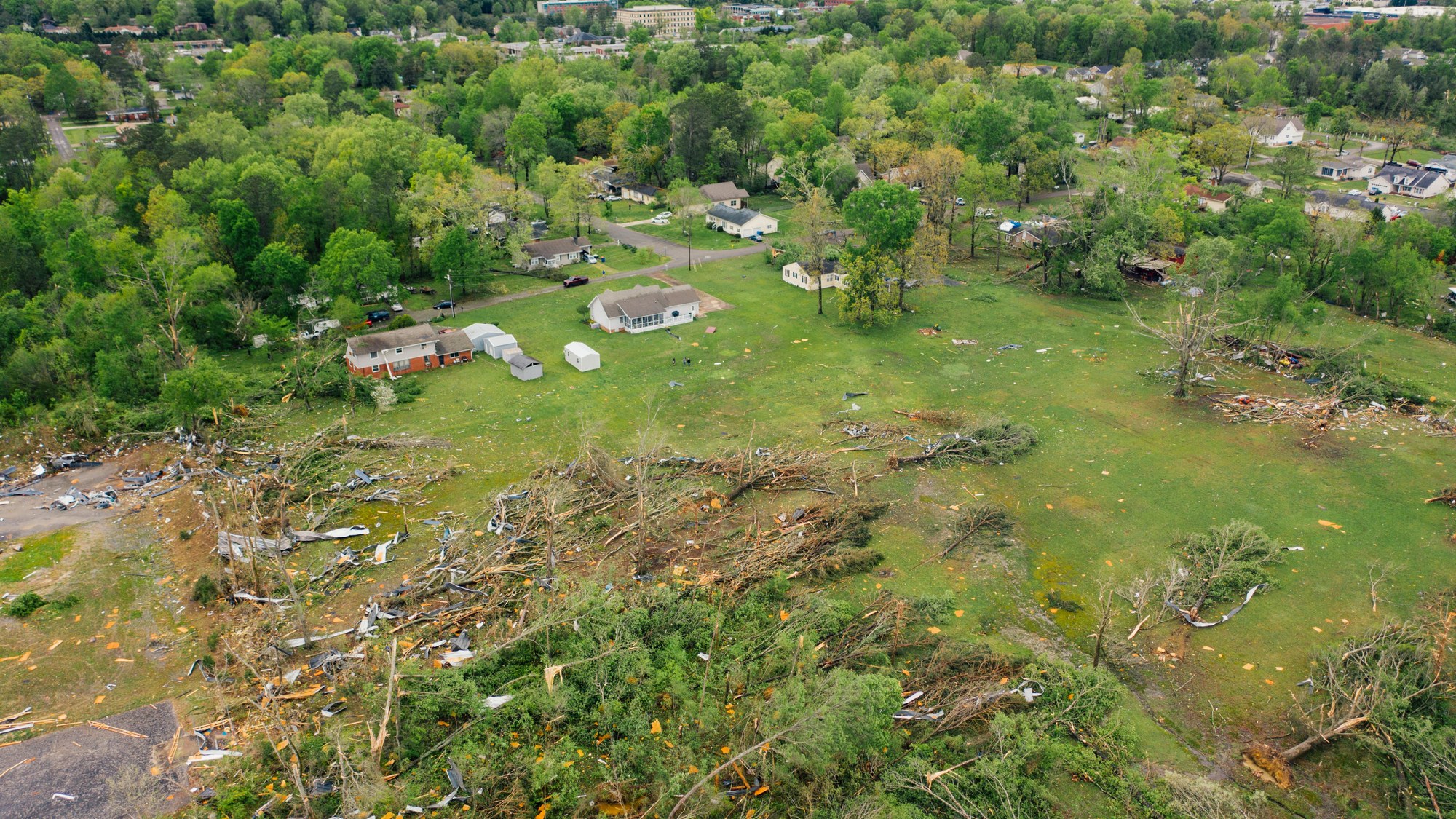
The IRS has pushed federal tax deadlines to Feb. 1, 2027 for storm and wildfire victims in covered counties of Texas, Wisconsin, Indiana, Washington and Mississippi. The latest additions are four Wisconsin counties hit by July tornadoes and eight Mississippi counties hit by Tropical Storm Arthur. Each state has its own release, and the relief reaches only the counties named in it.
Which Wisconsin and Mississippi counties moved to Feb. 1?
The Wisconsin relief, announced Oct. 14, covers Forest, Outagamie, Vilas and Winnebago counties after storms and tornadoes that began July 27, 2026. It carries FEMA declaration 4949-DR. In Mississippi, the IRS covers Covington, George, Greene, Hancock, Harrison, Pearl River, Stone and Wayne counties for Tropical Storm Arthur, which began June 18, under declaration 4930-DR.
A Mississippi correction posted Aug. 21 says the Feb. 1 extension applies to the quarterly payroll deadlines of July 31 and Nov. 2, 2026, which narrows some of the broader language higher in the release. Employers and anyone who files quarterly payroll returns in those eight counties should read that notice before assuming every deadline moved. Wisconsin’s release lists the same Feb. 1 date for estimated payments due on or after July 27, and for quarterly payroll returns normally due July 31 and Nov. 2.
The first question for anyone in the five states is whether their address falls inside a named county. A ZIP code is not enough, because the releases list counties, and a taxpayer just across a county line gets no automatic relief. The IRS says it “automatically identifies taxpayers located in the covered disaster area and applies filing and payment relief,” so people in a listed county do not have to apply. Taxpayers who live or work outside the covered area but have records there can call IRS Special Services at 866-562-5227 to ask for relief.
Retirement deadlines, in your inbox: Miss an enrollment or claim deadline and the money can be gone. Join the Retirement Money Brief and we’ll send you our 2026 Government Check Reality Tracker as a welcome gift.
Get the Brief + the check tracker →
We may earn a commission from links on this page.
What about Texas, Indiana and Washington?
In Texas, the IRS listed 62 counties for storms that began July 14, including Bexar, Harris, Travis, Kerr, Uvalde, Webb and Williamson. That release, dated Oct. 27, cites a disaster declaration issued by the State of Texas rather than a FEMA number. Indiana’s relief, issued Sept. 2 and updated Oct. 8, started with 27 counties, from Carroll and Cass to Wayne, and now adds Fountain, Parke, Pike and Putnam for 31 in all, for storms and tornadoes that began Aug. 11 under declaration 4933-DR.
Washington’s relief covers wildfires that began July 31 in Chelan, Ferry, Okanogan, Spokane, Stevens and Yakima counties, along with the Yakama Nation, the Colville Reservation and the Spokane Tribe of Indians. The IRS announcement, dated Aug. 31, lists emergency declaration 3650-EM.
What does the Feb. 1 date actually move?
The releases list most individual, corporate, partnership, S corporation, estate, trust and exempt-organization returns, along with employment and certain excise returns, with original or extended due dates before Feb. 1, 2027. People who had a valid extension on a 2025 individual return, which would have run to Oct. 15, get until Feb. 1 to file it.
Estimated income tax payments also move. The releases cover estimated payments originally due on or after the start date of each disaster, such as July 14 in Texas or Aug. 11 in Indiana, and the Texas and Mississippi notices say no failure-to-pay penalty applies if the tax is paid by Feb. 1, 2027. That puts the final estimated payment, normally due Jan. 15, 2027, inside the window for covered taxpayers.
Quarterly payroll and certain excise returns normally due July 31 and Nov. 2, 2026 also get the later date. Missed installment agreement payments in the Texas window will not cause a default, though the release says interest and late-payment penalties still accrue.
What stays on the old calendar?
Payments for 2025 returns were due April 15, 2026, and every one of the releases says those payments are not eligible for the relief, even when the return itself was extended. Anyone who filed on extension without paying the full balance in April does not get the extra months for that bill.
Information returns also stay put. The Texas and Indiana releases list the W-2, 1094, 1095, 1097, 1098 and 1099 series, plus Forms 1042-S, 3921, 3922 and 8027, among forms that are not postponed. Employment and excise tax deposits are generally excluded too, though the IRS abates penalties on deposits made by set dates: July 6 in Mississippi, Aug. 17 in Washington, Aug. 26 in Indiana, Aug. 11 in Wisconsin and July 29 in Texas.
The Texas release adds that anyone who receives a late-filing or late-payment penalty notice with a due date in the relief period should call the number on the notice to have it abated. It also says copy and transcript fees are waived for records requests marked with the disaster designation “SD-0018-DR” at the top of Form 4506 or 4506-T.
Is a late estimated payment sitting on a retiree’s calendar in one of these counties?
A Feb. 1 deadline is generous until the day it arrives. Retirees in the covered counties who skip the Jan. 15 estimated payment, or who file extended 2025 paperwork without knowing what they owe, can reach the new date with a bigger bill than expected.
Cut Your Retirement Tax Bill: 12 Moves includes how much of your Social Security is taxed, worked out on one worksheet, along with the 2026 numbers on one page. It is a 14-page guide.
Get the guide with the Social Security tax worksheet and 2026 numbers before Feb. 1 →
This article was produced with AI assistance and edited for accuracy against the sources linked above.