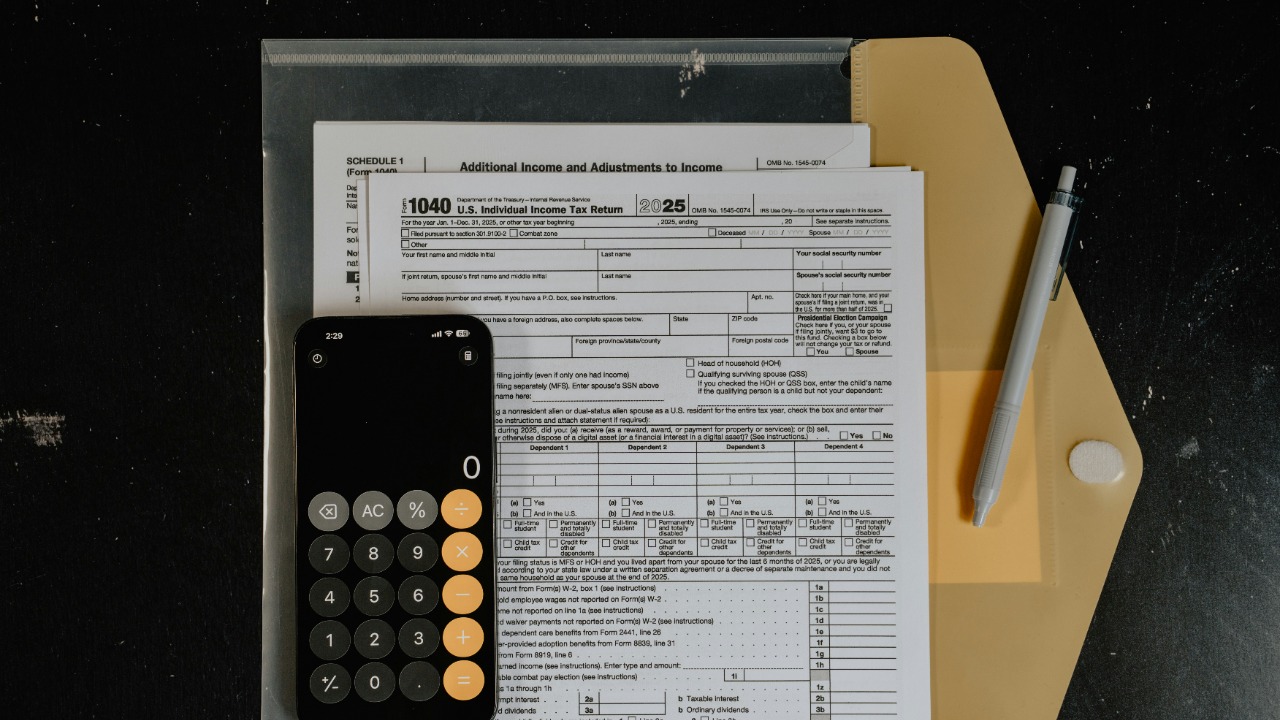
A pitch built around a “Tribal Tax Credit” or a similarly named write-off has circulated among taxpayers and return preparers who assume that once a refund clears, the claim behind it is settled. The Internal Revenue Service said on September 18 that the assumption is wrong: no such federal credit exists, and a return that claims one creates exposure the moment it is filed. Whether the refund arrived, was reduced, or never left the Treasury makes no difference to that exposure.
A False Claim Survives the Refund, IRS Says
In IR-2026-112, the agency’s September 18 warning to taxpayers, tribal communities, businesses and tax professionals, the IRS stated that “a federal tax return claiming a nonexistent Tribal Tax Credit contains a false claim, regardless of whether a refund was issued initially.” That sentence carries the weight of everything that follows. The falsity attaches at the moment a return is filed, not to whatever happens to the money afterward — a return that produced a refund is exactly as false, in the agency’s framing, as one the IRS intercepted before a check went out. IRS Chief Executive Officer Frank J. Bisignano tied the warning to the integrity of the filing system broadly, not to a paperwork dispute over one credit: acceptance of a return, the release notes, is never proof that a credit claimed on it was valid.
The mechanics of who sells the credit and how it is marketed are a separate matter from what happens to the person who signed the return. From this point forward, the question is one of liability, not promotion.
Free refund decision tree: A delayed refund usually means one of a few specific things, and each has a different next step. Find the reason with the free refund tracker.
Three Penalty Provisions Can Attach to the Same Return
The IRS’s penalty structure shows how the exposure stacks. An erroneous claim for refund or credit under 26 U.S.C. § 6676 adds a penalty equal to 20% of the “excessive amount” claimed — the portion of the credit that was never allowable — unless the filer can show reasonable cause. A separate accuracy-related penalty under 26 U.S.C. § 6662 adds another 20% where an underpayment stems from negligence or disregard of the rules, or where the understatement exceeds 10% of the tax required to be shown on the return or $5,000, whichever is greater for an individual filer. Where the IRS can establish that an underpayment is fraudulent, the civil fraud penalty under 26 U.S.C. § 6663 replaces the smaller figures with 75% of the underpayment attributable to fraud, and once the IRS proves fraud as to any part of the underpayment, the entire underpayment is treated as fraudulent unless the filer proves otherwise.
The three do not simply add together on the same dollar: the erroneous-claim penalty steps aside for any portion of the underpayment already subject to the accuracy-related or fraud penalty. In practice, a filer’s worst-case exposure on the credit itself is the 75% fraud figure rather than a sum of 20 plus 20 plus 75 — but interest keeps accruing on the underlying tax from its original due date regardless of which penalty applies, so a dispute that drags on for years compounds the bill every month it remains open.
Where Civil Penalties End and Federal Charges Begin
The IRS’s September notice did not stop at civil penalties. It warned that participating in the scheme “can result in the assessment of the correct tax owed, penalties, interest, and, potentially, fines and imprisonment.” The federal criminal code backs that language with specific numbers. Under 26 U.S.C. § 7201, willfully attempting to evade or defeat a tax is a felony punishable by up to five years in prison and, once current federal fine law is applied, a fine of as much as $250,000 for an individual, plus the costs of prosecution. A related statute, 26 U.S.C. § 7206, criminalizes willfully signing a return under penalty of perjury that the filer does not believe is true as to every material matter — a felony carrying up to three years in prison and the same fine exposure — and it applies whether or not the government can even prove the credit produced a final tax deficiency.
That last point matters because it does not require a promoter’s involvement to prosecute the filer. A person who signs and files a return claiming a credit the IRS says has no basis in federal law has, on the government’s reading, already made the statement Section 7206 was written to punish. Whether that person also fights to keep the refund through an audit is a separate decision layered on top.
What Repaying an Already-Spent Refund Costs on a Fixed Income
For an older filer living on Social Security and a modest pension, the statutes above translate into a specific and unpleasant math problem. A refund built on a credit that never existed is not a windfall the IRS forgives once it has been spent on rent, prescriptions or a grandchild’s tuition — it is a debt that keeps accruing interest from the original filing deadline, on top of whichever penalty applies, regardless of what the money bought in the meantime. A filer who cannot pay the corrected balance in full does not simply carry a quiet account balance: under the Federal Payment Levy Program, the IRS can garnish 15% of monthly Social Security old-age and survivors benefits to satisfy the debt. Unlike the $750-per-month floor that protects Social Security from most other creditors under a separate federal debt-collection law, that 15% comes out regardless of how little is left afterward.
The levy is not automatic. The IRS sends a final notice with appeal rights before Social Security benefits are enrolled in the program, and a filer has 30 days from that notice to arrange payment before the 15% withholding begins. That window is the practical difference between a payment plan on manageable terms and a permanent cut to monthly income.
The Legitimate Way to Undo a Return Already Filed
None of this requires waiting for an audit letter. A filer who claimed the credit — knowingly or on a preparer’s assurance — can file Form 1040-X to remove it and report the corrected tax before the IRS opens an examination. Correcting voluntarily does not erase the tax owed or the interest already accrued, but it is the clearest evidence a filer can offer against the civil fraud penalty, which requires the IRS to prove intent, and it preserves access to penalty relief tied to reasonable cause that stops being available once fraud has been established. What a corrected return cannot do is turn a return already claiming a nonexistent credit into one that never made the claim — the IRS’s September 18 position is that the false statement exists at the moment of filing, and only a filed correction, not a hoped-for audit outcome, changes what happens from there.
Making Sense of an IRS Notice After a Reversed Credit
A corrected return or a disallowed credit rarely ends with silence; it ends with an IRS notice written in codes and terminology that are not self-explanatory, arriving well after the original refund is gone. Confirming what changed, and whether a subsequent refund or balance is moving through the system correctly, means being able to read that notice and trace the return behind it.
The IRS Refund Recovery Kit is a 13-page kit with a notice decoder and the refund-trace steps for Form 3911.
See the notice decoder inside The IRS Refund Recovery Kit.
This article was researched and drafted with the assistance of AI and reviewed by an editor.


