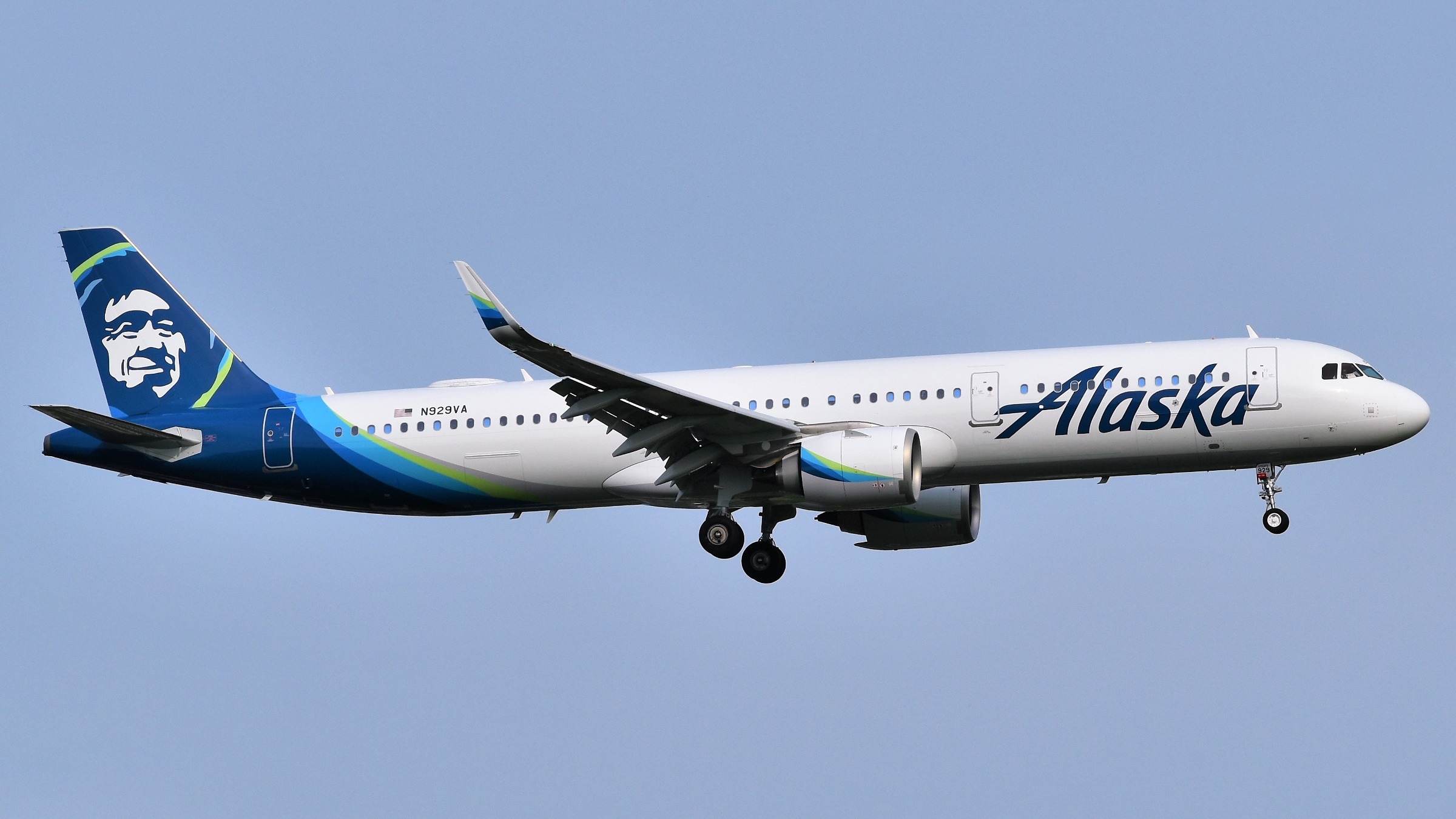
Alaska Airlines CEO Ben Minicucci is not sugarcoating it: the airline has raised fares, and it has no intention of rolling them back.
During Alaska Air Group’s first-quarter 2026 earnings call in April, Minicucci told investors that recent price increases have stuck, even as a spike in jet fuel costs squeezed margins across the industry. The carrier reported Q1 2026 revenue of approximately $2.8 billion and noted that unit revenue (revenue per available seat mile) increased year over year, anchoring the fare-increase narrative in concrete financial results.
“Fare increases are holding,” Minicucci said, according to Alaska Air Group’s Q1 2026 earnings webcast. He added, “Demand remains strong across our network, and customers are responding to the product we are delivering.” He framed the higher prices not as a temporary fuel surcharge but as a reflection of strong passenger demand and the airline’s confidence in its product.
Weeks later, Minicucci reinforced that message at the 2026 J.P. Morgan Industrials Conference, where he appeared for a fireside chat with institutional investors, according to a company announcement. The back-to-back appearances in formal, disclosure-governed settings amount to a clear signal: Alaska intends to protect pricing rather than chase volume with discounts.
Why Alaska believes it can hold the line on fares
Much of the airline’s pricing confidence rests on its operational track record. During the earnings call, Minicucci claimed Alaska led the domestic industry in on-time performance during the quarter. That claim has not yet been independently confirmed. The U.S. Department of Transportation publishes monthly Air Travel Consumer Reports that track on-time arrivals, cancellations, mishandled baggage, and oversales for every major carrier. As of May 2026, the DOT has not yet released finalized Q1 2026 on-time data, so readers should treat Alaska’s claim as unverified until those figures are published.
The underlying logic is simple. Passengers who trust that their flight will depart on schedule and not get canceled are willing to pay more for that reliability. Alaska is betting that its operational reputation functions as a pricing shield, one that competitors with weaker punctuality records cannot easily replicate.
That bet has structural support. Alaska’s West Coast-heavy network includes high-demand corridors between Seattle, San Francisco, Los Angeles, and popular leisure destinations in Hawaii and Mexico. Those routes attract a mix of business and premium-leisure travelers who tend to prioritize dependability over the lowest possible fare.
The fuel cost squeeze and what Alaska disclosed
Minicucci’s pricing stance arrived against a difficult cost backdrop. Jet fuel is typically the second-largest expense for U.S. carriers after labor, and prices rose sharply in early 2026, pressuring margins industry-wide.
Alaska acknowledged the fuel headwind during its earnings call but offered limited detail on its hedging positions. Without full visibility into how much of Alaska’s Q1 fuel consumption was hedged, it is not possible to determine precisely how much of the fare increase covers genuine cost growth versus margin expansion. The airline did not break out a specific hedging gain or loss in its public remarks.
How Alaska stacks up against competitors
Alaska is far from alone in holding fares at elevated levels. Delta Air Lines, United Airlines, and American Airlines have all emphasized pricing discipline in their own recent earnings calls. Southwest Airlines, historically the standard-bearer for low fares, has moved toward assigned seating and premium products designed to lift its average revenue per passenger.
But Alaska occupies a distinct niche. Its September 2024 acquisition of Hawaiian Airlines expanded its Pacific network significantly. As of early 2026, the integration of Hawaiian’s operations, fleet, and loyalty program into Alaska Air Group is still underway. Meanwhile, Alaska’s membership in the oneworld alliance alongside American Airlines gives it long-haul connectivity that a standalone West Coast carrier would struggle to match. Those structural advantages make it easier to sustain premium pricing on routes where Alaska faces limited nonstop competition.
The Bureau of Labor Statistics tracks airfare changes through its Consumer Price Index. The BLS airfare index for early 2026 has not yet published a single figure that captures the full scope of Alaska’s fare increases, and the agency does not break out data by individual carrier. However, the broader CPI airfare trend line through late 2025 and into 2026 shows domestic fares remaining above pre-pandemic levels after adjusting for overall inflation. That macro picture is consistent with Minicucci’s argument that higher prices are not a temporary spike but a new baseline for the industry, though it does not confirm the size or stickiness of Alaska’s specific increases.
What travelers should expect when booking this summer and fall
For passengers planning trips in the months ahead, the practical reality is that fares are more likely to resemble 2024 and 2025 pricing than anything from the pre-2020 era. Alaska’s CEO is telling the market, in settings governed by securities disclosure rules, that his airline sees no reason to cut prices to stimulate demand.
That does not mean deals have vanished entirely. Airlines still discount to fill off-peak departures, and route-specific fare sales appear regularly. But the floor has moved up. Routinely finding sub-$200 round trips on competitive domestic routes is increasingly rare, barring a significant economic downturn that crushes travel demand.
Several forces could shift the calculus. A sustained drop in oil prices would ease fuel costs and potentially give carriers room to lower fares. A recession that curbs consumer spending on travel could force aggressive discounting. And new low-cost competition on specific routes can always disrupt pricing in those corridors.
Why the industry’s pricing playbook is unlikely to change soon
None of those scenarios is what Alaska, or most of its peers, is planning around right now. The industry’s base case, as Minicucci articulated and other airline executives have echoed, is that passengers have accepted higher fares and will continue flying at current price levels. Until that assumption breaks, whether through an economic shock, a fuel price collapse, or a wave of new competition, the sticker shock at checkout is not going away.