David Keller

David M. Keller is a finance writer based in Columbus, Ohio, covering personal finance and consumer-focused economic topics. He earned his degree in journalism from Ohio University and began his career reporting on local business and economic trends for a regional media outlet. Since then, he has contributed to a variety of online publications, focusing on clear, practical coverage of topics such as cost of living, debt, and everyday financial decision-making.

A young woman who is in a state of stress calculates monthly housing costs and installments for a ca

Overtime pay up to $12,500 single or $25,000 joint becomes deductible through 2028 under the OBBBA — saving a worker with $20,000 of annual overtime about $4,400 at the 22% bracket

When the One Big Beautiful Bill Act became law in May 2025, it carried a provision that most overtime-eligible workers had never lobbied for and many still do not know exists: a federal income tax deduction for qualified overtime pay. The write-off, which took effect retroactively for the entire 2025 tax year, lets workers subtract…


Read More
Make a Realistic 3d model of residential building Newly Constructed Modern Home of modern cozy hous

The capital-gains exclusion on a primary-home sale still caps at $500,000 for couples and $250,000 for singles — untouched since 1997 — while median U.S. homeowner equity now tops $213,000

When Congress passed the Taxpayer Relief Act of 1997, a three-bedroom ranch house in San Jose might have sold for $280,000. Today that same house could fetch $1.5 million or more. A single homeowner who held on for the full ride would owe federal capital-gains tax on roughly $750,000 of profit after applying the $250,000…

Read More
Businessman hand holding credit card to online shopping from home with laptop payment ecommerce internet banking man enters the card details on the website

Setting your bank app’s fraud-alert threshold to $0 forces a text on every charge — catching the small probing transactions thieves run before they drain the account

A $1.07 charge at a gas station 400 miles from your house. A $0.50 donation to a charity you have never heard of. These are not billing errors. They are probes: tiny transactions that card thieves use to confirm a stolen number is live before they start spending for real. The pattern is so well…

Read More
Large industrial tanks sit near a cityscape.

Brent crude just posted its worst month since the COVID crash — plunging 19% in May to $92 a barrel — as a 60-day Iran MOU sits on Trump’s desk awaiting signature

On the last trading day of May 2026, Brent crude settled near $92 a barrel, capping a decline of roughly 19% from the $113-plus levels where the global benchmark closed April. That figure, drawn from daily spot prices in the Federal Reserve’s FRED database, makes May the worst single month for Brent since April 2020,…

Read More
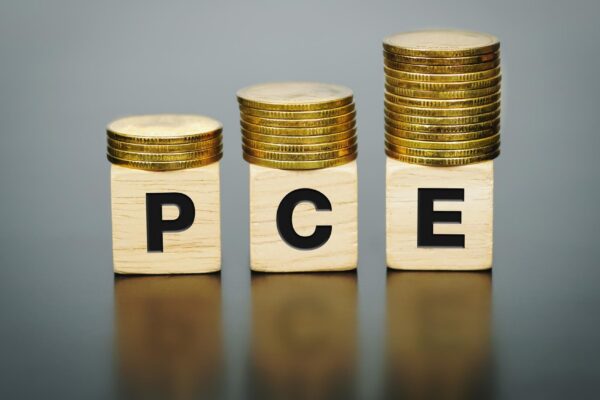
Text PCE (Personal Consumption Expenditure)on wood cube with coins, economic data concept.

April real wages just turned negative for the first time in three years — average hourly earnings climbed 3.3% but PCE inflation hit 3.8%, quietly erasing the raise every worker got this year

A 3.3% raise sounds solid until you learn that prices rose faster. In April 2026, the typical private-sector worker earned $37.41 an hour, a year-over-year gain that would have meant real progress in almost any recent month. But it didn’t, because the Personal Consumption Expenditures price index published by the Bureau of Economic Analysis climbed…

Read More
a house under construction with the roof ripped off

April new home sales slumped to 622,000 — the slowest pace since 2022 — as builders sit on 9.4 months of unsold inventory and 32% of builders kept cutting prices in May

Across Sun Belt subdivisions from suburban Dallas to the outskirts of Orlando, finished homes are sitting on lots with no buyers in sight. The April New Residential Sales report, published jointly by the U.S. Census Bureau and the Department of Housing and Urban Development, put the damage in numbers: new home sales fell to a…

Read More
MBisanz talk - CC BY-SA 3.0/Wiki Commons

An IRS Identity Protection PIN blocks anyone else from e-filing a return in your name — it’s free, takes five minutes to set up online, and auto-renews every January

During the 2025 filing season, the IRS flagged roughly 300,000 tax returns as confirmed identity-theft attempts, according to the agency’s annual Data Book. In a typical case, a thief uses a stolen Social Security number to e-file a fraudulent return and claim someone else’s refund before the real taxpayer even opens their tax software. The…

Read More
Wall street sign in New York with American flags and New York Stock Exchange in background

Wall Street just pulled the last 2026 rate cut from its forecasts — Goldman, Morgan Stanley, and Citi now price zero cuts through December — and markets show a 28% probability of a hike before year-end

As recently as February, traders betting on fed funds futures still expected at least one quarter-point rate cut before December. That bet is off the board. Goldman Sachs, Morgan Stanley, and Citigroup have each removed their final projected Federal Reserve rate reduction for 2026, according to updated research notes published in late May and first…

Read More
Senior business people in office

The Labor Department’s proposed safe harbor to add crypto and private equity to default 401(k) lineups closes public comments tomorrow — then moves to a final vote and OMB review

Most workers in a 401(k) plan never choose where their money goes. They get auto-enrolled, and a plan fiduciary picks the default fund on their behalf. According to Vanguard’s 2024 survey of its recordkeeping clients, roughly 60% of every dollar flowing into 401(k) plans lands in one of those default options. Now the Department of…

Read More
U.S. Department of the Treasury

Series EE savings bonds issued between May and October 2026 earn just 2.40% — but the Treasury guarantees the bond will double in value at 20 years regardless of rate

Put $10,000 into a Series EE savings bond right now and the government will pay you 2.40% a year, fixed for life. Hold that same bond for 20 years and the government promises it will be worth $20,000, no matter what. Those two numbers do not add up on their own, and the gap between…

Read More