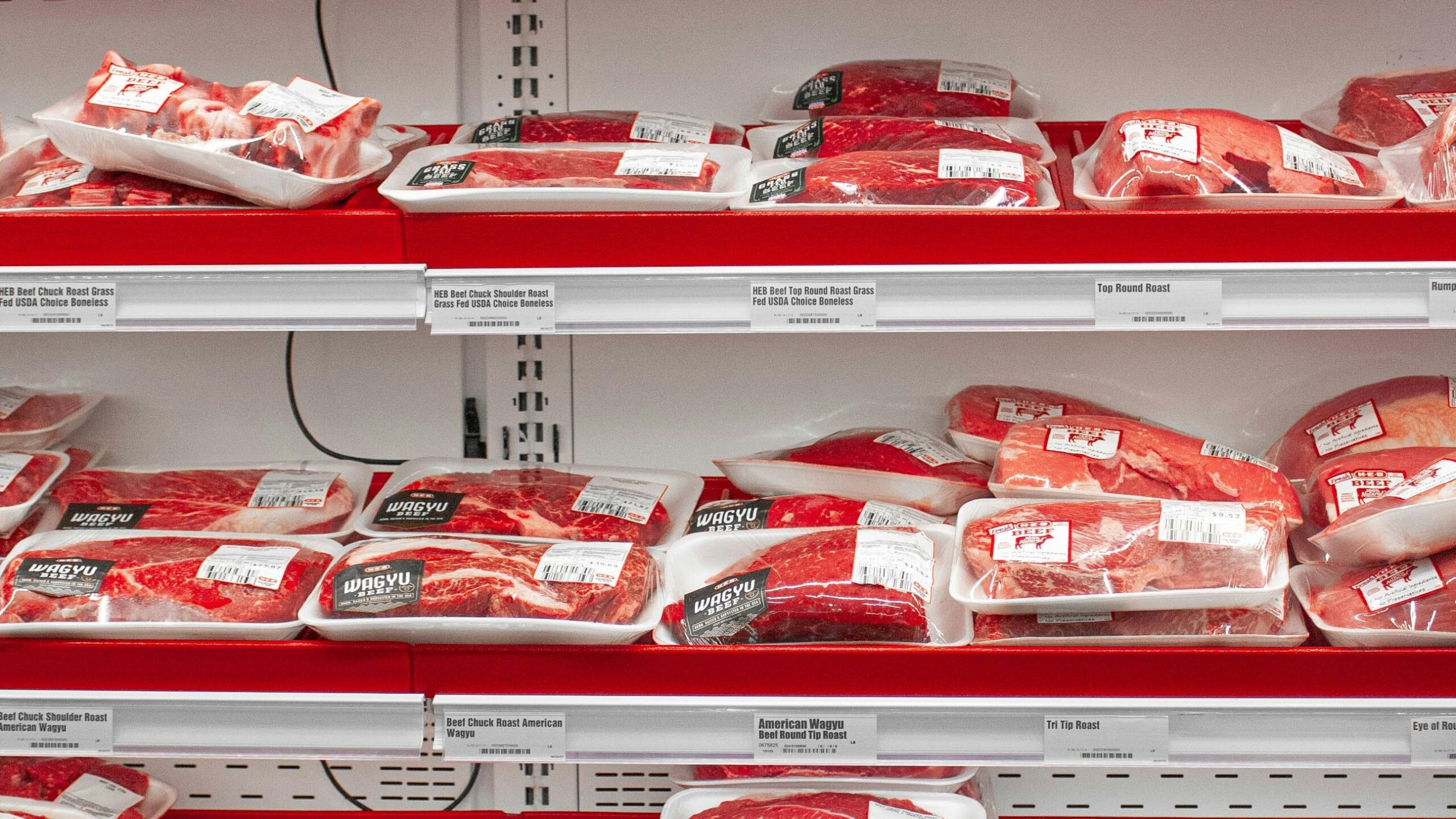
Three pounds of ground beef a week used to be a routine grocery-list item. At today’s prices, that habit costs more than $1,000 a year. The Bureau of Labor Statistics average price series put 100% ground beef at roughly $6.70 per pound as of early 2026, the highest inflation-adjusted level in decades and more than a gallon of regular gasoline in most of the country.
The outlook is not encouraging. The USDA Economic Research Service’s Food Price Outlook, updated in May 2026, flagged beef and veal as the protein category most likely to keep climbing sharply through year-end. Given the pace of wholesale price increases and the depth of the current supply shortage, some retail cuts could approach or exceed $10 per pound by fall if current trends hold. That is not a guarantee, but the forces behind it are measurable and, so far, unrelenting.
The national herd keeps shrinking, and biology is slow
The core problem is simple: the United States has fewer cattle than it has had in years, and rebuilding a herd is not something a rancher can rush. According to the USDA’s January 2026 cattle inventory report, the agency counted 86.2 million cattle and calves as of January 1, with beef cows specifically at 27.6 million head. That was down about 1% from the prior year and extended a multi-year decline that began during severe drought across major ranching states in 2022 and 2023.
Ranchers who sold breeding stock during the drought to cover feed costs and keep operations solvent now face a painful math problem. Replacement heifers cost roughly twice what they did five years ago. Even for those willing to pay, a cow carries a calf for nine months, and that calf needs another 18 months or so to reach market weight. The decision to expand has to be made years before the extra beef shows up at a grocery store.
Fewer breeding animals today means fewer calves entering feedlots tomorrow, which means less beef reaching processing plants. The USDA tracks how that tightening moves through the supply chain in its meat price spreads data, which breaks down the gap between what ranchers receive, what packers charge at wholesale, and what shoppers pay at the register. That spread has widened for several consecutive quarters, a signal that supply constraints are landing squarely on consumers.
Derrell Peel, a livestock marketing specialist at Oklahoma State University who has tracked cattle markets for decades, has noted that packer margins have actually compressed during this cycle while retail margins have not. Grocers are passing through the full wholesale increase, and in some cases adding to it, because shoppers have shown they will keep buying beef even as prices climb.
Why $10 is plausible but far from certain
The $10-per-pound figure that has circulated in headlines draws on USDA price forecasts and secondary interpretations of those forecasts, not a single official statement pinning ground beef at that number. The ERS Food Price Outlook projects percentage increases across food categories using ranges and confidence intervals, not fixed dollar targets. Translating a percentage forecast into a specific shelf price requires assumptions about starting points and timing that shift every month as new data arrives.
That said, several forces could push prices higher than current projections:
- Trade policy. Tariffs on imports, or retaliatory measures from trading partners, could tighten supply by reducing beef flowing in from Australia and Brazil, two countries that help fill gaps when domestic production falls short. At the same time, strong export demand for U.S. beef, particularly from South Korea and Japan, competes directly with domestic supply.
- Weather. A hotter-than-normal summer would stress cattle and reduce weight gain at feedlots, trimming the amount of beef each animal produces.
- Sticky demand. If consumers keep buying through grilling season despite the sticker shock, retailers will have little reason to discount.
- Food-service pull. Restaurants and fast-food chains buy enormous volumes of beef. As long as burger sales hold up at the drive-through, that demand keeps wholesale prices elevated for everyone.
On the other hand, a sharp economic slowdown could dampen demand enough to slow price growth. A faster-than-expected consumer shift toward chicken and pork would ease pressure on beef specifically. And if ranchers in regions where drought has eased begin retaining heifers for breeding in larger numbers, markets could start pricing in future supply recovery even before more cattle actually reach slaughter.
Regional variation matters, too. The BLS average price series reports a single national figure. Shoppers in cities with higher labor and transportation costs may already be paying well above $6.70, while buyers in cattle-producing states like Texas and Nebraska could be paying less. No federal dataset currently breaks retail beef prices down by metro area in a way that would confirm or deny $10 ground beef in any specific market before fall.
What to buy instead (and how to stretch a beef budget)
The price gap between beef and other proteins has grown too wide to ignore. According to BLS average price data from early 2026, boneless chicken breast was running around $4.20 per pound, pork chops were in a similar range, and ground turkey, the closest textural substitute for ground beef in tacos, meatballs, and chili, hovered near $4.50. Swapping ground turkey for ground beef in a household that uses three pounds a week saves roughly $340 a year at those prices.
Whole chickens remain one of the best values in the meat case. At roughly $2.00 per pound, a five-pound bird yields enough meat for multiple meals, and the carcass makes stock that becomes the base for soups and risottos. Pork shoulder, often priced under $3.00 per pound, is another workhorse cut that shreds well for sandwiches, stir-fries, and stews.
For shoppers who are not ready to give up beef entirely, the cut matters enormously. Chuck roasts and stew meat, while not as cheap as they once were, still cost significantly less per pound than pre-formed patties or premium grinds. Buying a chuck roast and asking the butcher to grind it, or grinding it at home, can shave $1 to $2 off the per-pound price. Buying in bulk during sales and freezing portions also locks in lower prices before any further increases.
Plant-based stretchers deserve a mention, too. Dried lentils and canned black beans cost well under $1 per pound and add protein and fiber to a meat-based meal. Mixing half a pound of cooked lentils into a pound of ground beef for a pot of chili cuts the beef cost of that meal nearly in half without dramatically changing the flavor. It is the kind of trick that home cooks have used during every beef price spike going back generations.
When the cattle cycle might finally turn
Cattle markets move in long, slow arcs. The so-called cattle cycle, the pattern of herd expansion and contraction driven by breeding decisions, weather, and economics, typically runs about 10 years from peak to peak. By most estimates, the U.S. herd is at or near the trough of the current cycle in terms of cow numbers.
Peel has said publicly that if heifer retention picks up meaningfully in 2026, the first real supply response could arrive by late 2027 or 2028. That timeline is consistent with the biological realities of cattle production: even an aggressive rebuilding effort takes two full years to put additional beef on the market.
For families staring at the meat case right now, that is not much comfort. The practical reality is that beef is historically expensive, the supply conditions driving those prices will not reverse quickly, and the smartest move is to diversify the protein rotation rather than wait for relief at the beef counter. Ground turkey in the taco, a whole chicken on Sunday, pork shoulder in the slow cooker, lentils in the chili. The cattle cycle will turn. In ranching terms, though, “eventually” means years, not months.