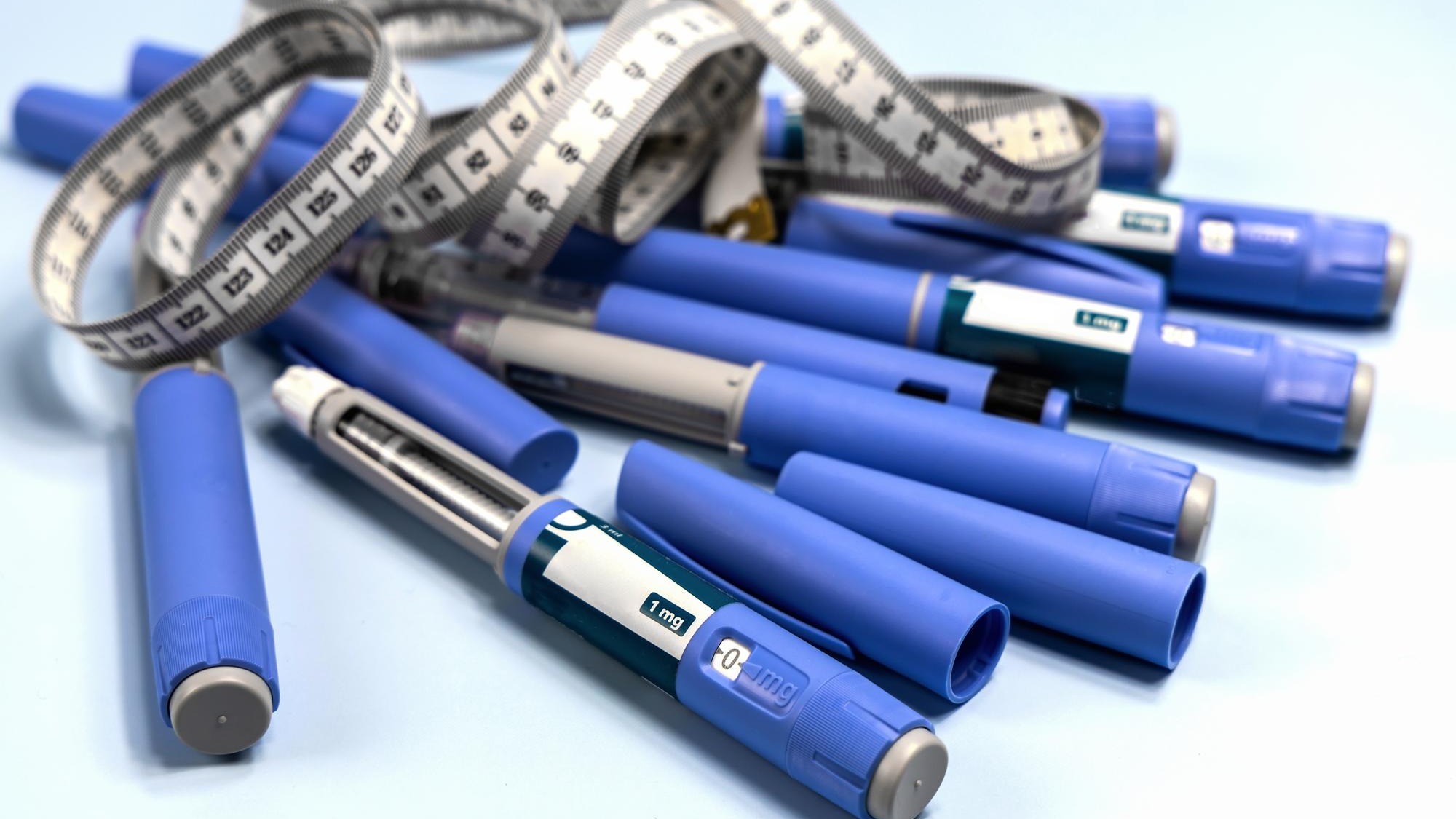
Patients who pay cash for prescriptions rather than billing insurance can now buy the weight-loss and diabetes drugs Wegovy and Ozempic for roughly $349 a month through TrumpRx.gov, a federal website the White House launched in February 2026. The site does not sell medication directly. It functions as a government-run comparison hub that connects self-pay patients to discount pricing that drugmakers agreed to offer under a “Most-Favored-Nation” pricing push tied to the administration. Eight months after its debut, the platform has expanded well beyond its original handful of brand-name drugs.
How TrumpRx Prices Wegovy and Ozempic
The discount is not one flat number across the board; it steps up with the prescribed strength, roughly tracking how doctors typically increase a patient’s dose over the first months of treatment. The site updates its own pricing directly rather than relying on figures from a launch-week press release.
According to the current pricing shown on TrumpRx’s own product page, a new self-pay patient gets Ozempic’s 0.25mg or 0.5mg pen for $199 for the first two monthly fills, then pays $349 a month for continued fills of the 0.25mg, 0.5mg, or 1mg strength, and $499 a month for the 2mg strength. The Wegovy pen offer works the same way: $199 for the first two fills of the 0.25mg or 0.5mg dose, then $349 a month for the 0.25mg through 2.4mg strengths, and $399 a month for the high-dose 7.2mg pen. Both drugs listed at roughly $1,000 to $1,350 a month before the discount, according to TrumpRx, putting the standing $349 price at a discount of 66% to 74% off list.
Free retirement updates: Miss an enrollment or claim deadline and it may be gone. Our free Retirement Shield newsletter keeps readers ahead of the ones that matter. Get the free newsletter.
Why the Discount Does Not Apply to Medicare or Medicaid
The TrumpRx price is only available to patients who pay cash and use no government or third-party coverage on that prescription at all. The terms attached to the Ozempic and Wegovy offers state plainly that the discount excludes anyone with Medicare, Medicare Part D, a Medicare Advantage prescription plan, Medicaid, Veterans Affairs benefits, TRICARE, or any other state or federal health program, and that a patient using the coupon must tell an insurer, if asked, that the drug was bought outside the plan and is not being submitted for reimbursement. That means a retiree enrolled in Medicare Part D cannot use both a Part D drug plan and the TrumpRx coupon on the same fill; a person has to pick one or the other for that prescription. For someone whose Part D plan already covers a GLP-1 drug with a lower copay, running the numbers before switching to a cash purchase matters more than the sticker price alone.
How the Site Actually Works
TrumpRx does not ship medication or process payment itself. A patient searches for a drug, enters a ZIP code, selects the dosage and how many times they’ve previously filled it, and, after accepting the program’s terms, receives a printable coupon carrying a pharmacy benefit identification number, group number, and member ID. That coupon is presented at a participating retail pharmacy along with a valid prescription from a doctor, and the pharmacy applies the discount at checkout the same way it would process an insurance card. According to the White House’s original fact sheet announcing the site, the arrangement rests on pricing deals the administration struck directly with drug manufacturers rather than a new government drug-purchasing program.
Since its February launch with a small slate of brand-name drugs, the platform has broadened its reach considerably. By August 2026, TrumpRx had added more than 600 generic medications, including widely prescribed drugs for cholesterol, blood pressure, blood thinning, and diabetes, through arrangements with outside pharmacy partners. Many of those generic listings carry cash prices under $5, a separate track from the brand-name “Presidential deal” pricing that applies to drugs like Wegovy, Ozempic, and Zepbound. A doctor’s prescription still routes to a pharmacy the normal way; the coupon simply changes what the pharmacy charges at the register once it is presented alongside that prescription.
What to Check Before Using the Coupon
Because the savings depend entirely on paying cash instead of billing any insurance, the math only favors a patient whose current out-of-pocket cost for Wegovy or Ozempic, after any copay or Part D coverage, is higher than TrumpRx’s $349-a-month standing price. A person with no drug coverage for GLP-1 medications, or whose plan does not cover them at all, stands to gain the most. Someone already paying a modest Part D copay for the same prescription may find that switching to a cash purchase and giving up the ability to apply that cost toward an insurance deductible actually costs more over a full year, once the introductory $199 pricing period ends.
The dosage strength also changes the comparison. TrumpRx’s standing $349 price applies to the lower and mid-range strengths of both drugs; the highest-dose pens carry a higher standing price, $499 a month for Ozempic’s 2mg pen and $399 a month for Wegovy’s 7.2mg pen. A patient whose doctor has titrated them up to one of those higher doses over time needs to check the specific strength’s price on the product page rather than assume the $349 figure covers every version of the drug. Because TrumpRx’s listed prices can change as manufacturer agreements are renewed or expanded, confirming the current price on the site itself before filling a prescription, rather than relying on an earlier news report or a printed coupon from months prior, is the more reliable habit going forward.
This article was produced with AI assistance and reviewed by The Financial Wire editorial team.
More Financial Reading
- What really happens to your joint savings account when you die?
- Bank statements: how long to keep them and when to toss them