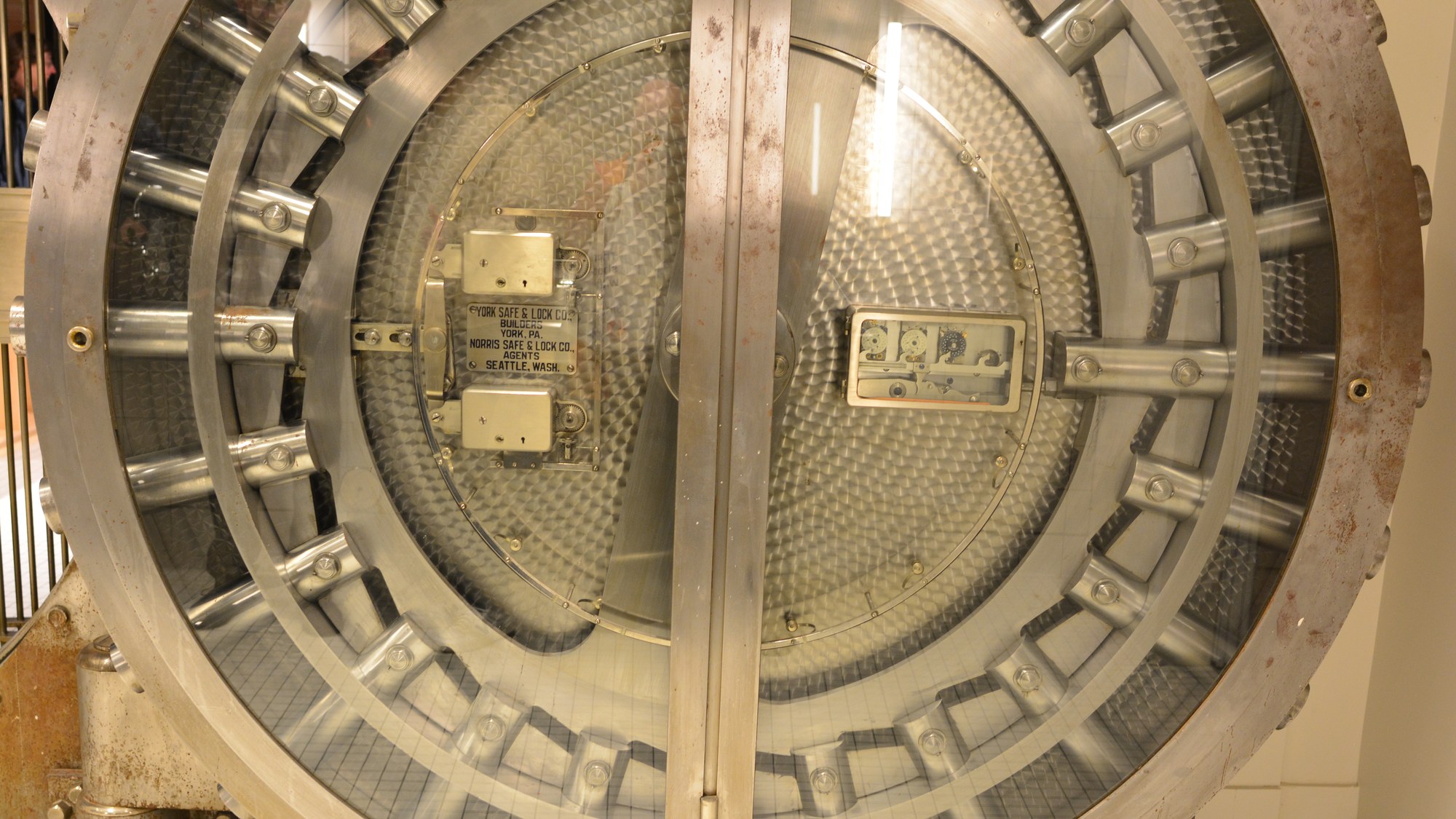
“While the Citizens Bank name may be new to some of our customers, our commitment to community banking is anything but new,” John Mills, president and chief executive of Citizens Bank, said as the Kilgore, Texas, bank merged with Texas National Bank on Oct. 26, according to the Panola Watchman. The combined bank has 19 branches across East and Southeast Texas.
Customers of Texas National Bank, which opened in Jacksonville, Texas, in 1985, now bank under the Citizens Bank name. Citizens Bank was chartered in 1949. The question for them, and for anyone who kept money at both banks, is what the merger changes about accounts and about deposit insurance.
Stay ahead of government payment news: Miss an enrollment or claim deadline and the money can be gone. Join the Retirement Money Brief and we’ll send you our 2026 Government Check Reality Tracker as a welcome gift.
Get the Brief + the check tracker →
We may earn a commission from links on this page.
How did two banks become one on Oct. 26?
It happened in two steps. East Texas Financial Corp., the parent of Citizens Bank, finished buying Texas National Bancorporation in February, and the two banks kept operating separately, according to a Feb. 11 report in Bankers Digest. At the time the combined company had $1.3 billion in assets as of Dec. 31, 2025, and the banks were expected to merge around the fourth quarter of 2026.
“This merger was designed with our customers in mind,” Mills said in February. The Oct. 26 merger put the plan into effect, and Mills said the two banks would keep building on shared values “as one Citizens Bank.”
The February report listed Texas National offices in Bullard, Jacksonville, Lindale, Longview, Lufkin, Marshall, Rusk and Tyler, and Citizens Bank offices in Bryan, Carthage, Center, Gladewater, Humble, Kilgore, Kountze, Sour Lake, Tyler, The Woodlands and Yorktown. After a merger, it said, customers can do business at any of the combined bank’s offices.
What does the bank tell Texas National customers now?
Citizens Bank’s website says “Texas National Bank is now Citizens Bank” and “your move to Citizens Bank is complete.” It advertises 19-plus locations across Texas and lists the bank as FDIC-insured. The local news report points customers to the site for services, branch locations and the transition, and tells them to contact their local branch.
The homepage does not list dates for account, card or online banking changes. Customers with a question about a routing number, a debit card or a login are told to contact their local branch, so a call or visit to the branch that holds the account is the quickest route for a specific account.
Citizens Bank describes itself as an independent community bank that is not affiliated with other institutions using similar names, according to the Panola Watchman report.
Did the merger change how much of a deposit is insured?
For most depositors, no. The Federal Deposit Insurance Corporation insures up to $250,000 per depositor, per insured bank, for each ownership category, and separately chartered banks are insured separately. Once two banks become one charter, that separation could disappear for anyone who held money at both.
FDIC’s rule softens that. Under its six-month rule, deposits from the acquired bank stay insured separately from the buyer’s for six months after a merger, so a depositor with $250,000 at each bank has time to restructure. A certificate of deposit that matures after the window stays separately insured until it matures, and one that renews on different terms inside the window loses that status when the six months end. Counted from Oct. 26, the window runs to late April 2027.
The grace period does not apply to someone who banked at only one of the two, according to FDIC. In that case the ordinary $250,000 limit already covers each ownership category.
Which accounts are worth a second look this week?
The accounts to look at first are joint accounts, trust accounts and certificates of deposit that sit at both banks, since those are the ones where combined balances can pass a limit. A statement from each bank shows what was held on the day of the merger.
Did you keep money at both Citizens Bank and Texas National Bank?
For a depositor who held accounts at both banks, the six-month window FDIC allows after a merger runs to late April 2027, and combined balances in one ownership category are easy to overlook when statements from two banks arrive.
The merger settles which bank holds the money; the Keep-It Starter Bundle covers the other places a household’s money leaks. It puts nine guides in one download, 95 pages in all, and one of them shows how to lock the doors on scammers and account takeovers in one weekend.
Get the nine money-leak guides, from the weekend account lock-down to the savings guide →
This article was produced with AI assistance and edited for accuracy against the sources linked above.