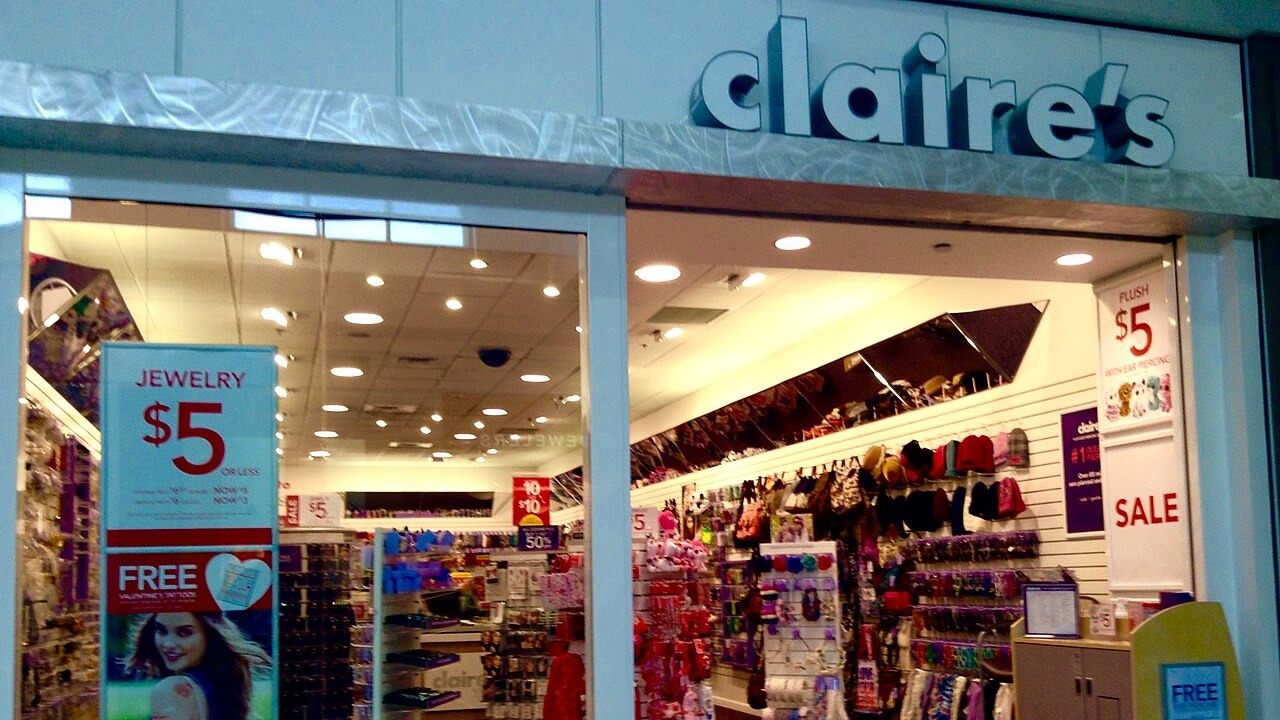
Claire’s, the accessories chain known for ear piercings and affordable jewelry aimed at tweens, filed for Chapter 11 bankruptcy protection on August 6, 2025. The company plans to close at least 18 U.S. stores while it searches for a buyer, marking the second time since 2018 that the retailer has sought court protection from its creditors. The filing raises sharp questions about whether a brand built on low-cost impulse purchases in shopping malls can survive in a retail environment increasingly dominated by online competitors.
Why a second bankruptcy changes the calculus for Claire’s
A first bankruptcy can be a reset. A second one signals deeper structural trouble. Claire’s emerged from its 2018 Chapter 11 process with reduced debt and a plan to stabilize operations, but the intervening years brought accelerating pressure from e-commerce rivals and shifting spending habits among its core teen and tween customers. The fact that the company is back in court less than a decade later suggests that the debt relief alone was not enough to fix the underlying business model.
The company has said it is pursuing strategic alternatives, a term that typically signals an active search for a buyer, a merger partner, or a significant capital infusion. If a buyer emerges, the most telling sign of Claire’s future direction will be whether new ownership invests in experiential retail formats, such as expanded piercing studios and in-store events, or simply liquidates underperforming locations. Tracking post-petition capital spending filings and lease renewal decisions over the next 90 days will offer the clearest early evidence of which path the company takes.
The closure of at least 18 stores represents only a fraction of Claire’s total U.S. footprint, which suggests management is not yet pursuing a full wind-down. Keeping most locations open during the restructuring, as company statements indicate, preserves the option to sell the business as a going concern rather than auctioning off assets piecemeal. That distinction matters for thousands of store-level employees whose jobs depend on whether a viable buyer steps forward.
Debt load and competitive pressure behind the filing
Claire’s operates in a retail segment where margins on individual items are thin and foot traffic is the primary revenue driver. Mall-based retailers selling low-price accessories have faced years of declining visits as younger consumers shift spending to online platforms and direct-to-consumer brands. The 2018 bankruptcy addressed the debt side of that equation, but it did not resolve the traffic problem.
The company’s decision to file again points to a gap between its fixed costs, primarily lease obligations and debt service, and the revenue its stores generate. Court filings and business reporting describe a retailer carrying substantial financial obligations that its current operations cannot support. The search for strategic alternatives acknowledges that Claire’s needs either a new owner with deeper pockets or a fundamentally different operating structure to remain viable. Reporting from business outlets underscores how leverage and waning mall traffic combined to push the chain back into restructuring.
Claire’s also faces intense competition from online marketplaces and fast-fashion brands that can replicate trends quickly and sell accessories at comparable or lower prices. Social media has become a primary discovery channel for younger shoppers, favoring brands that can market directly to consumers and ship quickly. While Claire’s has an online presence, its historical reliance on mall kiosks and small-format stores leaves it more exposed when in-person visits decline.
Another challenge is the nature of its core products. Impulse buys like hair clips, earrings, and novelty accessories are highly discretionary. During periods of economic uncertainty or tighter household budgets, these purchases are among the first to be cut. That volatility makes it harder for a heavily leased store base to generate predictable cash flow, especially when many locations are in malls that themselves are struggling to maintain traffic.
What the restructuring means for shoppers and employees
For shoppers, the immediate effect is limited. Stores that remain open will continue to operate during the Chapter 11 process, and gift cards and loyalty points are typically honored during the early stages of bankruptcy, subject to court approval. The real risk for customers arrives later: if no buyer materializes, additional closures could follow, and store-level services like ear piercings could become harder to access in many markets.
Employees face a more uncertain landscape. While keeping most stores open preserves jobs in the short term, Chapter 11 gives the company latitude to reject leases, renegotiate contracts, and streamline operations. That can translate into store closures, reduced hours, or changes in staffing levels as management and any potential buyer look for ways to cut costs and restore profitability.
Local malls and shopping centers will also feel the impact. Claire’s often serves as a traffic driver for younger shoppers, drawing families who may then visit neighboring stores. Each closure removes a familiar brand from the tenant mix and can make it harder for landlords to maintain occupancy and foot traffic, especially in properties that have already lost department store anchors.
Ultimately, the second bankruptcy is a test of whether Claire’s can evolve from a mall-dependent chain into a more diversified retailer that meets customers where they now shop. That likely means a sharper focus on e-commerce, stronger integration between online and in-store experiences, and a clearer emphasis on services like piercings that are harder for online rivals to replicate. The outcome of the restructuring will determine whether the brand that introduced generations of teenagers to their first pair of earrings can adapt to a retail landscape that looks very different from the one in which it grew up.