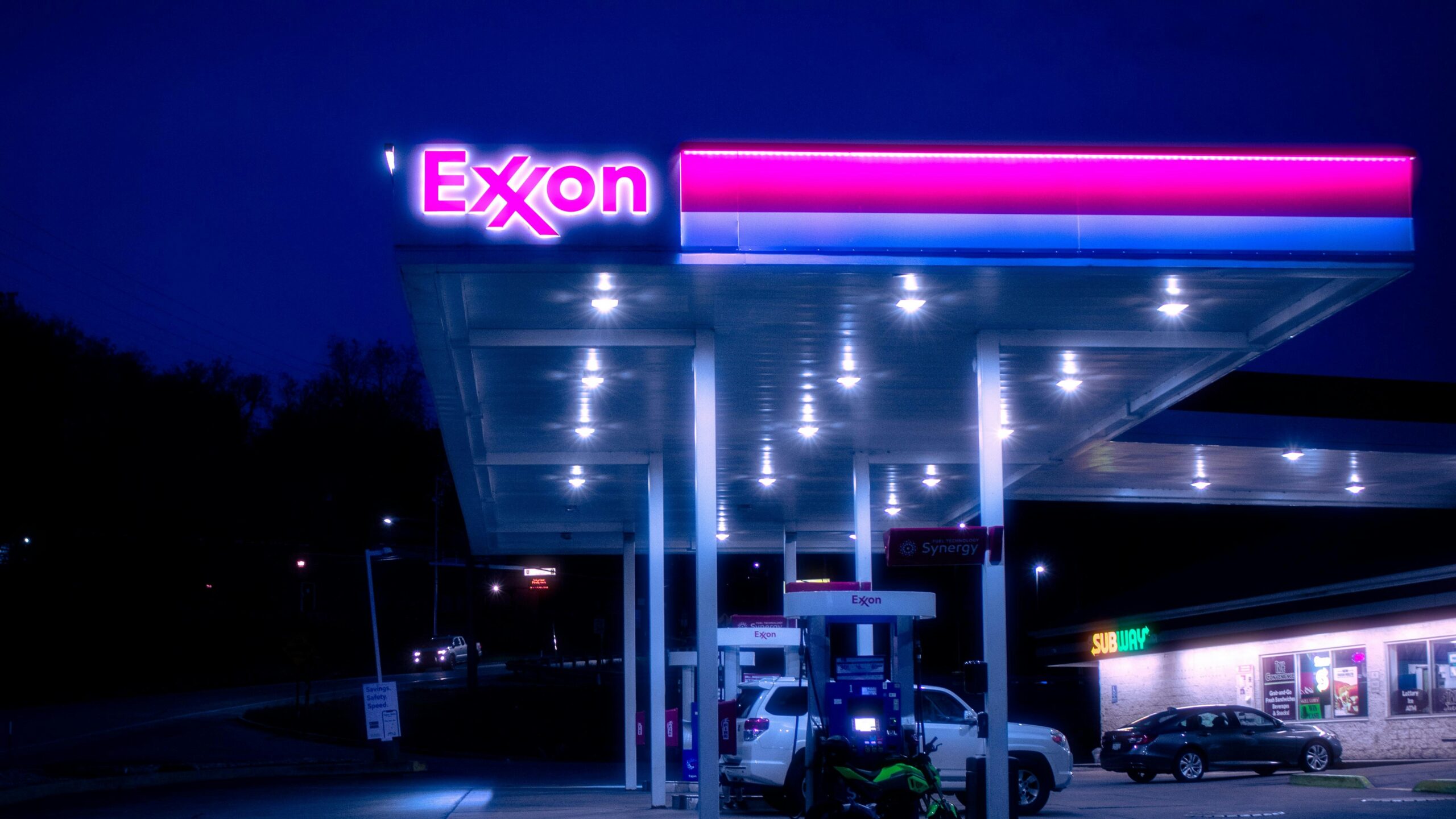
Exxon Mobil reported first-quarter profit of $4.2 billion on May 1, 2026, a 45% drop from the $7.7 billion it earned during the same stretch last year. The company disclosed the results in an 8-K filing with the SEC, and the numbers rattled investors. But for the millions of Americans paying a national average of $4.39 for a gallon of regular unleaded, according to the U.S. Energy Information Administration, the question was blunter: if one of the world’s largest oil companies just lost nearly half its profit, why does a fill-up still cost $60?
A profit drop that isn’t what it looks like
A 45% decline sounds severe. On a GAAP income statement, it is. But the shortfall was driven largely by paper losses on hedging and derivative contracts, not by a collapse in the core business of pumping, refining, and selling oil. The Associated Press reported that mark-to-market timing effects created accounting hits that dragged down reported earnings even as crude prices climbed above levels that typically fatten oil-company margins.
The mechanics work like this: Exxon holds financial contracts designed to manage the risk of price swings. When oil prices moved sharply during the quarter, those contracts lost value on paper, even though the barrels Exxon actually pulled out of the ground and refined were selling at strong prices. Cash kept flowing into the company. The accounting just made it look like it didn’t.
Exxon was not alone. Chevron posted a similar pattern of lower stated earnings despite elevated oil prices, as The Guardian reported. When two of the world’s largest integrated oil companies show the same gap between strong commodity prices and weaker reported profits, the explanation almost certainly lies in market-wide accounting mechanics rather than any single company’s misstep.
Why Wall Street is already looking past Q1
Analysts are treating the first quarter as a timing quirk, not a trend. Multiple institutional forecasts compiled by LSEG (formerly Refinitiv) project that Exxon’s earnings could more than double in Q2 2026, fueled by stronger refining margins, the expected reversal of those same derivative timing effects, and robust fuel demand heading into the summer driving season.
That projection deserves a caveat. Analyst forecasts can shift quickly as oil prices, refining spreads, and geopolitical risks evolve. No company guidance containing a precise dollar figure for Q2 has been published. But the logic is straightforward: if paper losses from Q1 unwind in Q2, and if crude prices hold near current levels, the math points to a significantly fatter bottom line.
Brent crude has traded above $80 per barrel for much of 2026, according to EIA spot price data, a level that historically translates into healthy upstream profits for integrated majors. Refining margins, which measure the spread between crude input costs and the price of finished products like gasoline and diesel, have also remained elevated as global refinery capacity stays tight.
What’s actually behind $4.39 gas
The price at the pump is only loosely connected to any single oil company’s quarterly earnings. Gasoline prices reflect a chain of costs: the global price of crude oil, the cost of refining it, distribution and marketing expenses, and federal and state taxes. According to the EIA, crude oil typically accounts for roughly 50% to 60% of the retail price, with refining, taxes, and distribution splitting the rest.
Several forces have kept that chain expensive in early 2026. Geopolitical disruptions, particularly tensions involving Iran and ongoing instability in key shipping corridors, have tightened global crude supply. OPEC+ production decisions continue to limit how much oil reaches the market. Domestically, U.S. refinery utilization has been strained by maintenance schedules and unplanned outages, reducing the flow of finished gasoline just as spring demand picks up.
The Guardian’s reporting references shipping disruptions and refinery outages as contributing factors. What the available data confirms is that supply has been tight relative to demand, and tight supply means higher prices regardless of what any individual company reports as profit.
The gap between corporate books and your gas bill
This is the tension that makes Exxon’s earnings report politically charged. A 45% profit drop sounds like the kind of number that should translate into cheaper gas. It doesn’t, because the drop was an accounting event, not an operational one. Exxon’s wells kept producing. Its refineries kept running. Global oil prices kept climbing. The only thing that changed was how certain financial instruments were valued on a specific reporting date.
Consumers, understandably, do not parse the difference between GAAP earnings and underlying cash flow. They see a company that made $4.2 billion in three months and wonder why gasoline costs more than it did a year ago. The answer is that Exxon’s profit and your gas price are shaped by overlapping but distinct forces. Crude oil prices, set on global markets, drive both. But derivative valuations, tax timing, and one-off charges can push reported earnings in a direction that has nothing to do with what happens at the pump.
Then there is the shareholder question. Even in a “down” quarter, Exxon continued returning billions to investors through dividends and its massive stock buyback program. The company has repurchased more than $50 billion in shares since mid-2022, according to its SEC filings. For critics, that spending pattern undercuts any claim that high gas prices are simply the result of forces beyond the company’s control. For Exxon, it is standard capital allocation that has nothing to do with retail fuel pricing.
If analysts are right and Exxon’s profit surges past $8 billion next quarter, that gap will become even harder to explain to a public already skeptical of Big Oil. The company will argue, with some justification, that Q1 was artificially depressed and Q2 simply reflects a return to normal. Critics will counter that “normal” for Exxon means billions in profit while families budget around $60 fill-ups.
Three things that will shape the rest of summer
Whether the analyst optimism holds, and whether drivers get any relief, comes down to three variables.
Crude oil prices. If Brent stays above $80, Exxon’s upstream division will print money. If geopolitical tensions ease and OPEC+ loosens output, prices could soften, which would help both corporate earnings comparisons and consumer wallets, though not necessarily at the same pace.
Refining margins. Summer is peak gasoline demand season in the United States. If refinery capacity remains constrained, the spread between crude costs and gasoline prices will stay wide, keeping pump prices elevated even if crude itself dips slightly.
The derivative unwind. The mark-to-market losses that hammered Q1 earnings are expected to reverse as contracts settle or prices stabilize. If they do, Exxon’s Q2 report will look dramatically better on paper, reinforcing the narrative that the profit drop was a timing quirk rather than a sign of weakness.
None of these factors point toward meaningfully cheaper gasoline in the near term. The forces keeping prices high, from tight global supply to strong demand to limited spare refining capacity, are structural, not temporary. Exxon’s quarterly earnings will bounce around with accounting noise, but the cost of driving is set by deeper market realities that one company’s income statement cannot change.