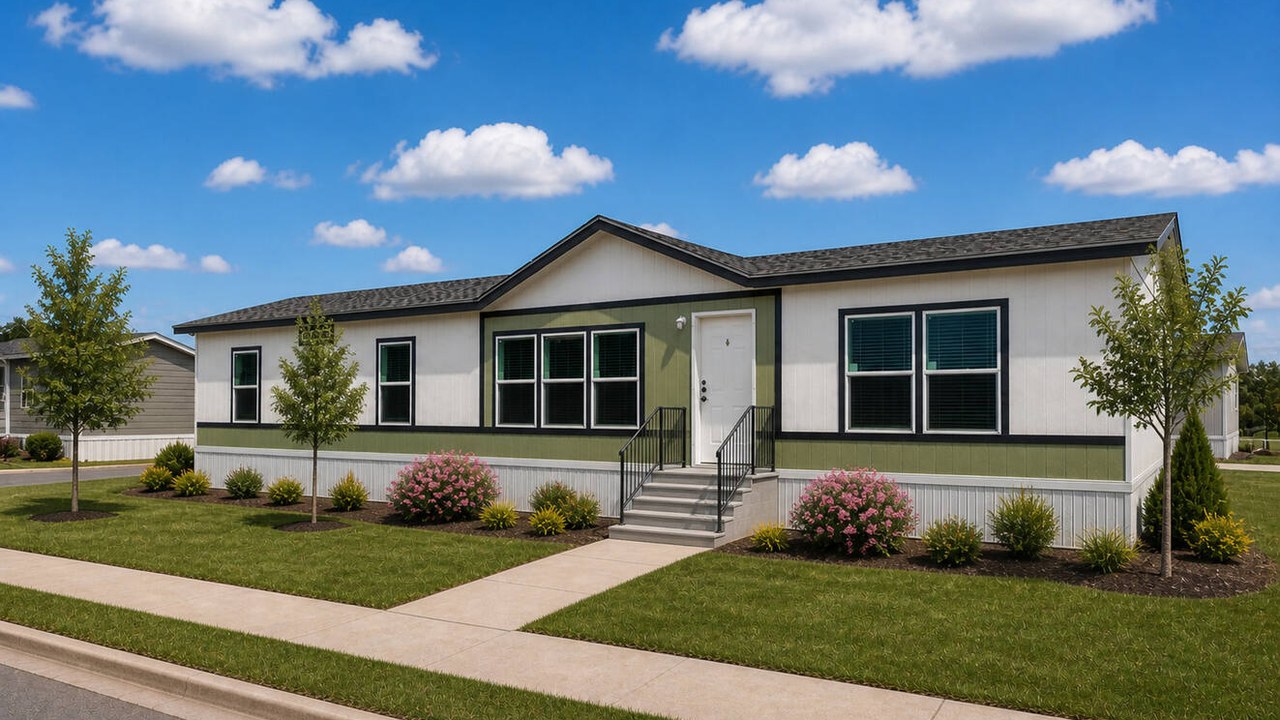
The U.S. Department of Energy has declared the 2022 federal energy-conservation standards for manufactured housing to have “no legal effect,” a step that took effect Sept. 18, 2026. The department acted under a provision of the 21st Century ROAD to Housing Act, and the notice says no federal energy standard for manufactured homes can take effect unless the Department of Housing and Urban Development adopts it. The notice contains no dollar estimate of what the standards cost builders or saved owners.
That absence matters for older homeowners, because the money question here is less about a sticker price than about what a manufactured home costs to heat and cool year after year.
What the Energy Department’s notice actually says
The notice, published in the Federal Register as document 2026-19154, states that the final rule the department issued on May 31, 2022, “establishing energy conservation standards for manufactured housing has no legal effect.” It cites section 301(d)(2)(B) of the 21st Century ROAD to Housing Act, Public Law 119-101, which was enacted July 11, 2026. Audrey Robertson, the Assistant Secretary who signed the notice for the department’s Office of Critical Minerals and Energy Innovation, is the named official on the document; the contact listed for questions is Jeremy Williams of the Department of Energy.
The wording is precise, and so should be its description. The department did not repeal the 2022 rule through a new rulemaking, and it did not weigh costs against benefits in this notice. It recorded that Congress had already stripped the rule of legal force. In the title’s terms, the federal energy standard for new manufactured homes is void, and the requirement it placed on builders is gone.
Who sets the standard now
The same statute shifts the job to HUD. According to the notice, no energy efficiency standard for manufactured homes developed by any federal agency has legal effect unless and until HUD adopts it through its consensus standards and regulatory development process. The notice also describes the law as directing HUD to adopt minimum energy efficiency standards within one year and to update them every three years.
So the change is a handoff and a reset, not a permanent absence of federal energy rules. Until HUD acts, no federal energy standard governs how new manufactured homes are built. What HUD eventually adopts, and what it adds to or subtracts from a home’s cost, is not yet known.
Why no price effect can be stated
Commentary on deregulation often attaches a dollar figure to the change. The notice does not. It publishes no estimate of the savings to manufacturers, no estimate of the effect on the price of a home, and no estimate of how much more or less an owner might spend on utilities. The department’s 2022 rulemaking carried its own estimates, but those were not part of this notice and are not relied on here.
Any claim that this declaration makes a manufactured home cheaper to buy, or costlier to run, therefore goes beyond what the department has published. The accurate statement is narrower: a federal requirement has been withdrawn from effect, and the numbers behind it were left out of the notice.
Running costs are the money question for owners
For a retiree on a fixed income, whether the purchase price moves matters less than the monthly utility bill, which arrives whatever Washington does. Older manufactured homes already in use were never covered by a rule aimed at new construction, so the declaration changes nothing about their existing insulation or equipment. Owners of those homes face the same heating and cooling bills they had before Sept. 18.
Help with those bills exists through the Energy Department’s own program. The Weatherization Assistance Program targets low-income households and gives priority to the elderly, the handicapped and children, with funds flowing to states and tribes by formula. The department’s application guide says the first step is to identify the state weatherization administrator and contact that office, because the program is run at the state and local level and procedures differ by location.
Neither page, as read, spells out income limits or whether a particular manufactured home qualifies. Those answers sit with the state administrator, and an inquiry costs nothing.
What remains unsettled
Two things are still open. HUD has a statutory task of adopting standards through a consensus process, and the content of that standard will determine whether a new home’s energy performance is regulated at all in the years ahead. The notice also leaves the cost question where it found it, with no published figure on either side.
Readers following the story can find the full text of the DOE notice at the Federal Register, where the docket number EERE-2009-BT-BC-0021 and RIN 1904-AC11 identify the original rulemaking. The department’s own statement, not any estimate of savings, is the verified core of the news.
Running Costs of a Manufactured Home After the 2022 Energy Rule Lapsed
The Senior Property Tax & Home-Cost Relief Kit is meant for older homeowners and renters on fixed incomes who face rising property-tax bills, utility bills and repair costs and cannot easily tell which kinds of help exist or where each application stands. It gathers that scattered help into one organized kit.
The Senior Property Tax & Home-Cost Relief Kit is an 11-page kit that lays out the five kinds of property-tax relief and the heating, cooling and home-repair help available to homeowners, and it includes an application log and renewal calendar for keeping track of each request.
Open the heating, cooling and home-repair help for a manufactured home’s yearly bills →
This article was produced with AI assistance and checked against the primary sources linked above.