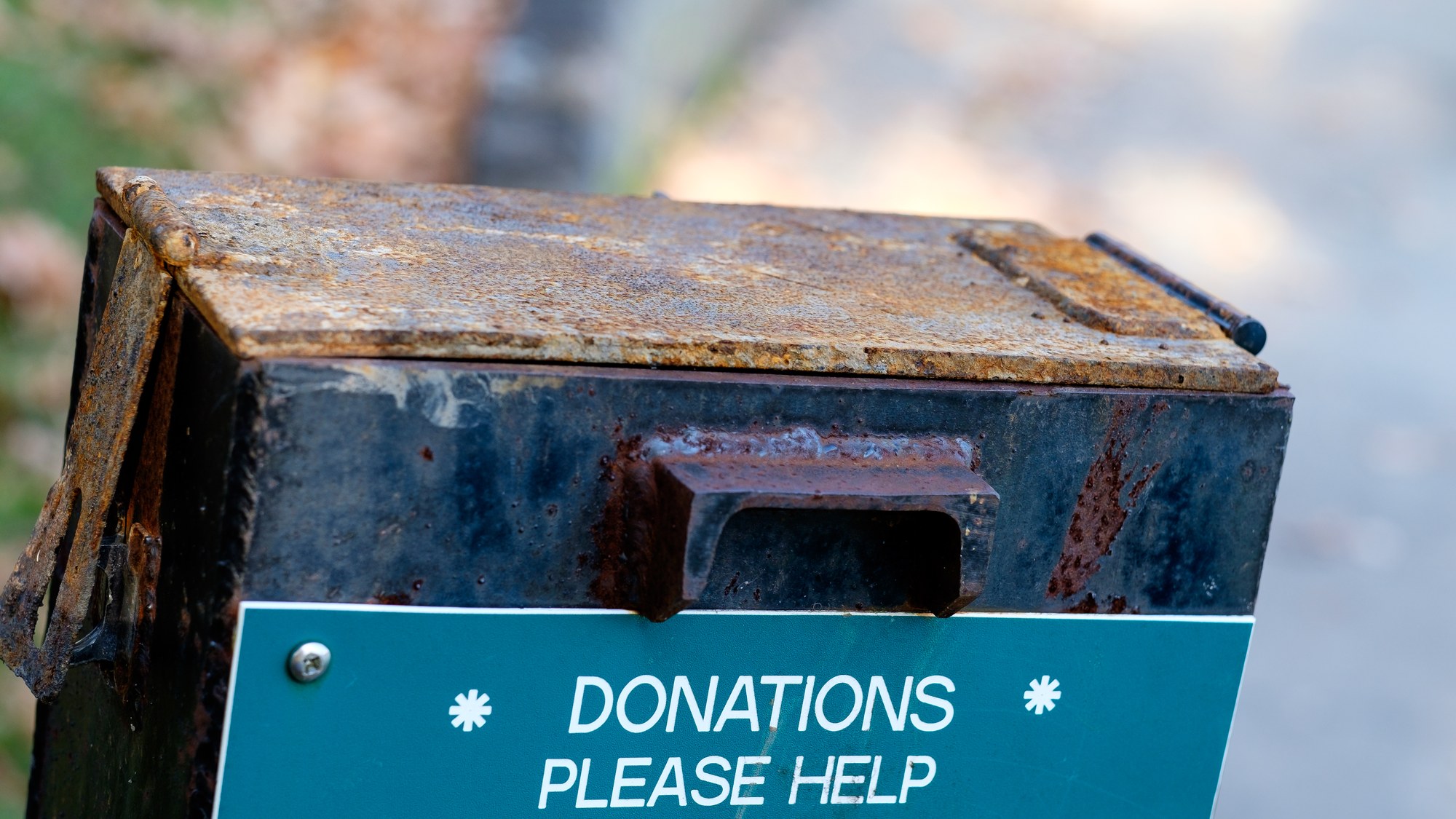
Charity abuse comes in three forms, according to a notice the Financial Crimes Enforcement Network sent to financial institutions on Oct. 30, 2026. The first is the sham charity, an organization that publicly advertises a legitimate purpose while actually serving illicit activity. The other two are charity fraud, where leaders keep donations for themselves, and embezzlement by insiders at real charities. The Treasury Department highlighted the notice, FIN-2026-NTC2, in its Minnesota fraud announcement the same day.
Anyone who gives to charities by check, card, transfer or online, and anyone who answers a fundraising call, is the donor those schemes are built around. The notice describes the victims of charity fraud as donors, “often older adults.” The check that matters for a giver is whether the organization asking is the one it says it is, and whether the state regulator lists it.
Stay ahead of scam news: Miss an enrollment or claim deadline and the money can be gone. Join the Retirement Money Brief and we’ll send you our Scam & Identity-Theft Action Card as a welcome gift.
Get the Brief + the scam action card →
We may earn a commission from links on this page.
Sham charities: a respectable front for illicit money
FinCEN says sham charities “publicly advertise an NPO as serving a legitimate purpose but, in reality, use the NPO for illicit activity.” Its examples include charities secretly controlled by terrorist groups, charities that send funds to or coordinate with terrorist organizations, and charities used to buy political favors. Some donors to such groups know where the money goes and some do not.
The notice names specific designations by the Treasury’s sanctions office involving Hamas, the Popular Front for the Liberation of Palestine and Muslim Brotherhood networks. It also discusses Iranian charitable foundations used for patronage instead of poverty relief. Those cases are the ones the notice ties to terrorist financing.
The notice is clear that the sector as a whole is not the target. It states that “the vast majority of U.S.-based NPOs present a low risk of terrorist financing,” and it tells institutions to evaluate each organization on its own facts. FinCEN counts about 1.96 million registered exempt organizations in the United States as of September 2026, and estimates 2025 charitable contributions at about $617.2 billion.
Fraud and embezzlement take money donors meant for a cause
The second scheme in the notice is plain fraud. Criminals “misuse the NPOs to enrich themselves rather than support an illicit cause or activity,” according to FinCEN. Typical features include few or no real services, money diverted to the lifestyle of the people in charge, and a footprint limited to a P.O. box, a commercial mail receiving agency or a home address.
The notice also describes the misuse of government funds, including child nutrition and homelessness programs, sometimes through “sponsor” arrangements that pay kickbacks. Treasury’s announcement ties the same theme to Minnesota, where it described a federal sentence of 30 years for Salim Said, a co-conspirator in the Feeding Our Future case, which prosecutors say defrauded a child nutrition program of $49 million.
Embezzlement is the third scheme, and in it the charity is itself the victim. The notice says insiders take money from an organization that is operating for legitimate purposes, by moving funds to personal accounts, depositing a donation check into a personal account, creating hidden accounts or fake paperwork, or using contractors that bill for no services.
What FinCEN told banks to look for
The notice stresses that “no single red flag is determinative,” and asks institutions to weigh the whole picture. Several of the warning signs it lists are ones a donor can also see:
- A charity that solicits donations but shows no apparent services and little physical or online presence
- A name that resembles a well-known charity with no affiliation to it
- An organization that is not registered with the appropriate state regulator, or whose legal status cannot be verified
- Officers or signatories with prior fraud convictions
- Spending that does not fit the charity, such as gambling, digital assets or luxury purchases
Institutions that file a suspicious activity report on this activity are asked to include the key term FIN2026NPO. The notice also reports FBI complaint data: over 4,500 fraudulent charity complaints with about $96 million in losses in 2024, and 662 complaints with almost $8 million in losses in 2025.
How a donor can run the same checks
The notice is written for institutions and has no section for consumers. It points to an FTC guide, “Before Giving to a Charity,” which covers the donor’s side. The guide says to search the cause and the charity’s name with words like “complaint” and “scam,” to check curated lists from BBB Wise Giving Alliance and CharityWatch, and to look the charity up in the IRS Tax Exempt Organization Search tool to confirm tax deductibility.
It also says most states require charities and their fundraisers to register with a state regulator, and that donors should check both the fundraiser and the charity against the regulator’s listing, found through the state government list at nasconet.org. Scammers use names that sound like big, well-known charities, the FTC says, so it recommends getting the exact name, website and mailing address and confirming them independently.
Payment method is the last check. The FTC says cryptocurrency, Western Union or MoneyGram wires, payment apps and gift cards are likely signs of a scam, and that credit cards or checks are the safest options. Charity scams can be reported at ReportFraud.ftc.gov and to the state charity regulator.
Is the charity on the state’s list, and does its name match the one on the check?
A charity scam usually ends with a card number, a bank login or a check that leaves the donor’s account. Recurring “donations” and the personal details collected along the way can keep costing money after the first gift.
“Scam-Proof Your Accounts in a Weekend” is a 13-page guide that sets out ten moves in the order that protects the most money first. It shows how to lock bank logins with two-step login, alerts and a verbal password, and how to freeze credit at all three bureaus, free by federal law.
Lock the bank logins and freeze credit with Scam-Proof Your Accounts in a Weekend →
This article was produced with AI assistance and edited for accuracy against the sources linked above.