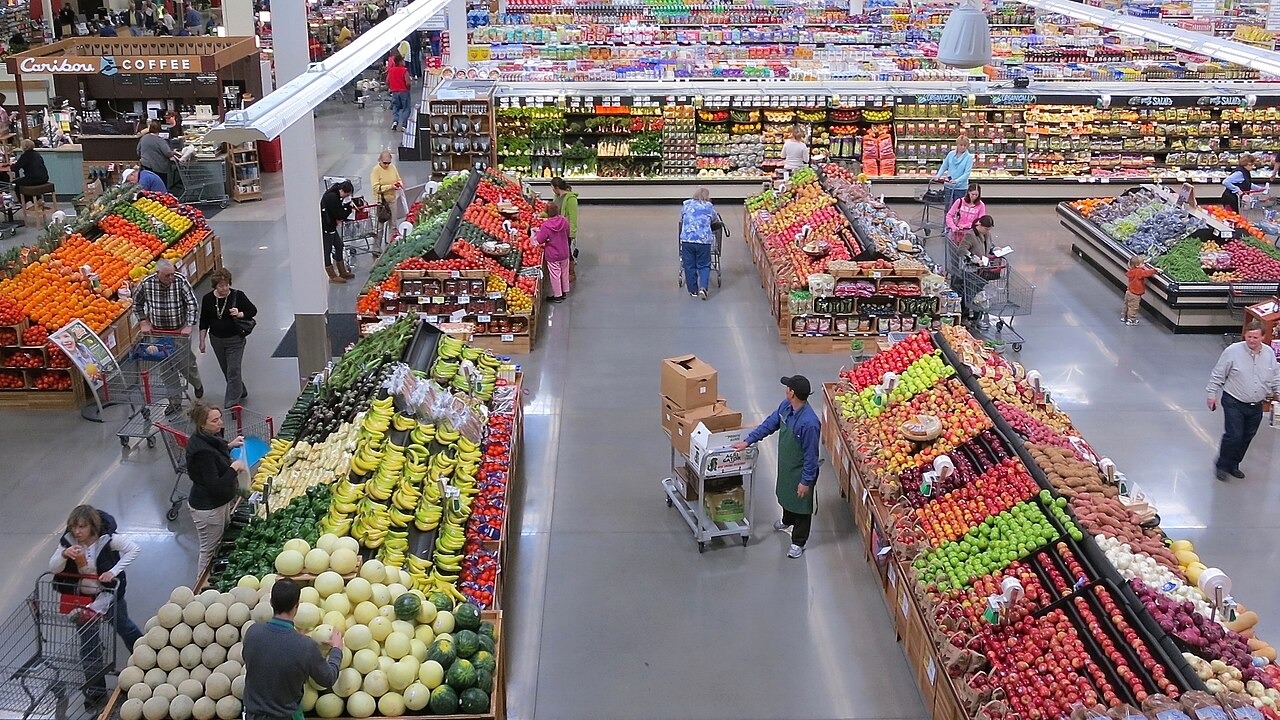
American grocery shoppers are paying measurably more than they were a year ago, and federal forecasters expect the pressure to continue. The Consumer Price Index for food climbed 3.1% over the 12 months ending May 2026, while grocery store prices specifically rose 2.7% in the same period. The USDA Economic Research Service has issued 2026 forecasts projecting additional increases for both food at home and food away from home, raising questions about whether those projections fully account for data disruptions that affected their construction.
Why the 3.1% annual food price increase hits households now
A 3.1% rise in the overall food index means families spending $250 a week on food are effectively paying roughly $8 more per week than they did last spring. For a household on a tight budget, that adds up to more than $400 a year-enough to force trade‑offs on other essentials such as utilities, transportation, or rent. The Bureau of Labor Statistics confirmed the 3.1% figure in its detailed CPI tables for May 2026, which break the food index into two components: food at home and food away from home. Grocery prices, tracked as food at home, rose 2.7% year over year, while restaurant and takeout spending climbed at a faster clip, widening the gap between cooking at home and eating out.
The impact is uneven across income groups. Higher‑income households are more likely to absorb modest grocery increases or shift toward bulk buying and discount retailers. Lower‑income families, who already devote a larger share of their budgets to food, have less room to maneuver. Even when the overall rate of food inflation slows from earlier peaks, the compounding effect of several years of increases leaves prices at a permanently higher plateau. That means a 2–3% annual rise today is landing on top of prior jumps, not replacing them.
Consumers are responding in familiar ways: trading down from national brands to store brands, cutting back on restaurant meals, and stretching ingredients across multiple dishes. But the faster rise in food away from home complicates those choices. When menu prices climb more quickly than grocery prices, the relative savings from cooking at home grow-but only for households that have the time, equipment, and stable schedules to shift their habits. For many workers juggling multiple jobs or caregiving responsibilities, the option to cook more is limited, so they feel the restaurant side of inflation more acutely.
The timing also matters for how policymakers and analysts interpret the trend. If food inflation were decelerating steadily, households might expect some relief ahead. Instead, the current pace suggests a slow grind higher, with the risk that any new shock-such as weather‑related crop damage or supply chain disruptions-could push prices up faster than current projections anticipate.
BLS and ERS data behind the 2026 food inflation forecast
Two federal agencies supply the numbers that define this story. The Bureau of Labor Statistics produces the Consumer Price Index, and its latest headline summary for May 2026 confirmed the 2.7% annual increase for food at home along with narrative detail on which grocery categories drove month‑to‑month changes. Some staples, such as cereals or dairy, may show relatively modest shifts in a given month, while more volatile items like eggs, fresh produce, or meats can swing more sharply and dominate the short‑term pattern consumers notice at checkout.
The Economic Research Service, housed within the USDA, then feeds those CPI readings and related producer price measures into time‑series models to generate an 18‑month rolling forecast of food price movements. According to its public summary findings, ERS identifies broad grocery categories expected to grow faster than long‑run averages through 2026, but it stops short of issuing pointed warnings about any single item. Instead, the outlook highlights ranges for food‑at‑home and food‑away‑from‑home inflation, reflecting both recent data and historical relationships between wholesale and retail prices.
The forecast process is highly sensitive to the most recent data vintage. ERS explains that projections rely on the latest BLS CPI and producer price information available at the time of each monthly release, with following‑year forecasts beginning each July. When a federal shutdown disrupted BLS data releases in 2025, early 2026 ERS forecasts were necessarily built on older CPI readings. If those pre‑shutdown data understated the inflationary momentum already building in key grocery categories, then the initial 2026 projections could be biased slightly downward.
One way to evaluate that risk is to compare realized inflation for food at home with the forecast ranges once the full 2026 CPI record is available. If the actual year‑over‑year increase ends up exceeding the midpoint of the ERS projection by a meaningful margin-say, on the order of 0.8 percentage points or more-that would suggest the data gap introduced a systematic underestimation. On the other hand, if subsequent monthly updates after the shutdown quickly pulled the forecast back in line with reality, the final figures may land comfortably within the original bands.
The July 2026 update will be the first ERS release to incorporate a full half‑year of uninterrupted, post‑shutdown BLS data, offering a clearer read on where grocery prices are actually headed. For households, the technical debate over forecast bias will matter less than the practical question of whether their weekly bills keep climbing. But for policymakers and analysts, understanding how data disruptions ripple through official models is critical to judging whether current projections are a floor, a ceiling, or a best‑guess path for food costs in the year ahead.