A round-trip flight from Fort Lauderdale to Detroit on Spirit Airlines used to run as low as $78 in the off-season. This spring, the same route on Frontier Airlines starts closer to $100. Multiply that shift across more than 100 city pairs, and you begin to see what Spirit’s disappearance actually costs the travelers who relied on it most.
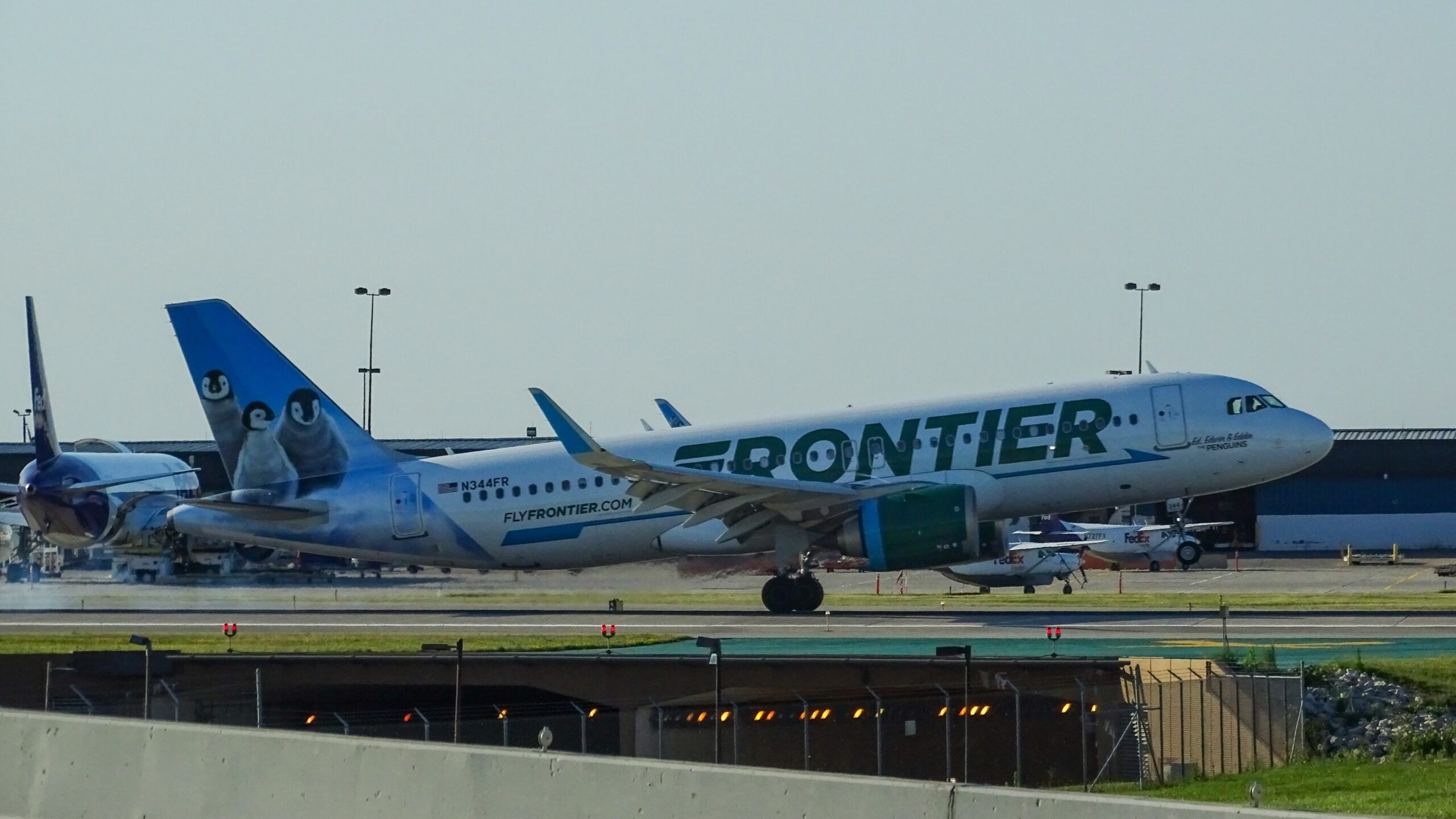
Frontier moved aggressively after a bankruptcy court authorized Spirit’s liquidation late last year, launching service on a wave of routes the defunct carrier left behind. By May 2026, Frontier had filed schedules on well over 100 former Spirit city pairs, according to publicly available schedule data tracked by aviation monitoring services. On many of those corridors, Frontier is now the only ultra-low-cost option.
But early fare comparisons tell a consistent story: base fares on those routes are running roughly 15% to 20% above what Spirit had charged for comparable service. That estimate is based on publicly searchable booking data and fare-tracking tools rather than a single official dataset. The Bureau of Transportation Statistics, which tracks average ticket prices at the point of purchase, will not publish quarterly figures covering this period until later in 2026.
In dollar terms, the gap may look small. On routes where Spirit once sold base fares for $30 or $40 one-way, a 15% to 20% increase means an extra $5 to $8 per ticket. But for families booking four or five seats, or for the price-sensitive leisure travelers who built entire vacation habits around Spirit’s rock-bottom pricing, those dollars add up across every trip.
How Spirit’s exit reshaped the budget market
Spirit did not fade out gradually. The airline fought through months of bankruptcy proceedings before a judge ruled that liquidation, not reorganization, was the only viable path. Its fleet, gate leases, and route authority were broken up and sold rather than transferred intact to a successor carrier. No single airline inherited a ready-made network.
The human cost was severe. Thousands of Spirit employees lost their jobs as the carrier wound down, including pilots, flight attendants, mechanics, and ground crews. Some have since been hired by Frontier and other airlines expanding to absorb freed-up routes and labor, but many others faced prolonged job searches in a tight aviation labor market.
Frontier, already Spirit’s closest competitor in the ultra-low-cost segment, was best positioned to fill the vacuum. The Denver-based carrier concentrated its expansion on leisure-heavy markets in Florida, the Caribbean corridor, and mid-size cities across the South and Midwest where Spirit had often been the only nonstop budget option. The exact count of routes Frontier absorbed has not appeared in a single company press release; the “100-plus” figure reflects schedule filings tracked by industry data providers and confirmed by multiple aviation trade outlets.
The speed of that expansion was impressive. Whether it translates to the same low fares is a different question. Without Spirit in the market applying downward pressure, Frontier has less incentive to match the rock-bottom prices that defined its former rival.
Why fares are climbing on these routes
The pattern is well established in federal research. The Government Accountability Office and the Department of Transportation have repeatedly found that average fares rise when a low-cost carrier exits a market, particularly on routes with limited alternative service. The DOT’s domestic airline fares consumer report, which publishes quarterly data, has documented this dynamic across multiple airline exits over the past two decades.
The core dynamic is straightforward: when Spirit was flying a route, every other airline on that route faced pressure to keep fares in check. Remove that pressure, and the pricing floor rises, even if another budget carrier steps in, because a single competitor has less reason to race to the bottom than two competitors do.
Several factors are compounding the effect on former Spirit routes:
- Reduced competition: On many city pairs, Spirit was one of only two or three carriers offering nonstop service. With Spirit gone, Frontier may be the sole budget option, giving it considerably more pricing power.
- Launch costs: Standing up service on more than 100 routes simultaneously involves aircraft repositioning, crew base adjustments, and marketing expenses. Airlines typically price early flights on new routes higher to offset those costs.
- Demand concentration: Spirit carried tens of millions of passengers in its last full operating year. That demand did not vanish. It shifted to remaining carriers, and when available seats are scarcer relative to demand, prices rise.
Frontier has not publicly detailed its pricing strategy on the acquired routes or indicated whether the higher fares reflect a temporary launch phase or a longer-term market reset.
The airports feeling it most
The impact is landing unevenly. Airports where Spirit held significant market share are absorbing the biggest shifts.
Fort Lauderdale-Hollywood International, Spirit’s largest hub for years, had built terminal capacity and passenger throughput around the carrier’s presence. Orlando, Las Vegas, and a string of mid-size airports in cities like Myrtle Beach, South Carolina, and Aguadilla, Puerto Rico, also depended on Spirit for a large share of their low-fare traffic.
For these airports, the question is not just whether Frontier fills Spirit’s old gates but whether it fills them at the same volume. Higher fares tend to suppress demand at the margins. Some travelers who once flew Spirit for a $50 weekend trip may drive instead, skip the trip entirely, or piece together connecting itineraries on other carriers. That behavioral shift matters for local tourism economies, hotel occupancy, and airport concession revenue.
JetBlue, which has a large presence at Fort Lauderdale, has picked up some of the slack on overlapping routes, and Allegiant has added frequencies at several smaller airports. But neither carrier operates the same breadth of point-to-point service that Spirit once did, and neither prices as aggressively on base fares as Spirit routinely did.
What budget travelers can do right now
Passengers who depended on Spirit’s pricing model are not out of options, but they need to adjust their approach:
- Compare across carriers, not just Frontier: JetBlue, Allegiant, Avelo, Breeze, and even the major airlines occasionally undercut Frontier on specific routes, especially during fare sales. Google Flights and fare-tracking tools like Skiplagged make route-level comparisons fast.
- Book early and watch for sales: Frontier tends to offer its lowest fares well in advance of departure. Waiting until the final week almost always costs more on budget carriers.
- Check nearby airports: If your home airport lost Spirit service and Frontier’s replacement fare feels steep, a short drive to a larger hub may open up cheaper options on competing airlines.
- Factor in the full cost: Ultra-low-cost carriers charge separately for carry-on bags, seat assignments, and other extras. A slightly higher base fare on a legacy carrier that includes a carry-on could end up cheaper once all fees are totaled.
Whether Frontier’s fare premium on former Spirit routes will stick or soften by late 2026
The 15% to 20% fare increase on former Spirit routes is an early-stage estimate, not a final verdict. Some routes may settle closer to Spirit-era pricing as Frontier optimizes its schedules and competitors adjust capacity. Others, particularly corridors where Frontier now operates as the only budget carrier, could see prices drift higher still.
What is already clear is that Spirit’s disappearance removed a powerful force that had pulled fares down across dozens of markets for more than a decade. Frontier stepped into the gap faster than any other airline, and for travelers on those routes, that means a nonstop option they might otherwise have lost entirely. But “nonstop” and “cheap” are no longer the same guarantee they were when Spirit was still flying. For millions of budget-conscious travelers scanning booking screens this summer, that difference is impossible to miss.