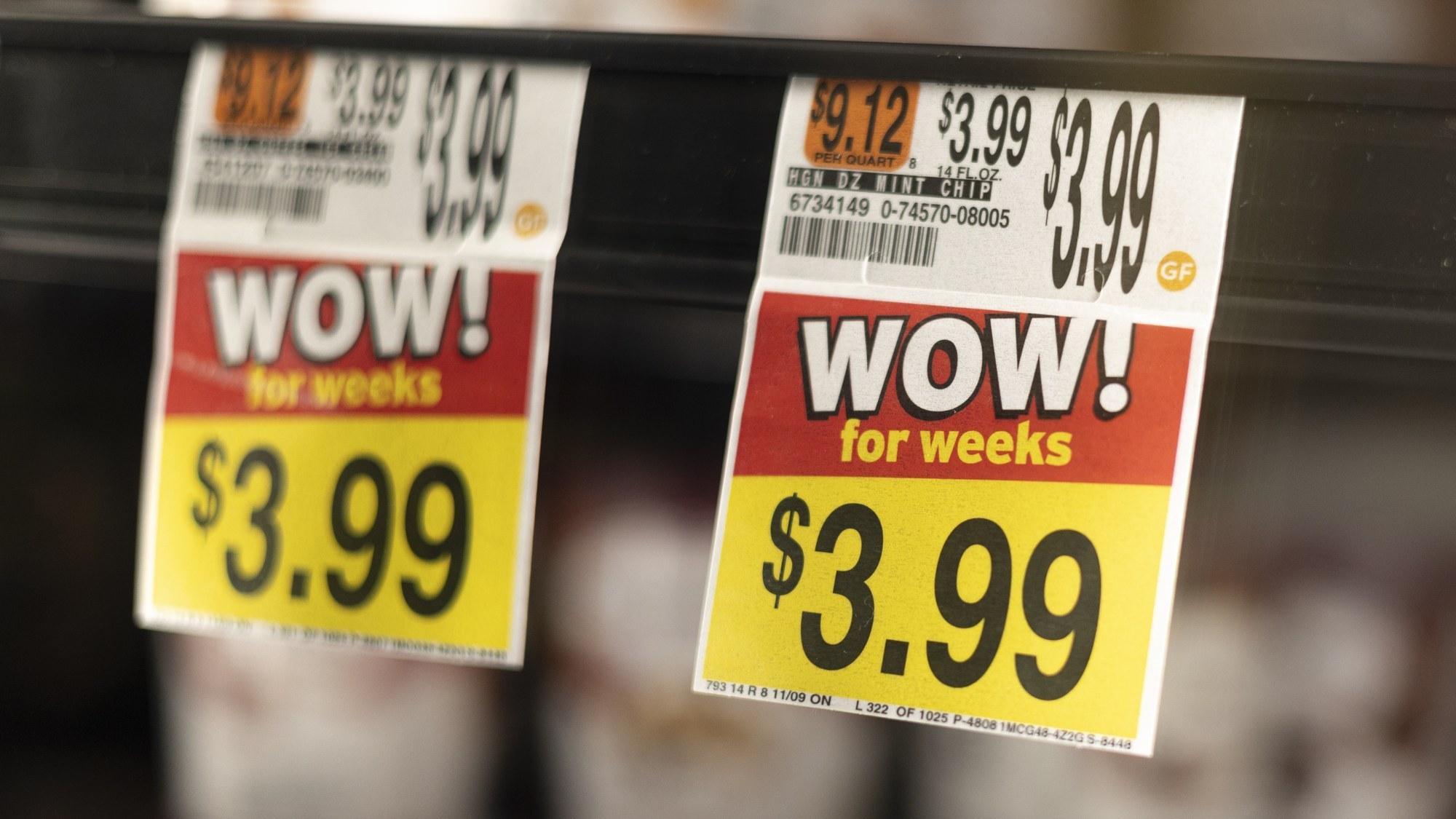
The ground beef for your Memorial Day cookout costs $6.70 a pound. The gas to get to the store runs about $4.53 a gallon. And if you bought a home in the past year, your 30-year fixed mortgage rate is sitting near 6.46%, more than double the sub-3% deals lenders were handing out in early 2022.
Each of those prices tells its own story. Together, they tell a bigger one: American households are caught in a cost-of-living squeeze that forces daily trade-offs between the grocery cart, the gas tank, and the monthly housing payment.
Grocery aisle: ground beef as a bellwether
The $6.70-per-pound figure comes from the Bureau of Labor Statistics’ average price series for all uncooked ground beef, one of the federal government’s longest-running retail food trackers. BLS field agents collect prices at stores nationwide, standardize them by weight, and publish a U.S. city average each month under a methodology that has been in place for decades.
That same series showed ground beef averaging around $4.85 a pound in early 2020, before pandemic-era supply chain chaos and a prolonged contraction in the U.S. cattle herd pushed prices on a steady climb. A roughly 38% increase over six years has turned a weeknight staple into a line item some families actively budget around, swapping in chicken thighs or canned beans when the per-pound price crosses their comfort zone.
Regional gaps are significant. Shoppers in the Northeast and along the West Coast typically pay above the national average, while parts of the Midwest and South run lower. The BLS number is a useful benchmark, but it will not match every receipt.
Trade policy adds another layer of uncertainty. Tariffs on imported goods have raised input costs across the food supply chain, and any further escalation could push grocery prices higher still. The USDA’s Food Price Outlook has flagged beef and veal as categories facing above-average price pressure heading into summer 2026.
At the pump: geopolitics meet the gas tank
The U.S. Energy Information Administration’s weekly retail gasoline survey, which includes all applicable taxes, pegged regular unleaded at about $4.53 a gallon in early May 2026. AAA’s daily Fuel Gauge Report recorded a nearly identical $4.54 during the same window.
That price reflects more than simple supply and demand. Refinery maintenance season and the annual switchover to costlier summer-blend gasoline have added seasonal upward pressure. Fuel analysts have also pointed to conflict-driven supply risks in major oil transit corridors as a factor keeping wholesale crude costs elevated, though the extent of the impact remains debated.
For a household running two cars and burning roughly 100 gallons a month, the gap between today’s price and the $2.60-per-gallon average that prevailed in early 2020 adds up to nearly $200 a month in extra fuel costs alone. That money has to come from somewhere. For many families, it comes out of restaurant meals, vacation plans, or contributions to a savings account.
Geopolitical uncertainty also makes forecasting difficult. If global supply disruptions ease, prices could retreat. If they worsen, $5-a-gallon gas is not out of the question in high-cost states like California and Washington that already sit well above the national mean.
Mortgage rates: the slow-burn squeeze
The 30-year fixed rate near 6.46% is consistent with recent readings from Freddie Mac’s Primary Mortgage Market Survey, the industry’s standard benchmark. While the precise weekly figure moves around, rates have hovered in the 6.3% to 6.7% range for much of 2026, reflecting a Federal Reserve that has kept its policy rate higher for longer than many borrowers hoped.
The math hits hard. On a $350,000 loan, a 6.46% rate produces a monthly principal-and-interest payment of roughly $2,200. At the 2.65% rate available in January 2021, that same loan cost about $1,415 a month. The $785 monthly difference, nearly $9,400 a year, prices out a significant share of first-time buyers and discourages existing homeowners from selling, since moving means surrendering a lower locked-in rate.
Renters feel the pressure indirectly. Landlords financing properties at today’s rates need higher rents to cover their costs, and the shortage of homes listed for sale keeps demand in the rental market elevated. The result is a housing market where both buying and renting consume a larger share of household income than they did just a few years ago.
What the numbers miss
Stacking beef, gas, and mortgage figures side by side paints a vivid picture, but an incomplete one. No single government report bundles these three categories into a unified household cost estimate. The Consumer Price Index tracks hundreds of goods and services, yet it does not isolate this specific trio in a way that maps neatly onto a family’s monthly bank statement.
Costs also interact in ways that national averages obscure. Higher diesel prices raise the cost of trucking beef from processing plants to grocery shelves. Elevated mortgage rates push would-be buyers into the rental market, tightening supply and lifting rents. Tariffs ripple through both food and energy supply chains in ways that vary by region. These dynamics play out differently in Denver than in Detroit.
Income matters, too. The BLS reported that median usual weekly earnings for full-time workers reached $1,192 in the first quarter of 2026, a nominal increase from a year earlier. Whether that wage growth keeps pace with rising costs depends heavily on a household’s specific spending mix. A single commuter with a long drive absorbs the gas spike very differently than a remote worker whose biggest expense is a mortgage payment locked in at 2021 rates.
How to track these costs yourself
For families trying to gauge where they stand, the most reliable tools are the primary data sources behind these numbers. The BLS average price series publishes updated food costs monthly. The EIA’s weekly gasoline survey tracks pump prices in near-real time. And Freddie Mac’s mortgage survey, released every Thursday, offers the closest thing to an official borrowing-cost benchmark.
None of those dashboards will lower anyone’s grocery bill or shrink a car payment. But checking the raw data regularly is the fastest way to spot whether prices are actually moving or whether a headline is just recycling last month’s number with a new spin. Ground beef at $6.70, gas above $4.50, and mortgage rates north of 6% are not temporary blips. They reflect structural shifts in food supply, energy markets, and monetary policy that are likely to define household budgets well beyond this summer.