If you have been waiting for lower mortgage rates, cheaper car payments, or some breathing room on your credit card balance, Kevin Warsh has a message: keep waiting.
The Senate is expected to confirm Warsh as the next chair of the Federal Reserve as early as the week of May 11, 2026, making him the first person to win the job without a single vote from the opposing party in the Banking Committee’s history, according to Senator Elizabeth Warren. And based on what Warsh told senators during his confirmation hearing on April 21, he has no intention of lowering the federal funds rate this year.
That rate currently sits at 4.25 to 4.50 percent. It sets the floor for what banks charge each other overnight, and it ripples outward into virtually every consumer borrowing cost in the country. The 30-year fixed mortgage rate was hovering near 6.8 percent as of early May 2026, according to Freddie Mac’s Primary Mortgage Market Survey. Credit-card APRs, which move almost in lockstep with the fed funds rate, remain near record highs. A Fed chair who is openly reluctant to ease policy removes one of the few forces that could push those numbers meaningfully lower before 2027.
A party-line first
Warsh, 55, served as a Fed governor from 2006 to 2011, a tenure that spanned the worst of the financial crisis. He later became a Distinguished Visiting Fellow at Stanford University’s Hoover Institution. The White House transmitted his nomination to the Senate in March 2026, putting him forward for both a four-year term as chair and a 14-year seat on the Board of Governors beginning February 1, 2026. That dual appointment would give him an unusually long institutional runway, shaping rate policy, financial stability decisions, and bank supervision well into the 2030s.
He replaces Jerome Powell, whose term as chair expired in early 2026.
In his prepared testimony, Warsh told the Banking Committee that “monetary policy independence is essential” and cast the Fed as an institution that must resist short-term political demands. He also argued that elected officials expressing views on interest rates does not, by itself, threaten what he called “operational independence.”
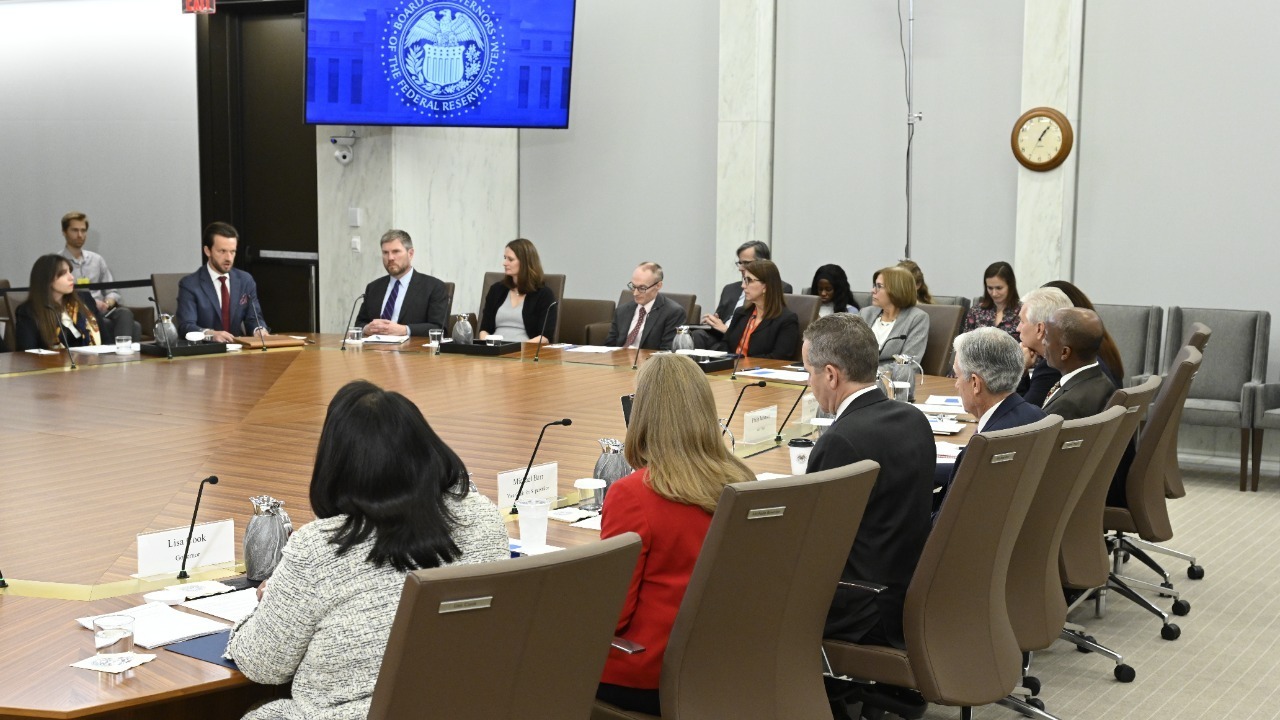
The committee advanced his nomination on a straight party-line vote. Warren, the panel’s top Democrat, said no Fed chair nominee had ever cleared the committee without at least some bipartisan support in the modern era. She warned that a strictly partisan process risks damaging the Fed’s credibility with both financial markets and the public.
Majority Leader John Thune has since filed cloture on two executive calendar items covering Warsh’s chair and board member slots, according to notices from the Senate’s Periodical Press Gallery. A schedule circulated by the Senate Democratic Caucus lists floor votes on those cloture motions for May 11. With Republicans controlling the chamber and no GOP senator publicly signaling opposition as of late May 2026, a unified majority would be sufficient to invoke cloture and confirm Warsh on simple majority votes.
What Warsh told senators about rate cuts
Warsh never said the words “no rate cuts in 2026.” He did something more deliberate. Line by line, he built a case for holding the current policy stance: he stressed the danger of easing too early, warned that loosening before inflation is convincingly tamed could reignite price pressures, and described no scenario under which he would favor lowering rates this year.
The signal was about as clear as a central banker gets without writing it on a whiteboard.
His caution has a factual anchor. While headline inflation has cooled from its 2022 peak, core measures of price growth have proven stubborn, and the Fed’s preferred gauge, the personal consumption expenditures price index, has remained above the 2 percent target. Warsh’s argument, in essence, is that the last stretch of disinflation is the hardest, and cutting rates prematurely could undo progress that took years of tight policy to achieve.
That said, there is a gap between a strong signal and a binding commitment. Economic conditions can shift fast. A sharp rise in unemployment, a financial shock, or a sustained drop in inflation readings could force any Fed chair to reconsider. Warsh’s testimony sketched a philosophy, not a contract. Calling it “ruling out” cuts is reasonable shorthand for the restrictive bias he conveyed, but it reflects the direction of his stance rather than an ironclad pledge.
Why the independence question matters beyond Washington
Warsh’s framing of Fed independence drew some of the sharpest exchanges at the hearing, and the stakes extend well beyond Beltway protocol.
When a central bank is seen as politically captured, bond investors demand higher yields to compensate for the risk that rate decisions will be timed to election cycles rather than economic fundamentals. That premium flows directly into mortgage rates, corporate borrowing costs, and, eventually, the prices consumers pay. It is one reason why Fed independence is not just an abstract governance principle; it is a pocketbook issue.
Warsh tried to thread a needle. By distinguishing between the Fed’s legal independence and the reality that presidents and lawmakers routinely comment on rate decisions, he acknowledged something that has been true for decades: from Lyndon Johnson leaning on William McChesney Martin to Donald Trump publicly berating Powell, political pressure on the Fed is nothing new.
Critics, including Warren, argue that explicitly blessing that commentary could, over time, soften the boundary between opinion and influence, particularly if a future White House pushes aggressively for cheaper borrowing ahead of an election. The party-line committee vote amplifies those concerns. If Warsh is confirmed without a single Democratic vote, he will carry a partisan stamp that, according to Warren, no predecessor has borne.
Whether that label fades quickly or lingers will depend on his early decisions: how he communicates with markets, how he handles dissent within the Federal Open Market Committee, and whether he visibly resists any pressure to time policy moves to political calendars.
How the confirmation could reshape borrowing costs through summer 2026
The confirmation vote itself will set the tone. A narrow, strictly party-line result would deepen the politicization narrative Warren has warned about, potentially nudging bond investors to price in a small credibility discount on the new chair. Even a handful of crossover votes could modestly shore up the Fed’s nonpartisan image and steady market expectations for rate stability. Either way, the margin will be the first concrete data point markets use to judge how much political baggage Warsh carries into the job.
If Warsh is seated in time for the June FOMC meeting, he would chair his first policy-setting session with fresh economic data in hand. Traders will parse every word of the post-meeting statement for any shift from the hold-steady posture he outlined in April. A hawkish hold would reinforce the message from his testimony. Any hint of flexibility would move bond markets fast, repricing rate expectations and dragging mortgage quotes along with them.
Underlying all of it is the incoming data on inflation and employment through early summer 2026. Warsh built his case for caution on the inflation risks he sees today. If the Consumer Price Index and PCE readings continue to cool, or if the labor market weakens noticeably, the pressure to revisit that stance will grow regardless of what he signaled during confirmation. The data will ultimately have more power than any hearing transcript.
For now, the most likely outcome is that Warsh is confirmed next week, takes office with a clear preference for keeping rates where they are, and faces immediate tests of the independence framework he described under oath. If you have been budgeting around the hope of lower rates in 2026, it is time to adjust the plan.