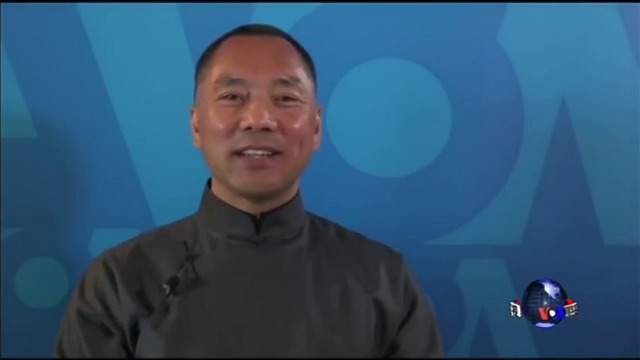
A federal judge in Manhattan sentenced Ho Wan Kwok, the self-exiled Chinese businessman known as Miles Guo, to 30 years in prison for running a fraud operation that, according to prosecutors, solicited more than $1 billion from victims through fake digital-asset offerings, media ventures, and membership programs. The court also imposed a forfeiture order of $889 million, covering assets that included a New Jersey mansion and a luxury vehicle. The sentence caps a prosecution that began with Guo’s arrest in 2023 and moved through a jury conviction on racketeering conspiracy, securities fraud, wire fraud, and money laundering charges.
Why a 30-year sentence reshapes the risk calculus for crypto solicitations
The prison term is among the longest ever imposed in a cryptocurrency-related fraud case in the United States. Guo built a large online following among Chinese diaspora communities by positioning himself as a dissident voice against Beijing. Prosecutors argued he exploited that political credibility to pitch unregistered investment products, then funneled the proceeds into personal spending. The scheme did not rely on anonymous blockchain transactions alone; it used branded entities, live-streamed appeals, and organized membership structures to pull in funds at scale.
That combination of political messaging and financial solicitation is what makes the outcome significant for regulators. The SEC had already flagged the pattern in 2021 when it charged media affiliates with illegal offerings of stock and digital assets. The criminal case that followed extended the government’s theory from unregistered offerings to outright fraud, and the jury agreed. If the sentence and forfeiture hold on appeal, they establish a clear benchmark: political exile status does not shield promoters from full-scale federal prosecution when the underlying offerings are fraudulent.
For crypto promoters and online influencers, the case underscores that intent and use of proceeds matter as much as registration status. Prosecutors emphasized that investor funds were diverted to luxury goods, real estate, and personal services instead of being deployed into the ventures that Guo touted. The 30-year term, paired with nearly $900 million in forfeiture, signals that courts are prepared to treat large-scale digital-asset schemes on par with traditional securities fraud in both charging decisions and sentencing outcomes.
Charges, co-defendants, and the dollar figures prosecutors proved
Guo was convicted on all counts after a trial in the Southern District of New York. U.S. Attorney Damian Williams stated after the verdict that the jury’s finding proved the fraud beyond a reasonable doubt, according to the post-trial statement from his office. The case named two co-defendants: Kin Ming Je, also known as William Je, described as Guo’s financial advisor, and Yanping Wang, also known as Yvette, who worked closely with him on several of the entities at the center of the scheme.
The dollar amounts cited by prosecutors and regulators differ in scope but overlap in substance. The DOJ characterized the scheme as having solicited more than $1 billion from victims through a mix of purported investment clubs, digital tokens, and media-related offerings. The SEC’s parallel civil complaint, filed in 2023, described unregistered and fraudulent offerings that raised more than $850 million. The gap likely reflects different measurement windows and legal standards: the criminal indictment captured a broader set of solicitations and victim losses, while the SEC complaint focused on specific instruments that met its definition of securities. Both agencies agreed that funds were misappropriated for personal use rather than invested as promised.
Guo was initially arrested in March 2023 on charges that laid out the architecture of the conspiracy. Prosecutors described a web of entities and offerings, including membership-based groups that promised access to exclusive investment opportunities and a digital token that was marketed as a gateway to future wealth. Investors were told that their money would back media platforms, blockchain projects, and financial products designed to challenge the Chinese government and empower dissidents. Instead, according to trial evidence, substantial portions of the capital went to a 50,000-square-foot New Jersey mansion, a yacht, luxury cars, and designer goods.
The sentencing materials highlighted victim impact statements from individuals who said they had emptied retirement accounts or borrowed heavily to participate in Guo-linked offerings, believing they were supporting a political cause as well as securing their financial futures. That blend of ideological appeal and profit promise made the losses especially acute. The court cited the scale of the harm, the sophistication of the scheme, and Guo’s leadership role in imposing the 30-year term.
Implications for regulators, platforms, and investors
The case is likely to inform how regulators and law enforcement approach future investigations that sit at the intersection of politics, social media, and finance. For agencies like the SEC and DOJ, Guo’s conviction reinforces the value of coordinated civil and criminal actions that track the same pool of investor funds from marketing pitch to end use. For platforms that host fundraising campaigns and influencer content, the outcome may prompt closer scrutiny of high-yield offerings tied to political movements or exile figures.
For individual investors, the Guo sentence serves as a cautionary marker: alignment with a cause, diaspora identity, or opposition to an authoritarian state does not substitute for due diligence on where money is actually going. The Manhattan court’s willingness to impose a decades-long prison term and sweeping forfeiture order suggests that when political branding is used to mask old-fashioned embezzlement, prosecutors will treat it not as a gray area of speech, but as a straightforward financial crime.