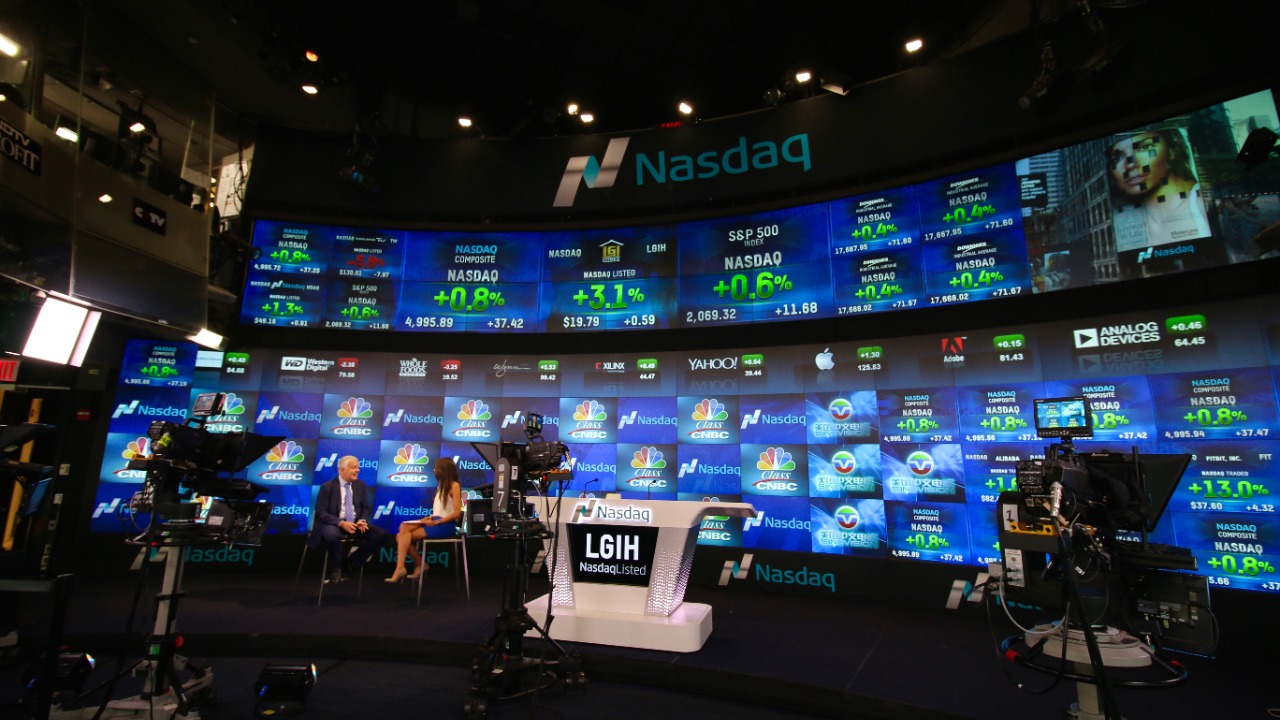
The Nasdaq Composite closed 2025 at 23,241.99, finishing the year with a 20.4% gain and extending a rally that was driven far more by artificial intelligence spending than by a broad rise across the entire technology sector. Even with some weakness in the final trading session, the index still turned in one of its stronger annual performances of the past decade, powered mainly by the companies supplying the chips, networking gear, cloud capacity, and software tied to the AI buildout.That distinction matters. The Nasdaq did not climb because every corner of the market suddenly accelerated at the same time. It climbed because investors kept directing money into a relatively concentrated group of companies that looked best positioned to benefit from surging demand for AI infrastructure. By year end, the market’s winners were clear: semiconductor leaders, large cloud platforms, and a handful of firms seen as essential to how AI systems are trained, deployed, and sold to businesses.The result was a year that looked strong on the surface but was also defined by concentration. A narrow leadership group accounted for an outsized share of the index’s performance, which means the rally reflected real conviction in AI’s commercial potential while also leaving the benchmark more dependent on a few dominant names than many investors would prefer. That tension, between technological promise and market concentration, shaped nearly every major move in the Nasdaq throughout 2025.
A year-end gain built on one dominant theme
According to the Federal Reserve Bank of St. Louis data series for the Nasdaq Composite, which uses Nasdaq market data, the index closed at 23,241.99 on December 31, 2025. Year-end market reports from the Associated Press and Reuters likewise put the Nasdaq’s full-year gain at about 20.4%.That return did not come out of nowhere. Investors spent the year rewarding companies that could show a direct financial link to AI demand, whether through chip sales, cloud revenue, software subscriptions, or the hardware needed to connect vast data centers. What had started as a market obsession in earlier years turned into a more concrete earnings story in 2025. The companies at the center of the rally were no longer being valued only on future potential. They were increasingly being judged on real orders, real capital expenditures, and real customer adoption.In that environment, the Nasdaq became a reflection of how strongly Wall Street believed that AI spending would continue. If the market thought businesses were still willing to pour money into model training, inference, and enterprise AI tools, the index moved higher. If doubts surfaced about valuations or the durability of that spending, pressure showed up quickly, especially in the largest names. The year’s performance was impressive, but it also came with a clear message: the market was pricing AI as the primary engine of tech growth.
Nvidia remained the market’s clearest AI barometer
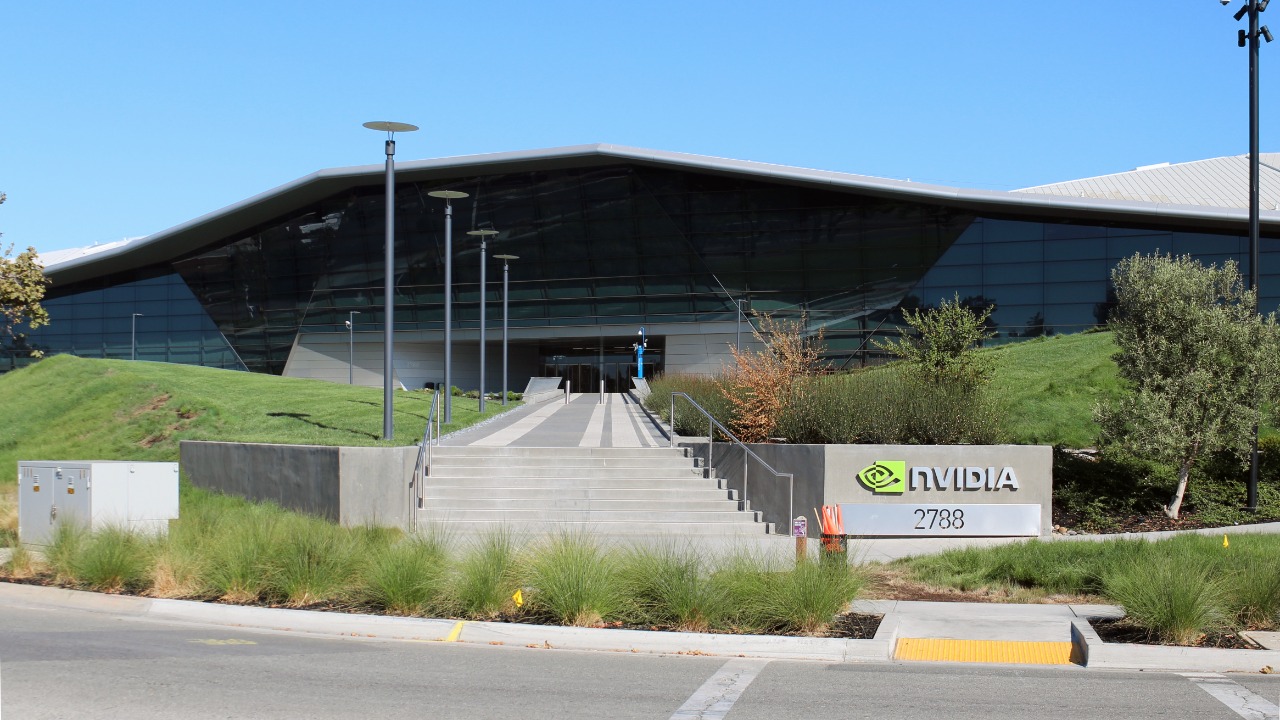
No company carried more weight in that story than Nvidia. In its annual report for the fiscal year ended January 26, 2025, the company said gross margin increased in part because of a higher mix of data center revenue, underscoring how heavily its business had shifted toward AI-related demand. That single detail captured why investors treated Nvidia as more than just another chip stock. It had become the market’s most visible indicator of whether the AI buildout was still accelerating.Throughout 2025, Nvidia’s results were closely watched not just for headline revenue growth but for what they implied about the broader tech economy. Orders for advanced accelerators, supply updates around packaging and memory, and commentary on customer demand all fed directly into sentiment across the Nasdaq. If Nvidia was strong, investors tended to assume the AI spending cycle remained healthy. If any weakness appeared, traders immediately started asking whether the broader theme had moved too far, too fast.The company’s risk disclosures also served as a reminder that the optimism was not without limits. Nvidia continued to flag issues such as export controls, supply constraints, and competitive pressure in its filing. Those warnings did little to derail the stock’s standing during 2025, but they helped explain why the market remained sensitive to every quarterly update. When one company becomes that central to a market narrative, its guidance ends up shaping far more than its own share price.
Broadcom strengthened the infrastructure case
Broadcom occupied a different place in the AI trade, but an important one. In its 2025 annual report, the company highlighted demand tied to custom AI accelerators, XPUs, and networking products for hyperscale customers. That made Broadcom a key beneficiary of the same spending wave that lifted Nvidia, even though its role was less visible to the average investor.Where Nvidia symbolized the computing power at the heart of AI systems, Broadcom represented the connective tissue. Massive AI clusters do not run efficiently without high-performance interconnects, custom silicon, and supporting infrastructure inside the data center. As major cloud providers and platform companies expanded their AI capacity, Broadcom increasingly looked like one of the quieter winners of the entire cycle.Its presence in the rally also said something important about the market’s thinking. Investors were not just buying the obvious AI headline names. They were also backing the companies positioned deeper in the supply chain, the businesses that could benefit as long as the broader buildout continued. That helped reinforce the idea that 2025’s Nasdaq gains were rooted in a full-stack AI theme, not simply a one-stock phenomenon.
Microsoft helped validate the demand side
Hardware companies may have dominated the AI conversation, but Microsoft helped prove the demand case. In its 2025 annual report, Microsoft said Azure surpassed $75 billion in revenue, up 34% year over year. In its fiscal second-quarter 2025 Intelligent Cloud update, the company said Azure and other cloud services revenue rose 31%, with 13 percentage points of that growth coming from AI services.Those numbers mattered because they showed the AI boom was not confined to chip orders alone. Businesses were also paying for AI-enabled cloud capacity and software services. That gave investors a stronger reason to believe the heavy spending on infrastructure had a path to monetization. Nvidia and Broadcom benefited from companies buying the tools to build AI systems. Microsoft offered evidence that customers were willing to buy access to those capabilities once they were in place.That helped make Microsoft one of the year’s most important read-throughs for the wider tech trade. If enterprise customers continued adopting AI features across cloud and productivity products, it strengthened the case for continued spending across the entire ecosystem. If adoption slowed, doubts about the payoff from all that infrastructure investment would have spread quickly. In that sense, Microsoft served as a bridge between the supply side and the demand side of the AI story that powered the Nasdaq in 2025.
The rally was strong, but it was also narrow
The main vulnerability in the Nasdaq’s 2025 performance is the same factor that made it so powerful: concentration. A relatively small group of mega-cap names accounted for much of the index’s advance. That is not unusual in modern markets, but it becomes more significant when those companies are all tied, directly or indirectly, to the same investment theme.As Reuters noted in its year-end market coverage, enthusiasm around AI and technology innovation remained one of the dominant forces behind U.S. equities in 2025. The upside of that dynamic is obvious. If businesses keep spending aggressively on chips, data centers, and AI software, the companies at the center of the trend may continue posting the kind of results that justify their premium valuations. The downside is just as clear. If spending slows, if adoption proves uneven, or if customers start demanding clearer returns on those budgets, the same names that drove the Nasdaq higher could weigh heavily on it.That does not mean the rally was hollow. It means the market placed a very large bet on one set of winners. For now, that bet has looked rational. AI moved closer to becoming a real commercial platform in 2025, and the stocks most directly exposed to that shift were rewarded accordingly. But the year also made clear that the Nasdaq’s strength depended heavily on whether AI spending remained robust enough to support both earnings growth and high expectations.In the end, the Nasdaq’s 20.4% gain in 2025 was a clear sign of where investor conviction settled. The market rewarded the companies building and monetizing AI infrastructure, especially chip makers and cloud leaders, and turned that confidence into one of the year’s defining equity stories. Whether that leadership broadens or becomes more fragile will shape what comes next, but the message from 2025 was unmistakable: AI was not a side narrative. It was the center of gravity for the Nasdaq.