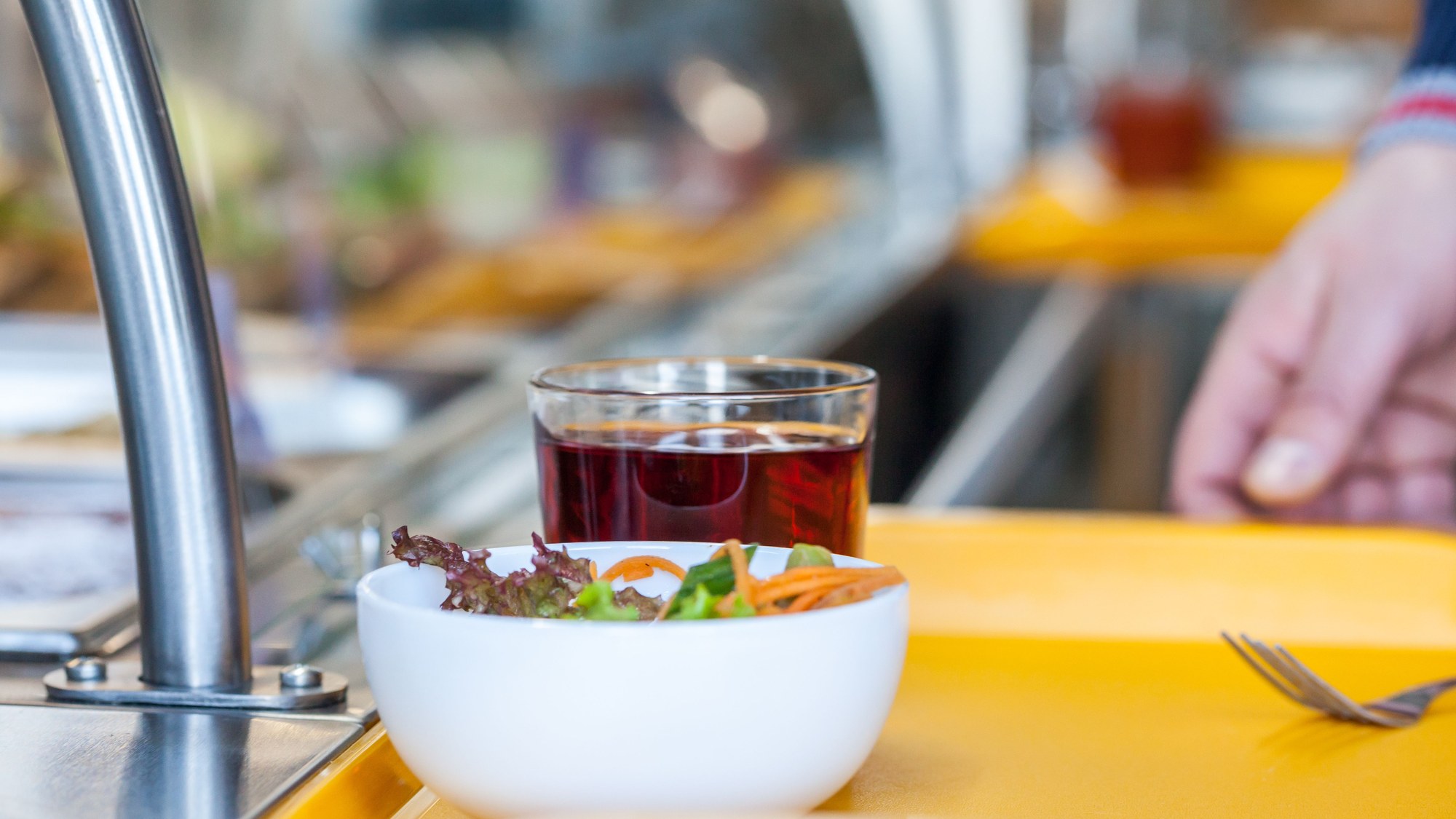
North Dakota voters narrowly rejected Constitutional Measure 2 on Nov. 3, a ballot measure that would have required free breakfast and lunch for students, according to unofficial returns reported by KFYR. About 50.6% of voters said no, a margin of fewer than 3,000 votes. The state’s fiscal estimate put the cost of free meals at $124.3 million to $134.3 million more in ongoing spending every two years, which works out to roughly $62 million to $67 million a year. The measure was called the Healthy School Meals for All program.
For North Dakota families and school districts, the vote means the measure never takes effect. Its ballot language set the cost for the 2027-2029 biennium and said the state would reimburse schools at 100% of current free-meal rates. The lasting question is who pays for school meals, because the debate centered on funding.
Retirement deadlines, in your inbox: Miss an enrollment or claim deadline and the money can be gone. Join the Retirement Money Brief and we’ll send you our 2026 Government Check Reality Tracker as a welcome gift.
Get the Brief + the check tracker →
We may earn a commission from links on this page.
What would Measure 2 have required?
The ballot language from the North Dakota Secretary of State said the initiated constitutional measure would require public school districts, public schools and public charter schools to provide free breakfast and lunch to enrolled students on each school day. Nonpublic schools, Bureau of Indian Education schools and other tribal schools could opt in.
The state would reimburse schools at 100% of its current free-meal rates, adjusted each year for inflation. The Legislature had to find a funding source, and if it could not, the payments would come from the Legacy Earnings Fund. The text added a new section to Article VIII of the constitution and would have overridden any conflicting part of it.
Where did the $124.3 million to $134.3 million come from?
The Department of Public Instruction prepared the estimate, and the North Dakota Legislative Council passed it to the Secretary of State in its July 2026 report, according to the state fiscal note. The note also lists $300,000 in administrative costs for the department and says the program would start with the 2027-28 school year. The ballot language called the figure an increase in ongoing biennial spending, adjusted for inflation each year after 2029, so the cost would repeat every budget cycle.
As the North Dakota Monitor reported in June, the Legislative Management committee voted to use the figure as the official estimate after officials consulted nine states with similar programs. The new figure was slightly lower than the estimates presented in December. Lynelle Johnson, who directs child nutrition and food distribution at the Department of Public Instruction, said the estimate reflects participation in other states’ programs. “We really weren’t sure how many families would still fill out applications,” she said.
Sen. Janne Myrdal, R-Edinburg, said “Free is free,” and predicted costs could reach $150 million to $170 million within a few bienniums. Rep. LaurieBeth Hager, D-Fargo, called the cost an investment in feeding about 125,000 students for roughly 175 days a year.
Why was the vote so close?
KFYR reported that supporters and opponents disagreed on how to fund school meals. Opponents argued that the Legislature, not the constitution, should handle the funding. A similar effort failed in the January 2026 special session, when the proposal passed the House but failed in the Senate.
The Together for School Meals coalition gathered the signatures that put the measure on the ballot. Backers delivered about 57,000 signatures, according to a North Dakota Monitor commentary in April, and the Secretary of State later verified more than 49,000. Amy Jacobson of the coalition said she expected voters to pass it, and the group cited savings of about $1,000 per student per year for families. The coalition also noted that the state’s existing school meal debt is just over $2 million. In July, the governor said he would not personally vote for the measure and wished it had been written as a law instead of a constitutional amendment.
How close was the Measure 2 vote?
The 50.6% figure is unofficial, and KFYR’s report was published late on election night. The same Monitor commentary noted that the Legacy Fund held more than $14.3 billion as of April, the fund the measure would have tapped if lawmakers found no other source. Before the vote, Rep. Mike Nathe of Bismarck told the Bismarck Tribune, “This is not a political issue.” He added, “This became an issue for families.” The official count comes from the North Dakota Secretary of State, which also published the ballot language and the fiscal note linked above.
The margin was under 3,000 votes, so the final tally is the number to watch. The cost estimate is a projection for 2027-2029. It assumed the participation seen in other states’ programs, and Myrdal’s prediction of $150 million to $170 million shows how far lawmakers disagreed on where the cost would settle. If the Legislature takes the issue up again, the Department of Public Instruction’s figures are the starting point, and the January special session showed the Senate was the chamber where the idea stalled.
Watching state ballot fights drain household budgets?
Measure 2 failed by fewer than 3,000 votes, over a cost estimate of $124.3 million to $134.3 million every two years. Public money questions like that get settled in small margins, and the household bills that follow them, from taxes to Medicare costs, are decided at the kitchen table.
The ballot fight was about school kitchens, and the household version is what people on fixed incomes keep after taxes and costs. The Keep-It Starter Bundle is nine guides in one download, one per money leak, and its Step 2, Cut Your Retirement Tax Bill: 12 Moves, covers the senior deduction, RMDs, QCDs and the Roth window.
Get the nine-guide Keep-It Starter Bundle, starting with the retirement tax-bill moves →
This article was produced with AI assistance and edited for accuracy against the sources linked above.