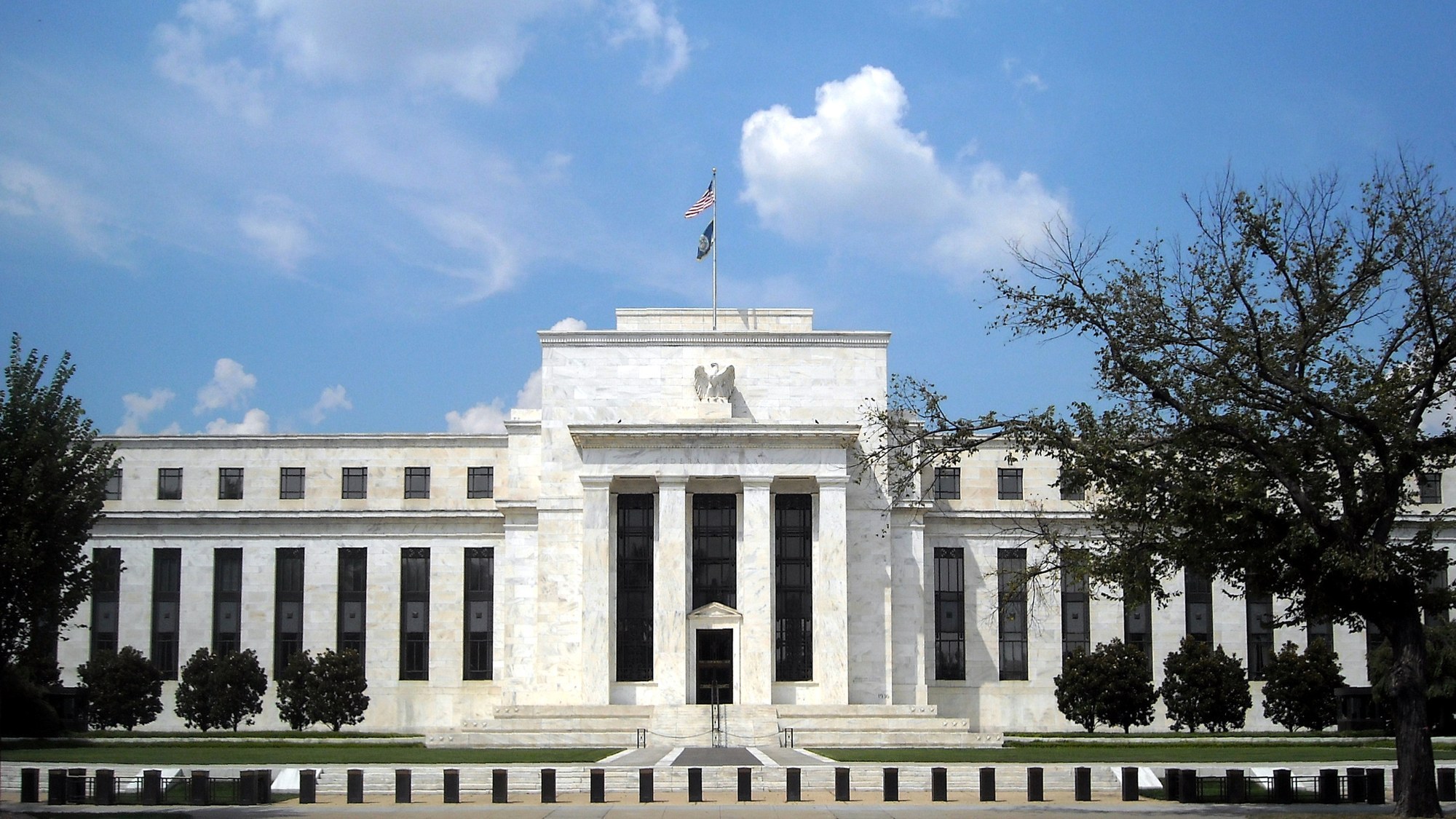
Investors who parked savings in bond funds expecting steady, low-risk returns are watching those funds lose value as Treasury yields climb across maturities. The relationship is mechanical: when interest rates rise, the market price of existing bonds falls, and bond fund net asset values follow. Funds holding longer-duration bonds have absorbed steeper losses than their shorter-duration counterparts, a pattern that the Federal Reserve’s published yield data and the SEC’s own investor guidance help explain.
How Rising Treasury Yields Hit Bond Fund Values
The core tension is straightforward but often misunderstood. Bond funds are not savings accounts. They hold portfolios of bonds whose prices shift daily with market yields. When the yield on a new Treasury note rises, older bonds paying lower coupons become less attractive, and their prices drop. A bond fund marks its holdings to market every day, so its NAV reflects those price declines in real time. The SEC’s guidance for mutual fund investors notes that the market value of bond holdings can fall when interest rates rise, directly reducing a fund’s daily share price.
The size of that price drop depends on duration, a measure of a bond’s sensitivity to yield changes. Economist Frederick Macaulay introduced the concept in work published through the National Bureau of Economic Research in 1938, formalizing how the timing of a bond’s cash flows determines its reaction to rate moves. Duration estimates how much a bond’s price will fall for each percentage-point increase in yields, assuming a parallel shift in the curve and small changes in rates.
In practice, a fund with a duration of six years will lose roughly twice as much in price terms as a fund with a duration of three years when rates move by the same amount. If yields across the curve rise by 1 percentage point, the six-year fund might see an approximate 6% price decline, while the three-year fund might lose about 3%, before considering any offset from interest income. That ratio holds whether rates shift by 25 basis points or 100, so long as the move is relatively small and broadly parallel. The result is that investors who reached for yield in longer-maturity portfolios are now seeing more pronounced drawdowns than those who stayed in short- or intermediate-term strategies.
The hypothesis that funds whose reported duration exceeds the median maturity of the Treasury curve will post NAV declines at least 1.5 times larger than shorter-duration peers for every 50-basis-point parallel yield increase is testable using publicly available Federal Reserve data. The Federal Reserve’s H.15 statistics provide daily constant-maturity Treasury yields across key tenors. By matching those yields to a fund’s stated duration, an investor can estimate how its price should respond to a given rate shock and then compare that estimate with the fund’s actual performance.
The Fed also publishes smoothed yield-curve parameters that describe the shape of the entire Treasury curve on any given day. These parameters allow investors to see whether rate moves are truly parallel or whether certain maturities are moving more than others. If, for example, long-term yields rise sharply while short-term yields barely budge, long-duration bond funds will typically fare worse than duration alone would suggest, because the parts of the curve they emphasize are under disproportionate pressure.
What the Fed and Treasury Data Confirm
The U.S. Department of the Treasury’s Office of Debt Management publishes daily yield figures spanning short-term bills through 30-year bonds. When those yields move higher in a broadly parallel fashion, every maturity bucket reprices, and longer maturities absorb the largest dollar-price declines because their cash flows stretch further into the future. The Treasury data therefore provide a direct check on whether the market environment matches what a bond fund’s recent performance implies.
By lining up a fund’s portfolio characteristics with the Fed and Treasury series, investors can see whether losses are consistent with its risk profile. A fund with an average maturity clustered around the 10-year point on the curve should react more to shifts in that part of the term structure than to movements in very short bills. If the 10-year yield in the H.15 release jumps while shorter maturities remain stable, a pronounced decline in the fund’s NAV is exactly what duration math would predict.
These official datasets also help distinguish between rate-driven price moves and other forces, such as credit risk or liquidity stress. If Treasury yields at relevant maturities are flat over a period in which a bond fund’s NAV falls, the cause likely lies in widening credit spreads or specific holdings rather than in general interest-rate conditions. Conversely, when yields rise across the board and high-quality government bonds decline, it is reasonable to attribute much of a diversified bond fund’s loss to interest-rate exposure.
For individual investors, the practical takeaway is that bond funds carry real market risk, even when they invest in government securities. Duration, curve positioning, and the pattern of Treasury yields published by the Fed and Treasury jointly determine how severe that risk can be in a rising-rate environment. By comparing a fund’s reported duration to movements in the official yield curve, investors can set more realistic expectations about potential drawdowns and avoid mistaking interest-rate sensitivity for the safety of a cash-like account.