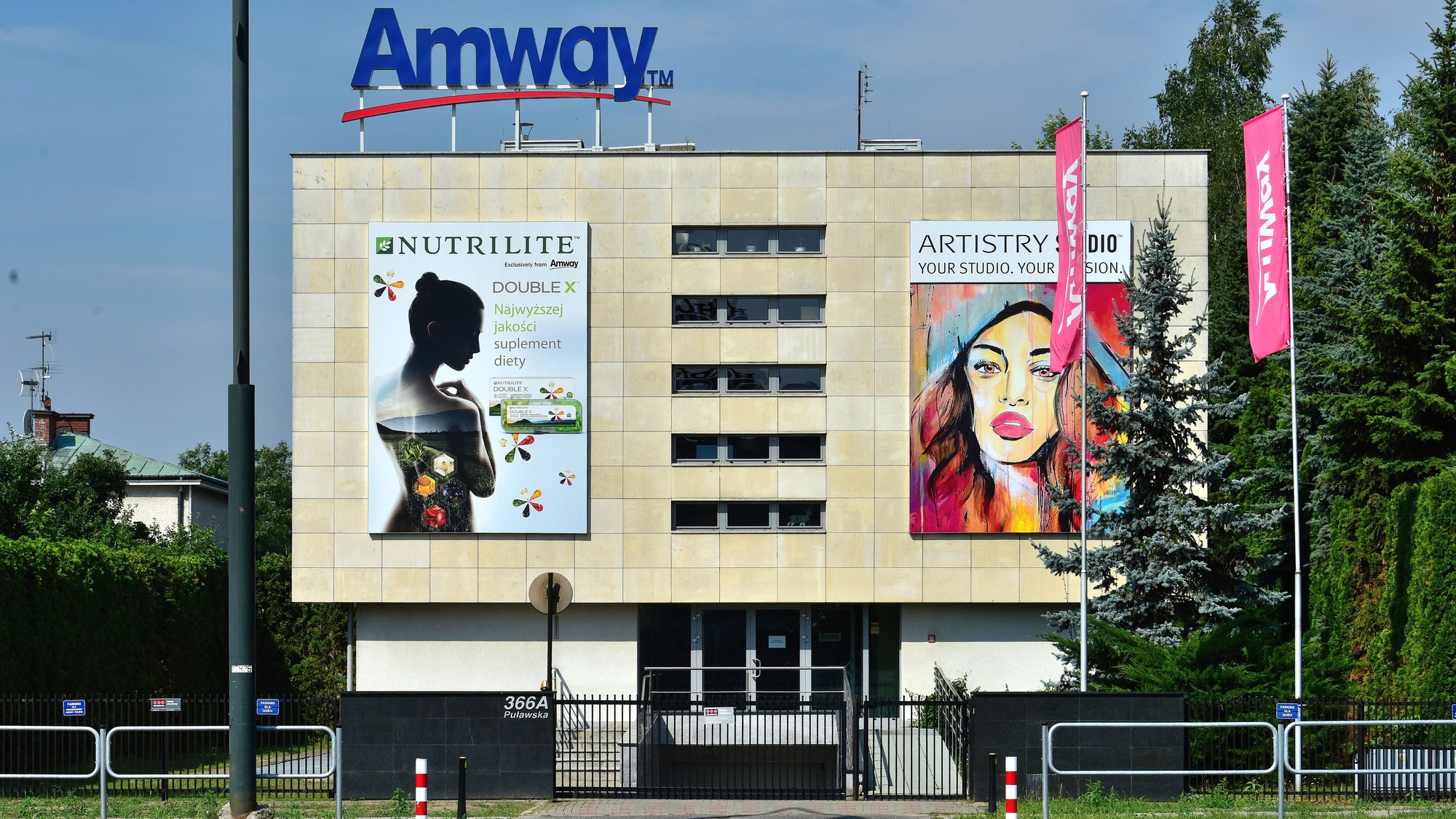
Amway Corp. and two of its largest recruiting organizations have agreed to a $225 million judgment to resolve a joint complaint from the Federal Trade Commission and the state of Washington over how they recruited people into the company’s multilevel marketing program. World Wide Group and Leadership Team Development, the two affiliates named alongside Amway, are accused of pitching prospective recruits on income figures that, by the government’s account, almost never materialized. The $225 million is not a completed payout. It is the judgment amount written into a proposed order that still needs a federal judge’s signature before it carries any legal force.
Complaint Alleges Recruiters Promised a Full-Time Income or Early Retirement
The FTC says recruiters working through World Wide Group and Leadership Team Development told prospective Independent Business Owners they were likely to earn income exceeding $40,000 a year, or income that would replace their full-time job or allow them to retire early. The complaint, filed September 17 in the U.S. District Court for the Western District of Washington, describes those figures as a routine part of the recruiting pitch, used to persuade people to sign on and start buying the products and training the two affiliates sold.
The same complaint alleges that once someone joined, the affiliates instructed them to buy a set amount of Amway products every month regardless of whether they could resell it or wanted it for personal use, while pushing them to spend most of their time recruiting others into the same arrangement rather than building actual product sales.
Free download: The first-hour steps in order, who to call at banks, agencies and credit bureaus, and what to document. Get the free scam and identity-theft action card.
What the FTC Says Most Recruits Actually Received After 2020
The gap between the pitch and the outcome sits at the center of the case. Washington’s attorney general, whose office joined the FTC as a co-plaintiff, said the complaint found only about 1% of recruits earned the $40,000-plus income the affiliates promised, and that most people who joined World Wide Group or Leadership Team Development after 2020 spent more money on Amway products and training than they ever received back in income. The office’s news release points to a case of 24 bottles of Amway water, 16.9 ounces each, that sold for $52 — pricing the state says made products harder to resell to the general public and easier to end up stockpiled, unsold, in a participant’s garage.
“Amway and its affiliates profited by taking advantage of regular people’s hopes and ambitions,” Washington Attorney General Nick Brown said. “This settlement will deliver relief for the many Washingtonians who joined Amway seeking to provide for themselves and their families, only to lose time and money and wind up with cabinets full of products they don’t want or need.”
A Proposed Recovery the FTC Calls Its Largest Ever From an MLM
The Commission voted 2-0 to authorize the complaint and the proposed order, which the FTC’s own announcement calls the largest monetary recovery the agency has obtained in an action against a multilevel marketing company. Christopher Mufarrige, director of the FTC’s Bureau of Consumer Protection, said Amway and its affiliates “misled prospective workers with false earnings claims and then pressured them to buy Amway products they were unlikely to be able to sell,” adding that the case “makes clear that the FTC will not tolerate any company deceiving workers.”
Those statements describe allegations the companies have not been found liable for at trial. The FTC and Washington reached the $225 million figure through negotiation with Amway, World Wide Group and Leadership Team Development, and the companies agreed to the terms without admitting wrongdoing.
The Stipulated Order Still Needs a Judge’s Signature Before Any Money Moves
The document the FTC and Washington filed alongside the complaint is a stipulated order, the parties’ negotiated draft of what a judgment should say, not a judgment a court has already entered. Its final page leaves the date blank next to the words “SO ORDERED” above a signature line reading “United States District Judge,” which no judge in the Western District of Washington has signed as of this writing. The FTC’s own release states plainly that stipulated final orders have the force of law only “when approved and signed by the District Court judge.”
The order does specify what happens once that signature is entered. Amway’s outside counsel is already holding $154.7 million in escrow, with World Wide Group and Leadership Team Development responsible for an additional $39.78 million and $26.52 million, respectively, all payable to the Commission within seven days of the order’s entry. Nearly all of the money is designated as redress for IBOs who lost money, though the FTC has said only that details of its redress program will come at a later date.
Why “Retire Early” Is the Line That Matters Most for Older Recruits
Of the phrases the complaint attributes to recruiters, “retire early” is the one aimed squarely at people already near or inside retirement, a group a recruiter can approach as looking for a second income stream rather than a first job. The complaint alleges the affiliates required participants to keep buying inventory and paying for training out of pocket every month regardless of what they sold, a different kind of risk for someone drawing down savings than for someone still collecting a separate paycheck elsewhere.
If the order is signed, the business would also have to change going forward: participants would need to resell at least 70% of what they buy each month, recruiters would get reduced compensation when the people they sign up buy products without reselling them, and Amway would be barred from charging new recruits for training or services during their first year. None of those changes are in effect yet. They take hold only once a judge in the Western District of Washington signs the order the FTC and Washington negotiated.
Income Claims Made by a Recruiting Pitch
The FTC’s complaint describes a recruiting pitch built on an income promise that, by the government’s own account, almost never arrived, alongside a training system that pushed participants to keep spending anyway. A signed order will not tell someone already inside a similar-sounding opportunity how to recognize the same pressure the next time it appears, or what to do in the first hour after money has already gone out the door.
The Senior Fraud Defense & First-Hour Recovery Kit is a 9-page kit built around the first-hour recovery plan, a family code word for verifying who is really asking for money, and the free credit-freeze steps.
See the first-hour recovery plan in The Senior Fraud Defense & First-Hour Recovery Kit.
This article was researched and drafted with the assistance of AI and reviewed by an editor.