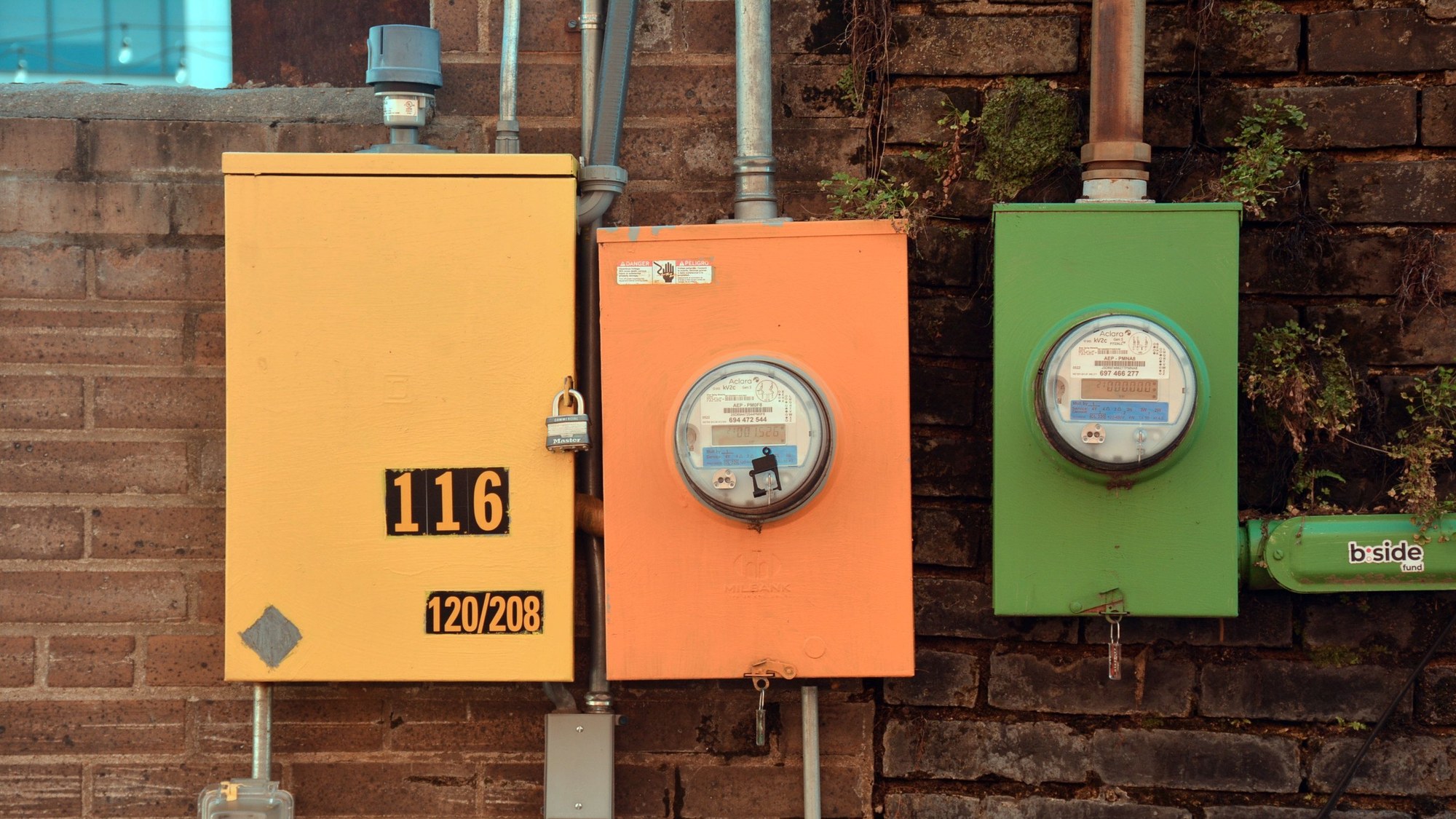
Residential electricity will average 18.23 cents a kilowatt-hour this winter, up 3% from last winter, the U.S. Energy Information Administration says in its winter fuels outlook. Homes in the Northeast will pay the most, about 26.19 cents, up 4%. EIA’s forecast covers the five months from November through March, was completed Oct. 1 and was published Oct. 6, and it compares each region with last winter.
Prices are only half of a winter bill, and the agency’s numbers show how far the two can diverge. The average U.S. household is forecast to spend $1,196 on electricity this winter, up 4%, but the Northeast’s bill is expected to fall 3% to $1,637 even as its price per kilowatt-hour rises.
That leaves a different question for each reader depending on the region and on what heats the home. A household that heats with electricity faces the price forecast directly, while one that heats with gas or oil sees electricity as the lighter part of the bill. EIA Administrator Tristan Abbey said in the agency’s announcement that “households that rely on heating oil face higher prices,” and the announcement says households that primarily use electricity or heating oil for space heating are expected to spend more.
Stay ahead of government payment news: Miss an enrollment or claim deadline and the money can be gone. Join the Retirement Money Brief and we’ll send you our 2026 Government Check Reality Tracker as a welcome gift.
Get the Brief + the check tracker →
We may earn a commission from links on this page.
What will the average electric bill be?
EIA puts the national average residential bill for the five winter months at $1,196, up 4% from last winter. Consumption is forecast at 6,562 kilowatt-hours, up 1%, so most of the increase comes from the 3% rise in price rather than from using more power.
By region, the forecast price per kilowatt-hour is 26.19 cents in the Northeast, 20.47 cents in the West, 16.87 cents in the Midwest and 15.75 cents in the South. Prices are forecast to rise 4% in the Northeast, Midwest and South and 1% in the West. EIA’s figures are nominal, and the agency assumes about 2% inflation.
Spread over the five winter months, the national average of $1,196 works out to about $239 a month. The same arithmetic gives roughly $327 a month in the Northeast, $276 in the Midwest, $230 in the West and $216 in the South. Those are averages, so individual bills will land above and below them.
Why would the Northeast bill fall when its price is rising?
Weather. EIA expects the Northeast to use 6,252 kilowatt-hours this winter, down 6%, because its base-case forecast has 4,331 heating degree days, 12% fewer than last winter. A higher price on less electricity works out to a bill of $1,637, which is 3% lower than a year ago and still the highest of any region.
The same math runs the other way in the West. EIA forecasts 2,781 heating degree days there, 25% more than last winter, and consumption of 5,624 kilowatt-hours, up 9%. With a price up only 1%, the West’s average electric bill still climbs 9% to $1,151.
What about the Midwest and the South?
Both regions land between the extremes. The Midwest is forecast to use 8,178 kilowatt-hours, the most of any region and down 1%, and to pay $1,380, up 3%. The South is forecast to use 6,849 kilowatt-hours, unchanged, and to pay $1,079, up 3%, the lowest bill of the four.
Across the country, the agency’s base case has 3,155 heating degree days, unchanged from last winter. A heating degree day measures how far the day’s average temperature falls below a baseline, so the count works as a stand-in for how much heating homes need.
How do other heating fuels compare?
EIA says heating oil is the only fuel with a large increase. Households that primarily use it are forecast to spend $2,115 this winter, up 21%, with the price at $5.26 a gallon, up 34%, and consumption at 402 gallons, down 9%. The agency attributes the jump to higher global crude oil and distillate prices, and the press announcement says those homes are located mostly in the Northeast.
Natural gas is cheaper: $640 for the winter, down 9%, at $13.44 per thousand cubic feet. Propane households are forecast to spend $1,246, down 3%, and in the Northeast $1,687, down 15%. Natural gas spending rises 7% in the West even as it falls in most regions.
What could change the forecast?
The numbers rest on a base-case weather assumption, and EIA runs side cases that make every region 10% colder or 10% warmer. The agency also cautions that a strong El Niño could cause large temperature swings away from its forecast. A colder winter than the base case would push both consumption and bills above the figures here.
The winter outlook sits within EIA’s October Short-Term Energy Outlook, which projects the average residential electricity price at 18.21 cents a kilowatt-hour for 2026 and 18.68 cents for 2027, compared with 17.30 cents in 2025. Those annual figures put the 2026 increase at about 5.3%, with growth slowing to about 2.6% in 2027.
Planning for a bigger electric bill this winter?
Electricity at 18.23 cents a kilowatt-hour, and 26.19 cents in the Northeast, is one line in what a house costs to keep. A winter bill that runs above the forecast lands on top of property taxes, insurance and repairs, and a household on a fixed income feels it first.
Cut Your House Costs is an 11-page guide that includes a home-cost audit worksheet, which lays out what the house costs line by line, and it covers a lower home insurance bill by shopping and asking for every discount. The worksheet is the place to see where winter power fits among the other bills.
Get the home-cost audit worksheet for this winter’s electric bill →
This article was produced with AI assistance and edited for accuracy against the sources linked above.