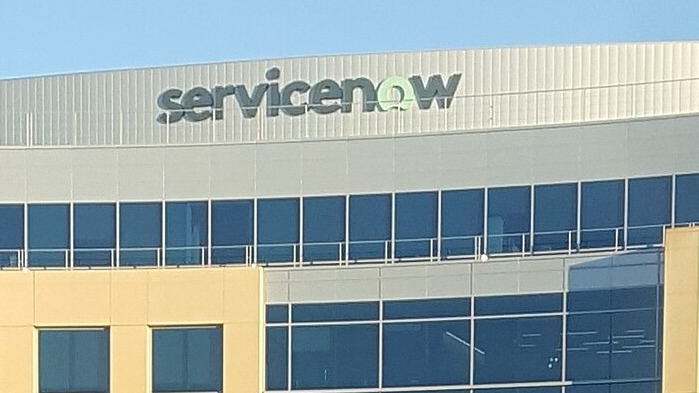
ServiceNow cut hundreds of jobs at its California facilities, filing notices with the state as required by labor law, while simultaneously accelerating a product strategy built around AI agents designed to automate enterprise work. The layoffs and the AI push arrived in the same window, creating a sharp contrast between the company’s shrinking workforce and its expanding automation ambitions.
Why the cuts and the AI pivot collide at ServiceNow
The tension is direct. ServiceNow filed layoff notices with state regulators under California’s WARN Act, which requires employers to give advance written notice before mass separations. At the same time, the company rolled out a series of AI-native products explicitly built to replace or streamline tasks that human employees perform, including support, operations, and workflow management functions.
The relevant labor code requires covered employers to disclose the number of affected workers, facility locations, and effective dates when conducting large-scale layoffs. Those filings create a public record that, when placed alongside ServiceNow’s own product announcements, raises a pointed question: is the company’s internal deployment of its own AI tools directly reducing the need for certain roles?
ServiceNow has not drawn that line explicitly. No public company statement or earnings transcript directly connects the headcount reductions to AI-driven automation inside the firm. But the proximity is hard to ignore. The company built and marketed products, including its Autonomous Workforce platform, its Moveworks integration, and its expanded AI Control Tower, that are designed to let software agents handle tasks ranging from employee service requests to IT operations monitoring. If those tools work as advertised, the internal demand for people doing similar work would logically decline.
WARN filings and AI product launches in the same quarter
The evidence sits in two separate but overlapping streams. On the workforce side, ServiceNow’s WARN Act notices, filed with California’s EDD, document job eliminations at the company’s state facilities. The WARN Act applies to employers with a certain number of workers and requires disclosure before plant closings or mass layoffs take effect. The filings themselves are public records, though the precise employee counts and effective dates from ServiceNow’s specific notices have not been independently reviewed in the available reporting.
On the product side, ServiceNow announced its autonomous platform, which the company describes as a system that thinks and acts, combining AI agents with workflow automation to handle enterprise tasks without constant human direction. The company also integrated Moveworks into its AI platform and partnered with Google Cloud to deploy AI agents for what it calls autonomous enterprise operations. At its Knowledge 2026 conference, ServiceNow framed these tools as a way for customers to offload repetitive, rules-based work to software while reserving human attention for higher-value decisions.
In a separate announcement, ServiceNow promoted a broader AI-native experience across its portfolio, highlighting how generative models and agents would be embedded into core workflows for IT, customer service, and HR. The company said these capabilities would be rolled out across products and packages rather than confined to add-on modules, underscoring how central automation has become to its growth story.
Automation narrative versus employment reality
Publicly, ServiceNow positions AI as a way to augment workers rather than replace them. The company emphasizes that agents can take on mundane tasks, freeing employees to focus on strategy, creativity, and complex problem-solving. That framing mirrors the broader enterprise software industry’s message that automation will elevate human work rather than eliminate it.
Yet the timing of the California job cuts complicates that message. When a company that sells automation tools also trims its own staff, it invites scrutiny over whether the efficiencies it markets externally are being realized internally in ways that reduce headcount. Even if the layoffs stem from unrelated restructuring, cost controls, or shifting investment priorities, the optics are difficult to separate from the AI narrative.
The WARN filings do not specify why the positions were eliminated or whether any particular tools or workflows were involved. They simply record that certain jobs at specific locations will disappear on certain dates. In the absence of a detailed explanation from ServiceNow, analysts and employees are left to connect the dots between a more automated product roadmap and a leaner workforce.
What it signals for enterprise tech workers
For people working in IT service management, operations, and support roles, the overlap between ServiceNow’s layoffs and its AI push is a concrete example of a broader trend. As software platforms gain the ability to interpret natural language, trigger complex workflows, and act across systems, the boundary between “assisted” and “automated” work keeps shifting. Tasks that once required a ticket, a queue, and a human agent can increasingly be handled by software.
That does not mean every job in these domains disappears, but it does suggest a change in what those jobs entail. Roles may tilt more toward configuring, governing, and auditing AI systems rather than executing every step of a process. At the same time, employers under pressure to improve margins may view automation as an opportunity to do more with fewer people.
ServiceNow’s dual track of workforce reductions and AI expansion captures this tension in a particularly stark way. The company is betting that customers will embrace autonomous operations as a path to efficiency, while employees watch to see how that same logic plays out inside the organization itself.