The U.S. Supreme Court handed importers and manufacturers a major legal victory when it ruled on February 20 that President Donald Trump could not use the International Emergency Economic Powers Act, or IEEPA, to impose sweeping tariffs. But for many businesses, the decision landed after months of higher costs, disrupted planning, and lost sales that a court opinion cannot reverse. That is the tension now hanging over the ruling in Learning Resources, Inc. v. Trump. On paper, companies won. In practice, many are still trying to figure out how much damage the tariffs already did, how quickly they can recover the money paid, and whether a new round of trade penalties could soon replace the ones the justices threw out.
What the Supreme Court actually said
The Court’s ruling was narrow in one sense and sweeping in another. The justices did not outlaw tariffs as a policy tool. They said this particular law, IEEPA, does not give the president the power to impose them. In the Court’s syllabus, the majority said the statute could not be read to support tariffs that were “unbounded in scope, amount, and duration,” cutting off the legal theory the administration had posited gave it the power to impose such tariffs without going through Congress. A copy of the opinion makes clear why that mattered. The Court stressed that the Constitution gives Congress the power to lay duties and imposts, and they rejected the administration’s argument that IEEPA could be stretched into a general trade authority. Reuters reported the ruling as a landmark defeat for one of Trump’s signature economic policies, with implications far beyond the specific companies that brought the case. That legal conclusion settled the statute question, but it did not settle the balance sheet question. Businesses that paid the tariffs for months before the ruling were left in a familiar position: vindicated in court, but still dealing with bills that had already come due.
Why businesses say the ruling came too late
For importers, tariffs are not abstract policy. They are a cash expense that hits the moment goods clear customs. Some companies absorb part of that cost to protect sales. Others raise prices, squeeze suppliers, delay hiring, or cut investment. None of those decisions automatically unwind because a court later says the tariffs were unlawful. That is why the relief in the business community has been mixed with frustration. Reuters reported that trade groups welcomed the decision but immediately turned to the refund process and the need for a more predictable trade policy. The reaction was less triumph than exhaustion. Companies had spent months repricing inventory, renegotiating contracts, and trying to guess whether the next shipment would arrive under one tariff schedule or another. Lawmakers who opposed the tariffs used the ruling to argue that the economic harm had already been done. A statement from Rep. Grace Meng said many AANHPI-owned small businesses had already been forced to raise prices or shut down. That is a partisan statement, not an official economic tally, but it captured a complaint heard well beyond Washington: even when the policy is reversed, the smaller firms with the least cushion often take the longest to recover. There is also evidence that the broader economy absorbed real strain while the tariffs were in effect. Democratic staff on the Joint Economic Committee said manufacturing employment fell by 108,000 jobs during Trump’s first year back in office, and a separate JEC estimate said American families had already paid nearly $1,200 each in tariff-related costs. Those figures come from the minority side of the committee, so they should be treated as political positioning, as well as economic analysis, but they help explain why the Court’s ruling did not immediately feel like a reset.
The refund battle could drag on
The next fight is over repayment. According to the Associated Press, U.S. Customs had already collected $133 billion in IEEPA tariffs as of mid-December. That is an enormous pool of money, and it is one reason the legal aftermath has become almost as important as the ruling itself. AP also reported that a federal court rejected the administration’s effort to slow the refund process, a sign that judges are not inclined to let the case drift after the Supreme Court’s decision. Even so, businesses should not expect a quick or painless cleanup. Refund claims will have to be processed through customs procedures, legal disputes will follow, and companies that already passed along some of the costs to customers may find the customers asking for refunds themselves. Nonetheless, consumers are unlikely to be made whole. AP noted that while importers may recover unlawfully collected duties, the chances that those recovered funds ever find their way back into consumers’ pockets are slim. That leaves a familiar asymmetry: the legal system can return some money to the companies that wrote the checks, but it cannot easily reverse the higher retail prices households already absorbed.
The White House is already trying a different path
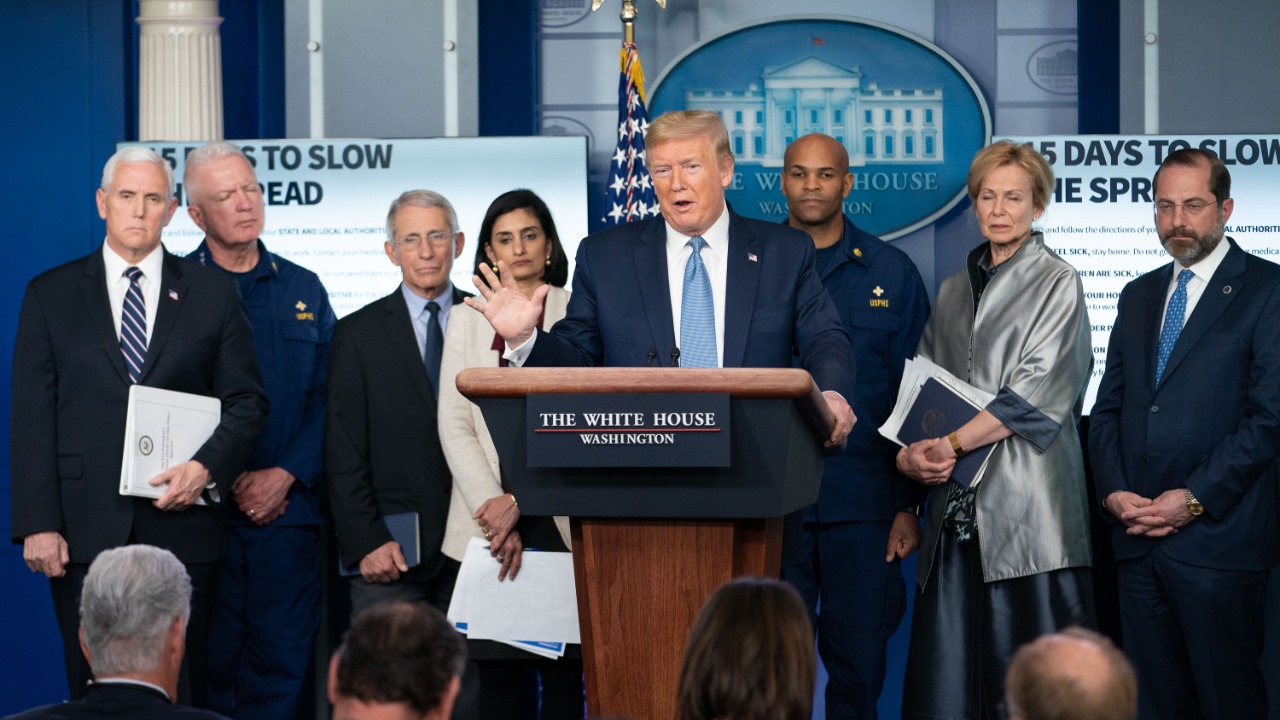
The administration did not treat the ruling as the end of its tariff agenda. The White House issued an order ending the IEEPA-based tariff actions, but it also made clear that other trade measures remained untouched. On the same day, the administration moved toward a different legal route, using Section 122 of the Trade Act of 1974 to impose a temporary import surcharge. Reuters reported that pivot as an attempt to preserve leverage after losing in court. The practical message for business was simple: one tariff program had been invalidated, but tariff risk had not disappeared. That matters because uncertainty can be almost as damaging as the duties themselves. Companies deciding where to source products, how much inventory to carry, or whether to sign long-term contracts still do not know what the next six months of trade policy will look like.
A legal win that does not erase the damage
The Supreme Court drew a clear constitutional line. It said a president cannot use an emergency-powers statute as a blank check for global tariff policy. That is a major ruling, and it will likely shape future fights over executive power long after the refund cases are sorted out. But businesses are right about one thing: the damage from the past year did not vanish with the opinion. The money tied up in duties, the customers lost during price increases, the hiring postponed because of policy whiplash, and the consumer dollars already spent at higher prices are not suddenly restored. The tariffs may be gone under IEEPA, but the scars they left on balance sheets and business confidence are still very much here.

Vince Coyner is a serial entrepreneur with an MBA from Florida State. Business, finance and entrepreneurship have never been far from his mind, from starting a financial education program for middle and high school students twenty years ago to writing about American business titans more recently. Beyond business he writes about politics, culture and history.