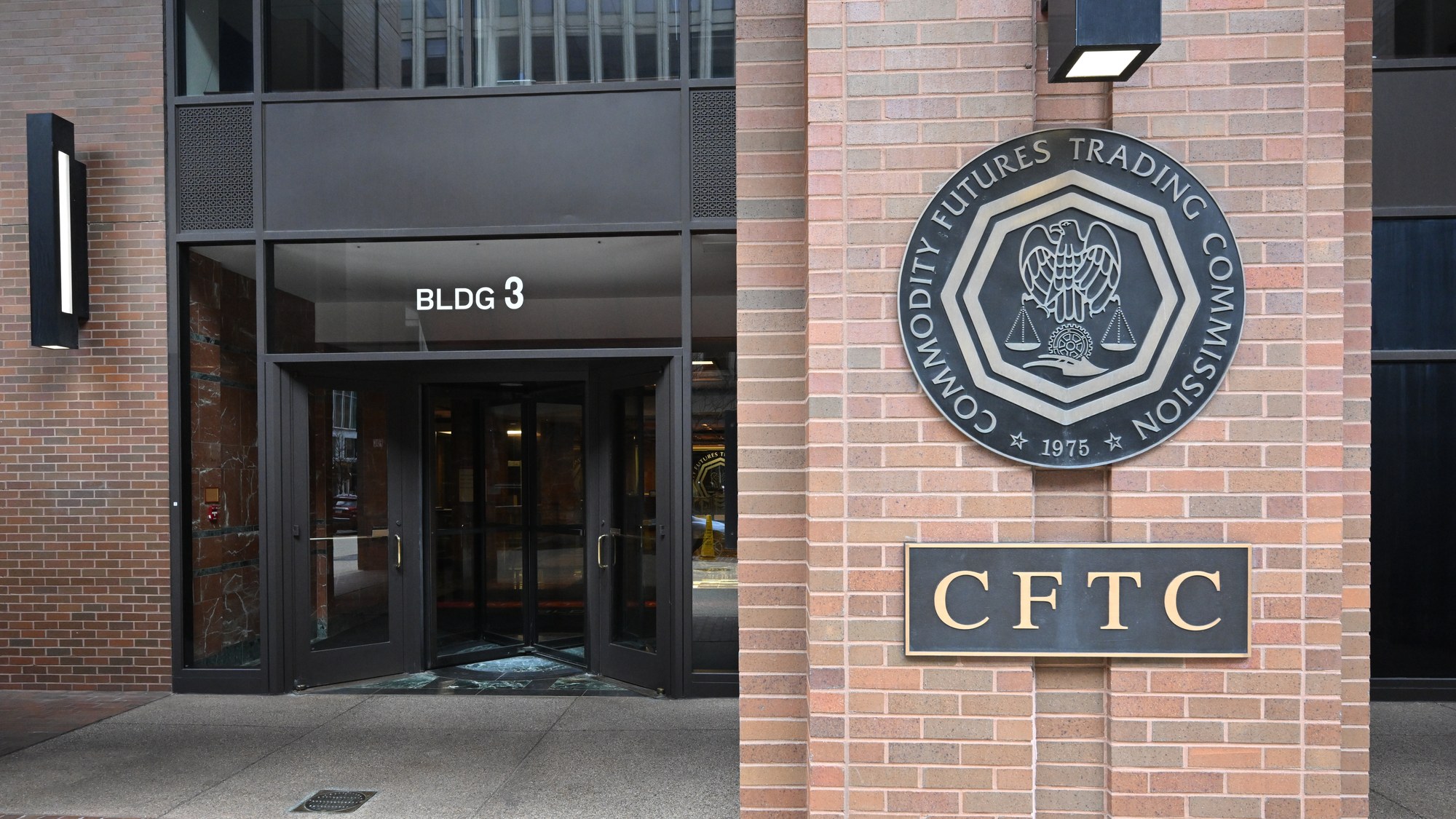
The Commodity Futures Trading Commission says a Brazil-based operation called Cash FX Group S.A. promised participants up to 15% weekly returns from a purported forex commodity pool, accepted more than $950 million from the public and left participants with at least $406 million in losses. The agency described the case in a Sept. 25 release announcing a civil complaint filed in the U.S. District Court for the Middle District of Florida. The complaint contains allegations; no court has found any defendant liable.
Five defendants and a multilevel marketing structure
The complaint names Cash FX Group S.A. and its chief executive, Huascar Jose Lopez Castillo, both in Brazil; The Conversion Pros, Inc., an Oregon company, and its chief executive, Ronald Pope; and Justin Halladay of Florida. According to the CFTC, the group operated a multilevel marketing Ponzi scheme, and millions of dollars were paid to each defendant. Those are the agency’s allegations, and the release does not report any defendant’s response.
David I. Miller, the CFTC’s Director of Enforcement, said in the release that the Division of Enforcement “has continued to refocus on its core mission of protecting the public from fraud.” The relief the agency is seeking includes restitution, disgorgement, civil monetary penalties, trading and registration bans and a permanent injunction against violations of the Commodity Exchange Act. Seeking restitution is a request to the court. The release does not say victims will recover money, and it carries no notice for participants about how to claim anything.
Two numbers that measure different things
The $950 million and the $406 million are not the same kind of figure. The first is the amount the CFTC says was fraudulently solicited and accepted from the public. The second is what the release says participants lost, at least $406 million. The difference between them is not explained in the release, so it should not be read as money that is sitting somewhere waiting to be returned.
The 15% weekly promise is the number that stands out most for a saver. The CFTC says the operators claimed the trading was run by “expert traders, proprietary algorithms, and artificial intelligence.” According to the complaint, very little forex trading actually took place, nearly all participant money was misappropriated, and existing participants were paid fictitious profits out of new contributions and shown false account statements.
How the SEC describes a Ponzi structure
The pattern the CFTC describes matches the definition on the Securities and Exchange Commission’s Investor.gov Ponzi scheme page. It says these schemes collect money from new investors to pay earlier investors instead of making real investments, and that they collapse when recruitment slows or existing investors try to withdraw. Its red flags include high returns with little or no risk, “overly consistent returns,” secretive or complex strategies, account statement errors and difficulty cashing out. The page also flags unregistered investments and unlicensed sellers.
Forex offers a second layer of risk on top of that pattern. The CFTC’s forex fraud page states that about two out of three retail foreign exchange traders lose money each quarter, that only six CFTC-registered forex dealers operate legally in the U.S., and that registration can be checked in the National Futures Association’s BASIC database. Its warning signs include pressure to move conversations to a private messaging app, outsized or guaranteed short-term returns, and payment accepted only in bitcoin, ethereum or other digital assets. The page also cites leverage above the legal limits of 2% for major currency pairs and 5% for others, websites with no verifiable physical address, and customer service handled through messaging apps instead of phone numbers as further signs.
Retirement money and the CFTC’s older advisory
An older CFTC forex fraud advisory puts the retirement question plainly: the forex market “is volatile and carries substantial risks” and is “not the place to put any money that you cannot afford to lose, such as retirement funds.” It also lists pitches spread by word of mouth or emails from acquaintances as a warning sign, which is the channel a multilevel marketing structure relies on.
The advisory suggests contacting the CFTC to verify a company’s registration, background and disciplinary record, and getting written risk disclosures. The agency takes complaints and tips at 866.366.2382, at its online complaint page and through its headquarters line at 202.418.5000. A separate CFTC awareness release from February 2025 notes that relationship-driven scams can steer victims toward forex trading as well as cryptocurrency and precious metals, and that victims average about 10 payments, each larger than the last.
The CFTC’s Sept. 25 release remains the controlling record for the case. It attributes the promise of up to 15% weekly returns, the more than $950 million accepted and the at least $406 million in participant losses to its complaint, and it describes each of the five defendants as a named party to a civil action, not as a party found liable.
Records and calls in the hour after an investment loss
Older investors who have already sent money to an unregistered operation face a narrow window in which a bank or payment processor may still be able to act, and a record of what was sent and when is what regulators and banks ask for first. The practical problem is knowing which call to make first and what to write down while doing it.
The Senior Fraud Defense & First-Hour Recovery Kit sets out a first-hour recovery plan and a fraud evidence and report log, so the calls happen in order and each transfer, screenshot and reference number is captured in one place.
Work out which call comes first after money leaves an account →
This article was produced with AI assistance and checked against the primary sources linked above.