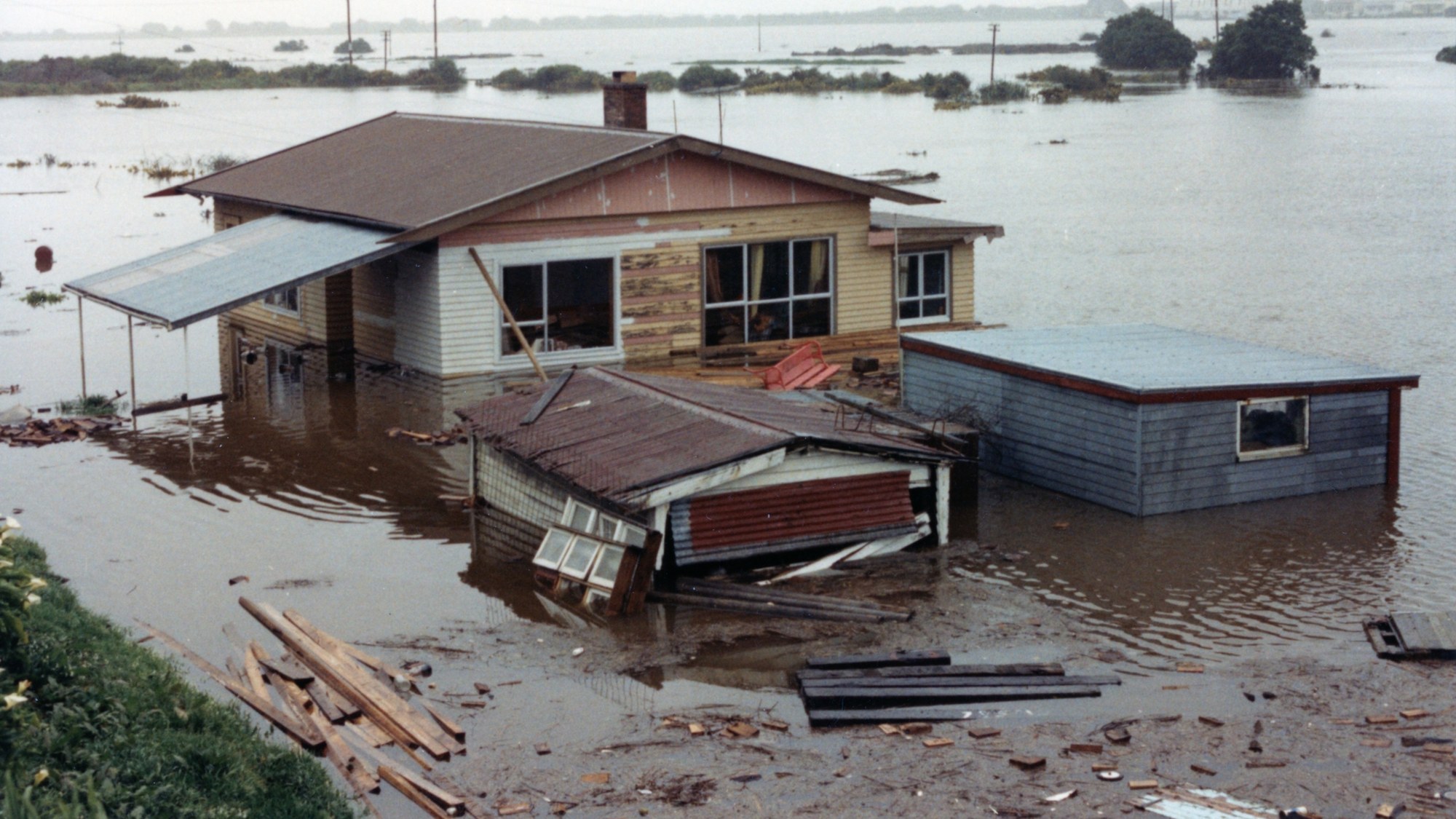
Protecting financial records ahead of a disaster is not only an insurance matter but a tax one, the Internal Revenue Service reminded taxpayers in the first week of September. Photographs and videos of belongings, the agency said, can support both an insurance claim and a federal casualty-loss deduction if a home, business or vehicle is later damaged or destroyed. For an older homeowner or renter without a recent room-by-room inventory, the reminder comes with a practical deadline of its own: it is far easier to document belongings now than to reconstruct a list from memory once a flood, fire or storm has already taken them.
What a casualty-loss deduction actually requires
A federal deduction for a disaster-related loss is not automatic just because property was destroyed. Individuals may deduct personal property losses that were not covered by insurance or other reimbursement, and the claim is filed on Form 4684, Casualties and Thefts. Substantiating that kind of loss means showing what was owned, when it was acquired and roughly what it was worth immediately before the disaster — precisely the information a photo or video record preserves and a memory, months or years later, does not.
Free download: What each refund-status message means, the direct-deposit and paper-check paths, and when to follow up with the IRS. Get the free refund delay decision tree.
Free download from RetireShield. Getting it also signs you up for the free Retirement Money Brief, a weekday email. Unsubscribe anytime.
The reminder ties the recordkeeping directly to the deduction
The IRS reminder, issued Sept. 3, said documentation of valuable property “can help support claims of losses of property for tax purposes, as well as insurance claims after a disaster,” according to the release. Details on what qualifies as a deductible casualty loss, and how to calculate it, are laid out in Publication 547. Only losses that are uninsured or otherwise unreimbursed qualify for the deduction, which is part of why the IRS pairs the recordkeeping reminder with the same photographs’ insurance-claim purpose — a taxpayer who is fully reimbursed by an insurer generally cannot also deduct the identical loss.
IRS Chief Executive Officer Frank J. Bisignano tied the reminder to National Preparedness Month, saying preparing early “can make a real difference when a disaster strikes” and urging “all taxpayers, even those in areas not prone to disaster,” to take the same precautionary steps to protect valuable property and financial records.
Photographs, workbooks and the room-by-room list
To make that documentation manageable, the IRS points taxpayers to its disaster loss workbooks — Publication 584 for personal-use property and Publication 584-B for businesses — which walk through a room-by-room inventory of belongings and equipment rather than leaving a taxpayer to reconstruct one from scratch after the fact. The agency also recommends scanning paper records such as tax returns, insurance policies, property titles and Social Security cards and storing electronic copies on a secure device or in the cloud, since many financial institutions now provide statements electronically as well.
Businesses face a related exposure: employers that use a payroll service provider are encouraged to confirm the provider carries a fiduciary bond, and eligible business taxpayers can use their IRS Business Tax Account to check balances and payment history if records are damaged or destroyed. Registered users of the Electronic Federal Tax Payment System can also keep making federal tax payments through EFTPS even if other paper records at the affected location are lost, since the system does not depend on documents kept on site.
None of this preparation is limited to taxpayers in disaster-prone regions. The IRS reminder specifically addressed households that do not consider themselves at risk, since flooding, wildfire and severe storms have each struck areas with little recent history of that kind of damage. A room-by-room photo record costs nothing and takes an afternoon; reconstructing the same list of belongings from memory after the fact, while also dealing with displacement, insurance adjusters and, in some cases, a postponed tax deadline, is a far heavier task.
What happens automatically once a disaster area is declared
When the IRS grants disaster tax relief for a federally declared disaster area, certain filing and payment deadlines falling inside the postponement period are pushed back, and that relief is generally automatic for taxpayers whose IRS address of record sits inside the covered area — no separate request is required. Taxpayers who live outside the covered area but whose necessary records are located inside it have to call the IRS Special Services Hotline at 866-562-5227 to request the same relief, and tax practitioners holding records for ten or more affected clients can use the agency’s bulk-request process instead of calling individually.
The agency’s broader disaster hub, updated as new events occur, lists current relief areas alongside FAQs for disaster victims and links to Ready.gov and DisasterAssistance.gov for the non-tax side of recovery. None of that automatic filing relief substitutes for the underlying proof a casualty-loss claim needs under Publication 547 — a postponed deadline buys time to file, not evidence of what was lost.
The paperwork gap between a photographed loss and a filed deduction
Photographs establish what a taxpayer owned before a disaster, but they do not by themselves file an amended return, track a refund a disaster-related adjustment generates, or explain a notice that arrives months later asking for more support. That gap between documenting a loss and following the claim through the system is where a casualty-loss refund most often stalls.
It is a 13-page kit with a notice decoder and the refund-trace steps (Form 3911).
See the notice-decoding and refund-tracking steps in The IRS Refund Recovery Kit.
This article was researched and drafted with the help of AI and reviewed by The Financial Wire editorial team before publication.