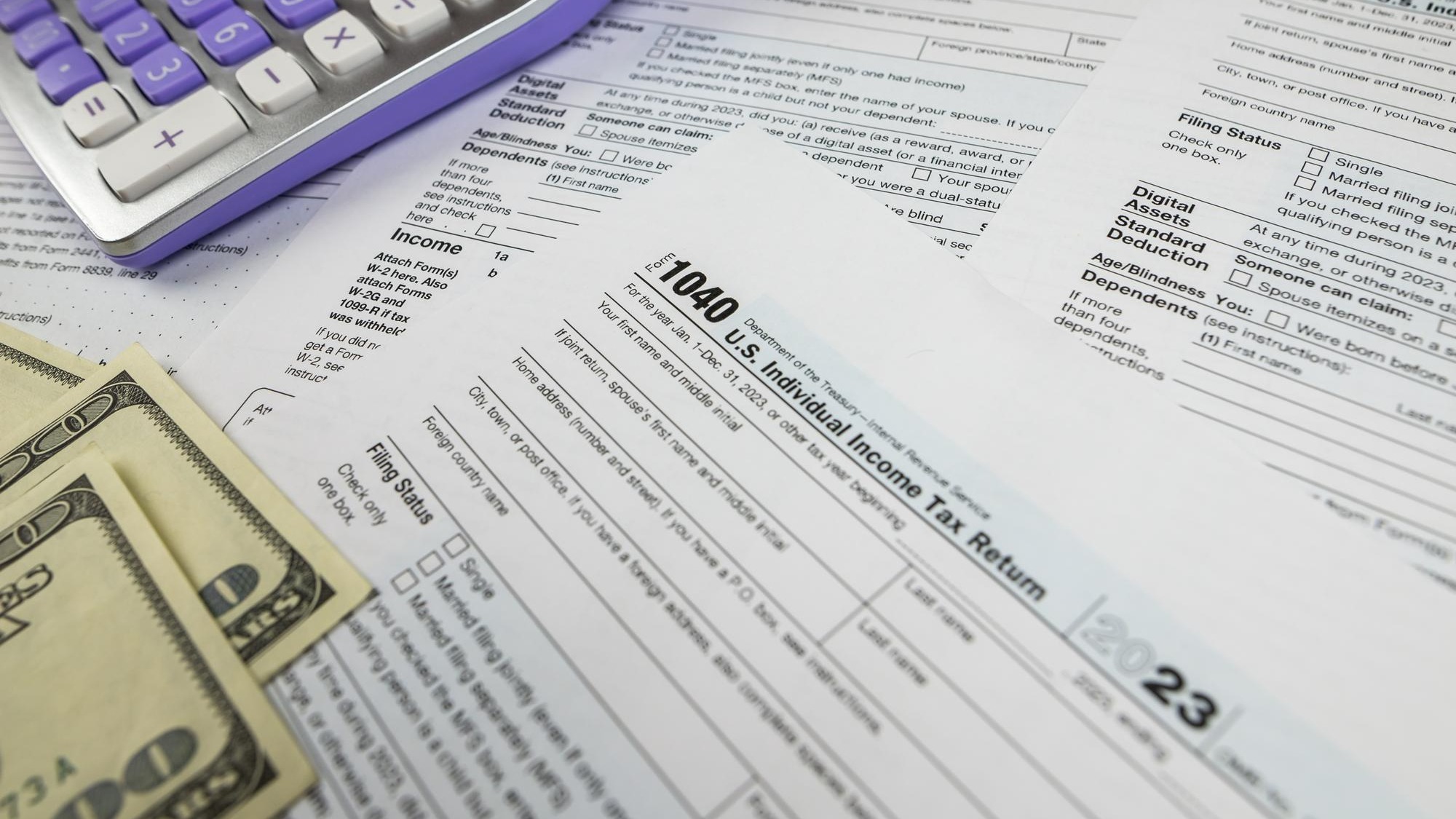
A taxpayer who owed $50,000 on a late 2021 return and paid the bill 12 months later would have been hit with roughly $3,000 in failure-to-pay penalties alone. The IRS announced relief for exactly that kind of charge back in January 2024, and millions of people got automatic refunds. But not everyone did. If you paid a failure-to-pay penalty on your 2020 or 2021 federal return and never saw that money come back, you likely have fewer than 58 days to claim it before a hard federal deadline wipes out your right to a refund permanently.
Under the two-year refund rule in 26 U.S. Code Section 6511, taxpayers must file a refund request within two years of the date they made a penalty payment. Someone who paid on July 28, 2024, for example, has until July 28, 2026. Payments made earlier carry even tighter deadlines. As of late May 2026, filers who made penalty payments in the spring or summer of 2024 are running out of time fast.
The form you need is Form 843. It can only be submitted by mail. If the IRS does not receive it (or a postmark proving timely mailing) before your personal two-year window closes, the agency is legally barred from issuing a refund.
Why the IRS waived these penalties in the first place
In late December 2023, the IRS announced a broad penalty relief program for failure-to-pay penalties on tax year 2020 and 2021 returns. The formal terms were published in Notice 2024-7, which appeared in Internal Revenue Bulletin 2024-02 on January 8, 2024.
The reason was straightforward: pandemic-era processing backlogs left millions of returns sitting in IRS queues far longer than normal. While those returns waited, failure-to-pay penalties kept accruing on unpaid balances. The agency acknowledged that many taxpayers were being penalized not because they refused to pay, but because the IRS itself had not yet processed their filings or sent balance-due notices.
Notice 2024-7 set the boundaries. Returns processed between February 5, 2022, and March 31, 2024, qualified, as long as the assessed tax on each return was under $100,000. For accounts that met those criteria, the IRS suspended penalty accrual and reversed penalties that had already posted. The agency said it would issue refunds or credits automatically for qualifying accounts by check, direct deposit, or offset against other outstanding IRS debts. Roughly 5 million taxpayers received automatic relief totaling about $1 billion, according to the IRS.
Why some taxpayers never got their money
The automatic sweep did not catch everyone. You may have been left out if:
- Your assessed tax balance on the return exceeded $100,000.
- Your return was processed outside the February 5, 2022, to March 31, 2024, window.
- You paid the penalty in full before the IRS applied its relief logic, so no credit was generated on your account.
- Your account had complications, such as an active installment agreement or an offset to a different tax liability, that prevented the automated system from issuing a refund.
If any of those situations apply, the IRS did not send you money automatically. But you may still be entitled to a refund. You just have to request it yourself, and the vehicle for that request is Form 843.
There is also a middle category that catches people off guard: partial relief. Some taxpayers received a credit or small refund that covered only a portion of the penalties they paid. This can happen when the IRS automated system applied relief to one penalty period but missed another, or when an offset absorbed part of the refund before it reached the taxpayer. If your transcript shows some penalty abatement but the total refunded does not match the total penalties you paid, you can file Form 843 for the remaining difference. The same two-year deadline applies to each individual payment, so check every penalty transaction on your transcript rather than assuming the IRS finished the job.
One important first step: if you are not sure whether you already received full relief, log in to your IRS Online Account and pull your account transcript for the relevant tax year. Look for Transaction Code 167 (penalty abatement) or any refund entries that correspond to the penalty amount. If the abatement entries match the full penalty total, the IRS already took care of it. If they do not, or if you see no abatement at all, you are likely one of the people who need to file.
How to file Form 843 before your deadline
Form 843, titled “Claim for Refund and Request for Abatement,” is the standard IRS form for requesting a refund or removal of penalties, interest, and certain other charges. There is no electronic filing option for this form. It must be mailed. Walk through these steps in order:
- Pull your IRS account transcript. Log in to your IRS Online Account or request a transcript by mail. Look for failure-to-pay penalty charges (Transaction Code 166) on your 2020 or 2021 account. Write down the exact dates and dollar amounts of every penalty payment you made.
- Calculate your personal deadline. Your two-year window runs from the date of each individual payment, not from the tax year or the filing date. If you made multiple payments, each one has its own separate expiration date. The earliest payment deadline is the one to worry about first.
- Complete Form 843. Download it from IRS.gov. Enter the tax year (2020 or 2021), the type of penalty (failure-to-pay under IRC Section 6651(a)(2)), and the refund amount you are requesting. In the explanation section, reference IRS Notice 2024-7 specifically and explain that you paid a failure-to-pay penalty that falls within the scope of the agency’s pandemic-era relief program but was not automatically refunded.
- Mail it to the correct IRS campus. The instructions on Form 843 list the mailing address based on your state of residence. This is not the same address you used for your original return. Use certified mail with a return receipt requested. Under Section 7502, the IRS treats the postmark date as the filing date, so a timely postmark protects you even if the envelope takes weeks to arrive.
A tax professional, whether an enrolled agent, CPA, or tax attorney, can file Form 843 on your behalf using a valid Form 2848 (Power of Attorney and Declaration of Representative). If the dollar amount is significant or your account history is complicated, professional help is worth the cost.
What the two-year rule actually says
Section 6511 gives taxpayers the later of two deadlines: three years from the date a return was filed, or two years from the date a payment was made. For penalty refunds, the two-year payment rule is almost always the binding constraint, because penalty payments typically happen well after the return was filed.
The IRS enforces this cutoff without exceptions. The Internal Revenue Manual (IRM 4.10.11) instructs employees to deny refund claims filed after the statutory period, even when the underlying penalty would clearly qualify for relief. Once the window closes, the agency has no legal authority to pay. Federal courts have upheld this rule repeatedly, treating it as a jurisdictional bar that cannot be waived on equitable grounds.
Put plainly: you could have a perfect case for penalty relief under Notice 2024-7, but if your Form 843 arrives one day late, the IRS will reject it and no court will override that result.
How much money could be at stake
The IRS has not disclosed how many taxpayers still have unclaimed refunds from the penalty relief program. The 5 million figure and $1 billion total cover only the accounts the automated system reached.
Individual refund amounts depend on the size of the unpaid balance and how long it went unpaid. The failure-to-pay penalty accrues at 0.5% of the outstanding tax per month, capped at 25% of the total balance. A taxpayer who owed $10,000 and took 12 months to pay would have accumulated $600 in penalties. At a $50,000 balance over the same period, the penalty reaches $3,000. For taxpayers who went longer without paying, or who carried larger balances, the numbers climb from there.
There is an additional wrinkle worth noting: when the IRS refunds a penalty, it generally owes interest on the refunded amount from the date of the overpayment. That interest can add meaningfully to the total, especially given that IRS interest rates have been elevated in recent years (7% for individual underpayments through at least the first quarter of 2025, per IRS announcements).
What this relief does not cover
Notice 2024-7 applies only to failure-to-pay penalties under IRC Section 6651(a)(2) for tax years 2020 and 2021. It does not extend to:
- Failure-to-file penalties (Section 6651(a)(1)), assessed when a return is submitted late.
- Estimated tax penalties (Section 6654), which apply when quarterly payments fall short.
- Accuracy-related penalties (Section 6662), covering negligence or substantial understatement of income.
- Tax years 2022 and later. No comparable automatic relief program has been announced for subsequent years as of June 2026.
If you paid a different type of penalty, Form 843 can still be used to request abatement, but you would need to argue reasonable cause or another standard ground for relief rather than citing Notice 2024-7.
Every penalty payment has its own expiration date
The IRS is not sending reminder letters to taxpayers who missed the automatic relief window. No second sweep has been announced, and the agency has given no indication it will extend the two-year statute of limitations for these claims. If you paid a failure-to-pay penalty on your 2020 or 2021 return and never received a refund or credit, the responsibility to act falls entirely on you.
Start by pulling your IRS account transcript for tax years 2020 and 2021. Identify every penalty payment and its exact date. Count forward two years from each one. If any of those deadlines fall within the next two months, or have already passed, you need to move now.
File Form 843 by certified mail. Keep the receipt. Follow up with the IRS if you do not receive a response within 90 days.
The legal basis for these refunds is clear, and the money is sitting there. The only thing that can take it from you is a missed deadline.