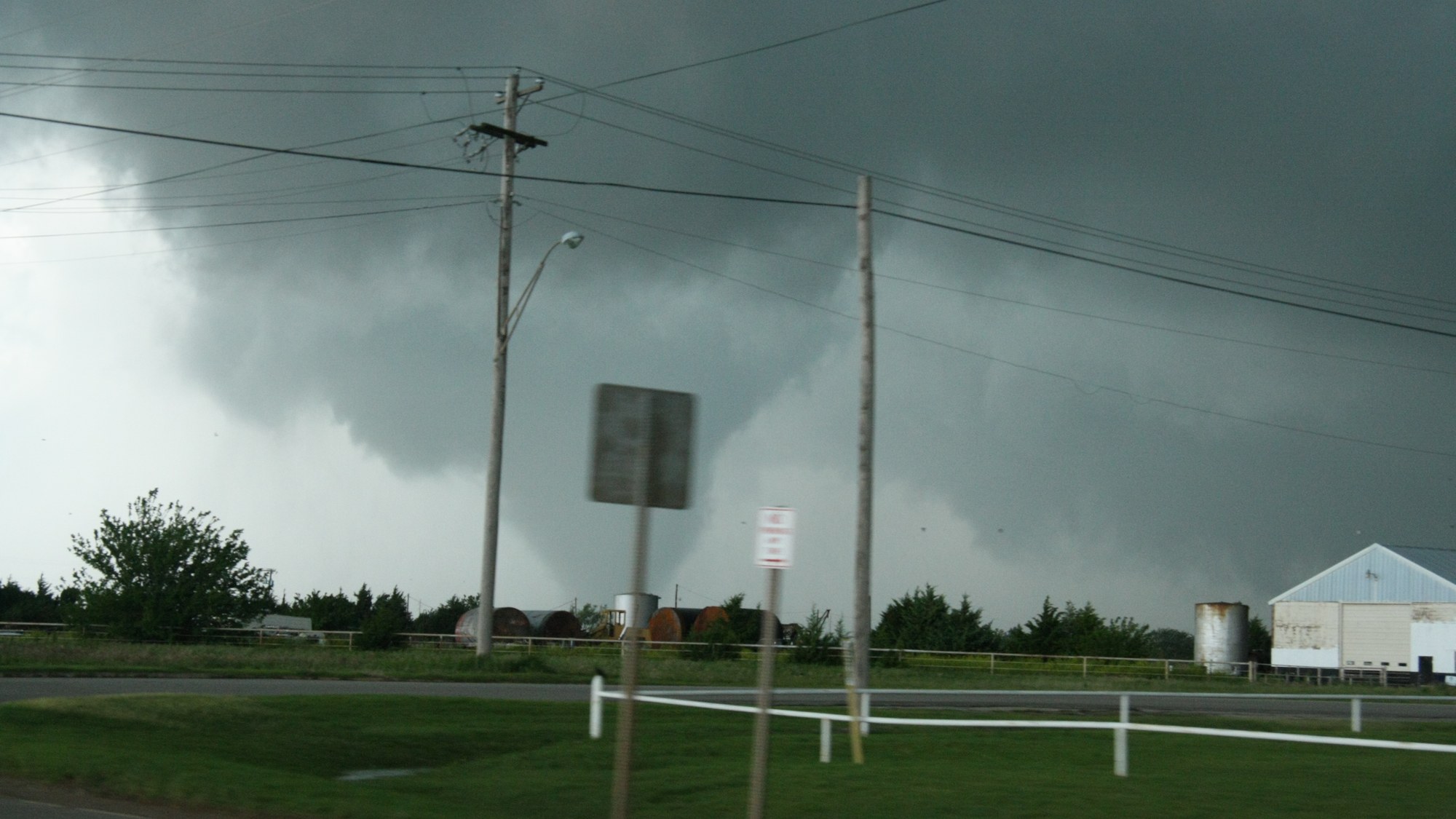
Taxpayers hit by spring storms in parts of Mississippi, Wisconsin and Michigan have until Monday, Nov. 2, to file and pay federal taxes that the IRS postponed. Texans affected by July storms in 62 counties get far longer, until Feb. 1, 2027. The relief covers addresses inside the declared disaster areas, not every resident of those states.
The deadlines are listed on the IRS tax relief in disaster situations page, which still shows Nov. 2, 2026 for the three states and Feb. 1, 2027 for Texas. Each entry links to a release that spells out the counties, the filings covered and the penalty rules.
Which counties get the Nov. 2 date in Mississippi, Wisconsin and Michigan?
Mississippi relief, announced July 13 under FEMA declaration 4922-DR, covers five counties: Franklin, Lamar, Lawrence, Lincoln and Wilkinson. The storms, straight-line winds, tornadoes and flooding began May 6.
Wisconsin’s relief, tied to declaration 4923-DR and storms that began April 13, covers 21 counties plus the Oneida Indian Reservation. They are Bayfield, Brown, Buffalo, Iowa, Jackson, Jefferson, Juneau, Kenosha, Kewaunee, Manitowoc, Marathon, Milwaukee, Outagamie, Racine, Rock, Sauk, Vernon, Washington, Waukesha, Waupaca and Winnebago.
Michigan’s 37 counties fall under declaration 4925-DR, for storms that began April 10. They run from Alcona and Allegan in the north and west to Washtenaw and Wexford, and include Kalamazoo, Marquette, Muskegon and Saginaw.
Who has to act by Monday, and who does not?
Anyone with a home or business in one of those counties who has an unfiled return or an unpaid bill with an original or extended due date before Nov. 2 is the person the date was written for. That includes individual, business, estate, trust and exempt-organization returns, and quarterly payroll and certain excise returns normally due July 31. Estimated income tax payments due on or after the start of each disaster also move to Nov. 2, and the IRS says no failure-to-pay estimated tax penalty applies if the payment lands by then.
Retirement deadlines, in your inbox: Miss an enrollment or claim deadline and the money can be gone. Join the Retirement Money Brief and we’ll send you our IRS Refund Delay Tracker as a welcome gift.
Get the Brief + the refund tracker →
We may earn a commission from links on this page.
The most common case is a 2025 return filed on extension. Those returns were due Oct. 15, and for people in a declared area the date is now Nov. 2. Taxes owed on those returns are a different matter: the payment was due April 15, 2026, and the releases state that those payments are not eligible for the relief.
That distinction matters because interest and late-payment penalties on the April balance have been running since then. A filer in a covered county who sends the return on time but has never paid the balance still owes it, and the extra time applies to the paperwork rather than the original bill.
What the postponement leaves out
The relief does not reach information returns in the W-2, 1094, 1095, 1097, 1098 and 1099 series, or Forms 1042-S, 3921, 3922 and 8027. Employment and excise tax deposits are also excluded from the postponement, though each release carries a narrow abatement for deposits made inside a short window after the storms. In Mississippi that window covers deposits due May 6 through May 21, made by May 21.
Penalties are not erased automatically. An affected taxpayer who gets a late-filing or late-payment notice with a due date inside the postponement period should call the number printed on the notice and ask the IRS to abate the penalty. The Mississippi release also says casualty losses can be claimed on the return for the disaster year or the prior year, and that the Form 4506 or 4506-T fee for copies of earlier returns is waived when the declaration number is written at the top.
Why Feb. 1 for Texas, and what else shares that date?
The Texas relief, announced Oct. 27, covers 62 counties hit by storms that began July 14, among them Bexar, Travis, Harris, Kerr, Kendall, Galveston, Uvalde and Webb. Returns and payments with original or extended due dates from July 14, 2026, through Jan. 31, 2027, move to Feb. 1, 2027.
That range sweeps in quarterly payroll and certain excise returns normally due July 31 and Nov. 2, along with estimated tax payments due on or after July 14. Payroll and excise deposits due July 14 through July 28 are abated if made by July 29. As with the other states, the 2025 balance due last April is not covered.
The same index lists other Feb. 1, 2027 entries, including a second Wisconsin entry for severe storms and tornadoes (WI-2026-03) and a separate Mississippi entry for Tropical Storm Arthur (MS-2026-03). Someone in Wisconsin or Mississippi should check which disaster applies to the county, since the Nov. 2 date belongs only to the earlier storms. The Northern Mariana Islands also carry a Nov. 2 date, for Super Typhoon Sinlaku.
Is the address on the list before Monday?
The test is the county on the taxpayer’s address, checked against the release for the state. A resident of Dane County, Wisconsin, or Wayne County, Michigan, appears in none of the lists above and has no extra time from these notices.
Anyone who cannot tell, or who gets a penalty notice anyway, has a paper trail to build: the declaration number, the county and the date of the notice. The open question for filers inside the counties is whether the return and any 2026 estimated payment are done before the weekend ends.
Need to answer an IRS penalty notice in writing before the date passes?
A late-filing or late-payment notice that arrives after a storm relief date is easy to pay out of habit, and the IRS tells affected taxpayers to call the number on the notice to ask for abatement. A call leaves no paper trail, and a missed deadline inside a notice can cost real money.
The story’s money question turns here into a related job: answering a notice in writing. 50 Letters to SSA, IRS, Banks & Insurers includes fill-in IRS letters for penalty relief, and every letter comes with when to send it, where, the deadline and what to enclose. It runs 113 pages, with a mailing log at the back and a large-print edition.
Get the IRS penalty-relief letter with its send-by dates and enclosure list →
This article was produced with AI assistance and edited for accuracy against the sources linked above.