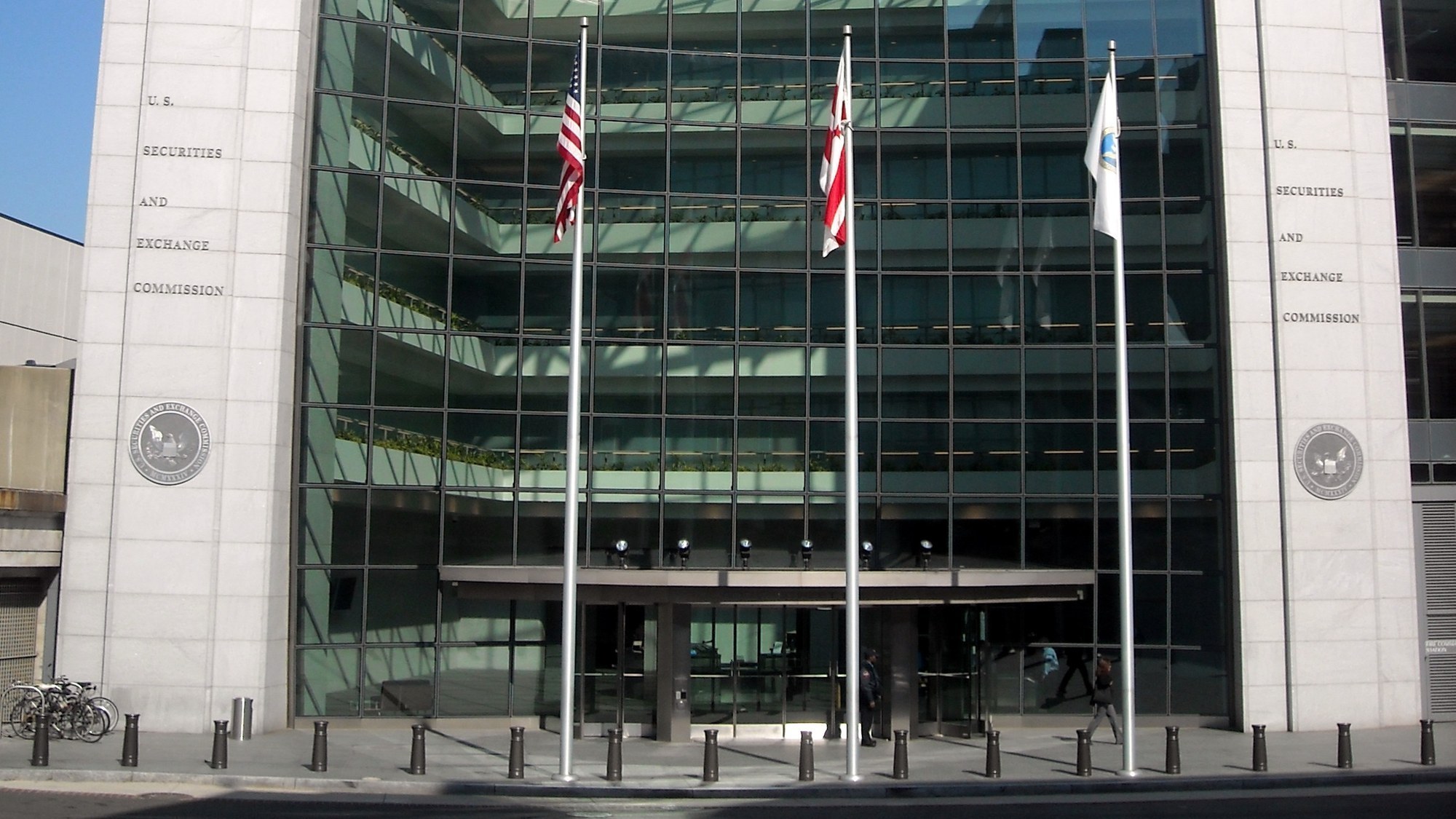
The Securities and Exchange Commission has charged a Port St. Lucie, Florida man and his firm, CMI Capital, with running an investment scheme that raised about $860,000 from at least 18 investors, most of them current or retired South Florida law enforcement officers. The SEC alleges Michael D. Williams used cropped screenshots of trading platforms to make it look like the fund was generating exorbitant profits, then diverted roughly $384,000 of investor money to credit card payments, a sports car and vacations. The charges are civil allegations; Williams has not been convicted of wrongdoing.
The SEC’s complaint centers on a specific tactic: doctored images investors say convinced them the fund was performing far better than it actually was. That detail, more than the dollar figures alone, is what the agency’s Miami office highlighted when it announced the case.
The Cropped Screenshots the SEC Says Deceived Investors
According to the SEC’s press release, Williams sent prospective and existing investors “cropped screenshots of graphics that showed exorbitant trading profits,” images the agency says were altered to cut out context that would have revealed the true performance of the trading Williams claimed to be doing on investors’ behalf. Stephanie N. Moot, Director of the SEC’s Miami Regional Office, said, “We allege that one of the tactics the defendants used to trick investors was to send them cropped screenshots.” The tactic mattered specifically because it targeted people trained to spot deception professionally — current and retired law enforcement officers — yet the manipulated images were convincing enough to draw in at least 18 of them.
A cropped screenshot works as a deception tool because it borrows the visual credibility of a real brokerage or trading platform while removing the surrounding context — account totals, time stamps, or losing positions — that would let a recipient judge whether the profit shown was representative of anything ongoing. The SEC’s complaint treats that framing as central to the case: the agency is not alleging Williams simply lied verbally about returns, but that he manufactured visual evidence designed to survive a skeptical investor’s own instinct to ask for proof.
Inside the kit: Verifying a caller or a pitch, and the free credit-freeze steps, give an investor a way to check a promised trading record or a fund manager’s claims before money moves, and a way to lock down accounts if it turns out money already has. Open The Senior Fraud Defense & First-Hour Recovery Kit
Where the SEC Says $384,000 Went
Of the roughly $860,000 the SEC says CMI Capital raised, the agency alleges about $384,000 was misappropriated for Williams’s personal use, including credit card payments, a sports car and vacations. The SEC’s release notes that more than $375,000 was repaid to some investors at various points, which the agency says helped keep the scheme running by maintaining the appearance of profitability even as money was being diverted elsewhere. The $384,000 figure represents the portion of raised funds the SEC alleges never went toward the trading strategy Williams described to investors at all.
Repaying some investors while diverting money from others is a pattern regulators frequently see in Ponzi-adjacent schemes, even ones far smaller than the classic multimillion-dollar collapse: an early return builds credibility and generates referrals, which is precisely the kind of word-of-mouth expansion the SEC’s release suggests helped CMI Capital grow its investor base among South Florida officers who likely knew each other professionally.
South Florida’s Law Enforcement Community as the Target
The SEC’s complaint identifies the investor base as current and retired law enforcement officers in South Florida, a detail the agency’s Miami office emphasized in announcing the charges. Affinity-based fraud — schemes that recruit victims through a shared professional or community identity — often spreads through personal referrals inside close-knit groups, which the SEC’s release suggests is part of how Williams built his roughly $860,000 in raised funds from at least 18 people. Law enforcement retirees, in particular, represent exactly the older-investor population regulators say is frequently targeted because retirement savings are actively being deployed for income.
The SEC’s Miami Regional Office, which Moot directs, covers South Florida specifically. Retired public-sector workers with pensions and lump-sum retirement accounts represent exactly the kind of recognizable, reachable investor pool that affinity fraud depends on, since a shared department or union affiliation can substitute for the due diligence an investor might otherwise do on a stranger.
Civil Charges, Not a Conviction
The SEC’s action against Williams and CMI Capital consists of civil charges alleging violations of the antifraud and registration provisions of the securities laws; it is not a criminal indictment, and the allegations have not been proven in court. The agency’s press release, dated September 23, 2026, lays out the allegations but leaves resolution — whether through settlement, litigation or dismissal — to future proceedings. Until then, the roughly $860,000 investors put into CMI Capital, and the $384,000 the SEC says was diverted, remain allegations rather than adjudicated facts, a distinction the SEC’s own release is careful to preserve throughout.
The SEC’s civil enforcement track runs separately from any potential criminal referral, and the agency’s remedies in a civil case typically include disgorgement of ill-gotten gains, civil penalties and an injunction barring a defendant from future securities work, rather than a prison sentence. For the at least 18 law enforcement investors named in the case, that means any path back to the roughly $860,000 they put into CMI Capital runs through whatever the SEC can recover from Williams and the company, not through a criminal restitution order, since no criminal charges have been announced alongside the civil complaint.
Verifying a Trading Record Before Money Moves
A cropped screenshot of trading profits is designed to look convincing precisely because it hides the context a real account statement would show, and the SEC’s case against CMI Capital shows that even a careful, professionally trained investor base can be talked past that gap. Once money is already in, the confusing part is knowing what to document and who to call first.
The Senior Fraud Defense & First-Hour Recovery Kit includes the family code word and a fraud evidence and report log for tracking exactly the kind of claims CMI Capital investors were shown.
Look up the family code word in The Senior Fraud Defense & First-Hour Recovery Kit.
This article was produced with AI assistance and checked against the primary source linked above.