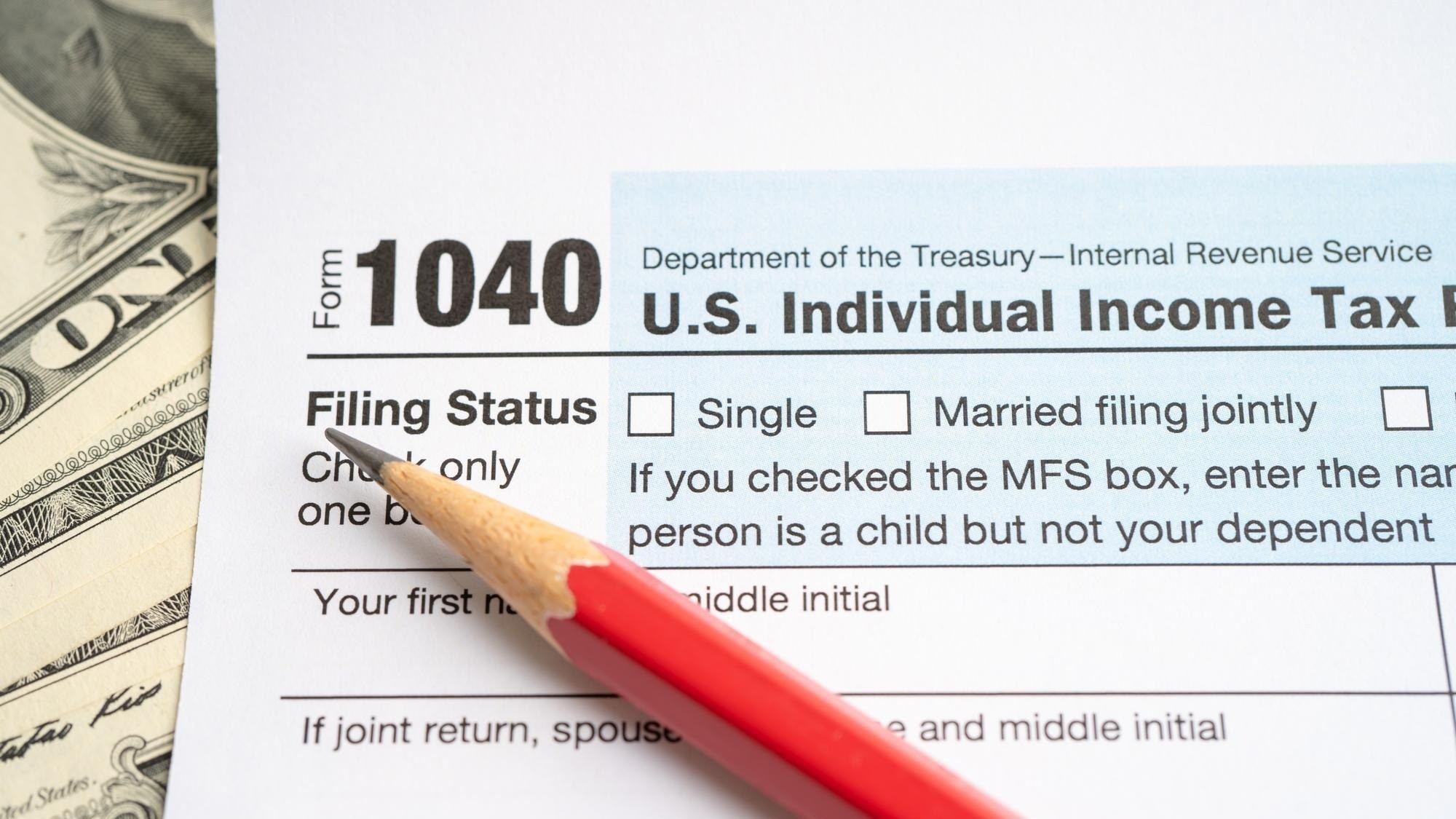
The Treasury Inspector General for Tax Administration (TIGTA) estimated in a report dated July 27, 2026 that the IRS made about $21.1 billion in improper Earned Income Tax Credit payments in fiscal year 2025. The figure is an estimate, produced by the IRS and assessed by the watchdog, and it makes the credit by far the largest source of improper payments among the four refundable credits the report examines. Improper payments are not the same thing as fraud, a distinction that runs through the whole document.
The estimate sits at the center of TIGTA report 2026-400-039, titled “Assessment of Fiscal Year 2025 Compliance With Improper Payment Reporting Requirements.” It was published months ago and describes a fiscal year that has since closed, so it is a standing finding about how the credit performed rather than a new development.
The $21.1 billion estimate and the 32.7 percent rate
The report puts the Earned Income Tax Credit improper payment rate for fiscal 2025 at 32.7 percent, against roughly $64.7 billion in credit payments, which yields the $21.1 billion figure. The same report totals the estimated improper payments across the four refundable credits at about $28.1 billion, a 26.5 percent rate, so the EITC accounts for roughly three-quarters of the dollars. The other three credits are the Additional Child Tax Credit, the American Opportunity Tax Credit and the Net Premium Tax Credit. The full text is on Oversight.gov.
The rate is what gives the dollar figure its weight. A $21.1 billion error on a program of $64.7 billion is a very different story from the same amount on a program ten times larger. It also puts the credit far above the statutory benchmark: the report notes that the Payment Integrity Information Act sets a threshold of less than 10 percent, and the EITC rate is more than three times that.
The report was signed by Diana M. Tengesdal, Deputy Inspector General for Audit. Her office did not generate the estimate itself. The report attributes the figure to the IRS, and the audit assesses whether the agency complied with improper payment reporting requirements.
What the report means by improper payment
The report defines an improper payment as “any payment that should not have been made or that was made in an incorrect amount.” That definition is broad on purpose. It captures a payment sent to someone who was not eligible, a payment calculated wrongly for someone who was, and a payment issued without enough documentation to confirm it was right.
It does not require intent. The report does not present the $21.1 billion as a fraud finding, and it does not say how much of the total reflects deliberate misconduct versus honest mistakes about a complicated rule. Reading the estimate as stolen money would go beyond what the inspector general wrote. It is an estimate of payments that were wrong in some way, whatever the reason.
Family and living arrangements as the source of EITC errors
The report attributes the high error rate to a pattern it describes across the refundable credits. The eligibility rules are complex, “often relating to personal family and living arrangements,” and the IRS cannot verify much of what a filer reports at the time the return arrives.
The EITC illustrates the problem. For a claimant with children, the child must pass four tests under the IRS qualifying child rules: relationship, age, residency and joint return. The residency test requires the child to live in the same home as the taxpayer in the United States for more than half of the tax year. Where more than one person could claim the same child, tiebreaker rules favor the parent with whom the child lived longer, or the parent with the higher adjusted gross income if the time is equal. Those facts, who lived where and for how many months, are exactly what a processing system cannot confirm from a return alone. The rules are laid out on the IRS qualifying child page.
The money at stake per household is substantial. For tax year 2025, the IRS lists maximum EITC amounts of $649 with no qualifying children, $4,328 with one, $7,152 with two and $8,046 with three or more, and an investment income limit of $11,950, according to the agency’s EITC tables. A credit of that size, tied to household facts the IRS cannot check in advance, is what the report treats as structurally exposed to error.
Fewer pre-refund exams, and the limits of math error authority
The report counts 24.6 million EITC claims in fiscal 2025 and says the IRS selected about 79,000 returns for pre-refund examination, roughly 0.3 percent. Pre-refund examinations declined by approximately 70 percent between fiscal years 2023 and 2025, and the IRS has said it is emphasizing outreach and education in place of more examinations.
The IRS also has limited tools to correct a return automatically. Its math error authority covers mathematical mistakes, taxpayer identification numbers and amounts above statutory limits. The report says that authority cannot be used to systematically test a refundable credit claim for ineligibility. Across the three fiscal years from 2023 to 2025, math error authority stopped approximately $7.6 billion in refundable credit claims, according to the report.
The five recommendations and the 10 percent gap
TIGTA made five recommendations, and the IRS agreed with all of them. They ask the agency to request legislative changes that simplify and streamline refundable credit eligibility, to identify areas where additional correctable error authority would help, to work with external partners and use available data to verify eligibility systematically, to use funding to expand social media distribution of refundable credit content, and to monitor how effective the paid social media is.
The report also gives a sense of the distance to the benchmark. For the four credits combined, the IRS would need to reduce improper payments by $17.5 billion to reach the 10 percent line the law sets. None of the recommendations is a quick fix, since the largest ones depend on Congress changing the eligibility rules or granting new correction powers.
Taxpayers who do have a credit reduced or disallowed after an examination face a follow-on requirement. The IRS says Form 8862 must be attached to a later return when the Earned Income Credit or related credits were reduced or disallowed for any reason other than a math or clerical error, as described on the IRS Form 8862 page.
The finding rests on a single document with a clear signatory and date: TIGTA report 2026-400-039 of July 27, 2026, which estimates the IRS’s fiscal 2025 improper Earned Income Tax Credit payments at $21.1 billion, a 32.7 percent rate.
Refund-trace steps and a notice decoder for stalled IRS refunds
Tax refunds sometimes stall, shrink or never arrive, and the letters the IRS sends about them are written in a code of notice numbers and status messages. The gap that causes the most confusion is the one between what a refund tracker shows and what a notice actually requires.
The IRS Refund Recovery Kit is a 13-page kit that includes a notice decoder, the refund-trace steps for Form 3911 and a refund status tracker spreadsheet, along with an explainer on the 3-year refund deadline.
See what the notice decoder covers in The IRS Refund Recovery Kit →
This piece was drafted with AI assistance from the cited TIGTA report and IRS pages, and checked against those sources before publication.