American grocery shoppers face steeper bills for the rest of 2026 after the USDA’s Economic Research Service raised its annual food price forecast on May 22, 2026. The agency now projects food-at-home prices will climb 3.2 percent this year, with beef and veal leading all categories at a projected 12.1 percent increase. The revision reflects tightening cattle supplies that have been building since the national herd peaked in 2019, and it arrives as consumers absorb retail beef prices already running well above year-ago levels in Bureau of Labor Statistics data.
Why the revised beef and grocery forecast hits household budgets now
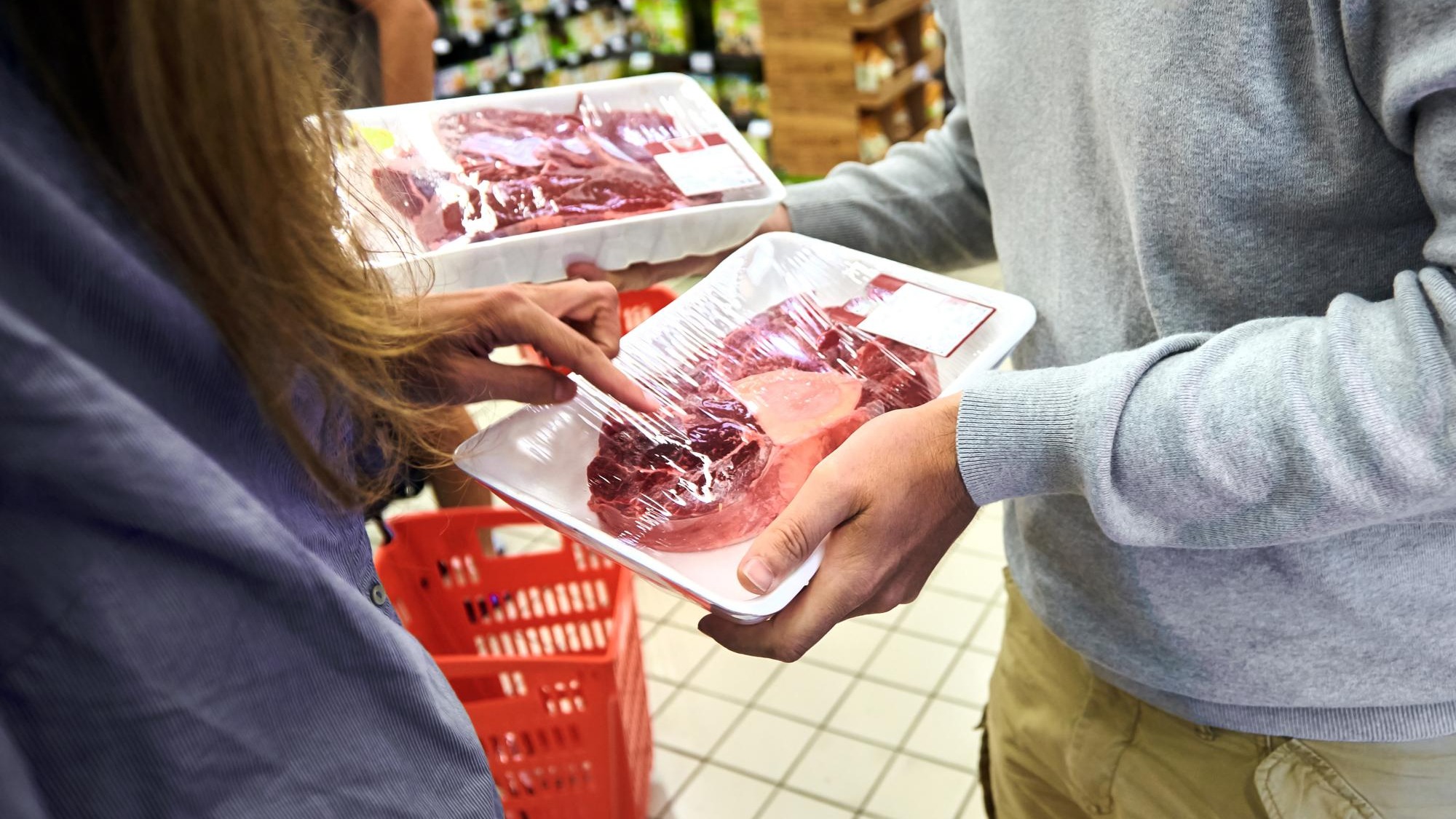
A 12.1 percent annual jump in beef and veal prices translates directly into higher costs for ground beef, steaks, and roasts at the register. That figure, published in the USDA’s updated summary findings on May 22, sits far above the broader 3.2 percent food-at-home forecast, meaning beef is the single largest upward pull on the grocery basket the agency tracks. For a household that spends roughly a quarter of its meat budget on beef, double-digit price growth in one year can force real trade-offs: switching to chicken or pork, buying smaller portions, or absorbing the cost elsewhere.
The structural driver is straightforward. The U.S. cattle herd has been shrinking since its 2019 peak, and the January 1, 2025 inventory confirmed the downward trend, according to the agency’s cattle data. Fewer animals moving through feedlots means less beef reaching packers and, eventually, grocery cases. Rebuilding a cattle herd takes years because producers must hold back heifers for breeding rather than sending them to slaughter, which tightens supply further in the short run before it eventually expands output.
That lag matters for household budgets because it limits how quickly higher prices can draw out new supply. Even if ranchers respond to current market signals, the resulting calves will not reach slaughter weight for more than a year. In the meantime, retailers and food manufacturers pass higher wholesale costs through to shoppers, and families that treat beef as a weekly staple feel the squeeze first.
How ERS built the 12.1 percent beef forecast and what the data gaps mean
The ERS forecast rests on time-series models fed by BLS Consumer Price Index and Producer Price Index data, a methodology the agency describes in its technical documentation. Each category forecast comes with a 95 percent prediction interval, giving a range around the point estimate rather than a single fixed number. The formal framework is laid out in a technical bulletin that explains how uncertainty bands are calibrated against historical forecast performance and how model parameters are periodically re-estimated as new data arrive.
One complication affected the models this cycle. A 2025 federal government shutdown disrupted CPI data collection, and the October 2025 price readings for several categories were not published by BLS on the normal schedule. ERS filled the gap with estimated values, a workaround noted in its published revision history for the Food Price Outlook. That substitution introduces a layer of modeling risk: if the estimated October values diverged from what actual survey data would have shown, the error could propagate into the 2026 trajectory and widen the gap between forecast and eventual outcomes.
The agency has not released the specific imputed figures it used, so outside analysts cannot fully replicate the forecast path or test how sensitive the 12.1 percent beef projection is to those assumptions. Instead, observers must infer potential bias from how the prediction intervals behave. If realized inflation repeatedly lands near the top or bottom of the stated range, that will be an early signal that the shutdown-era estimates pulled the model off its usual track.
Despite those gaps, the broad direction of the beef outlook aligns with fundamentals. Wholesale prices have been trending higher alongside tighter cattle inventories, and futures markets have priced in constrained supplies through 2026. In that context, the ERS point estimate functions less as a precise promise and more as a benchmark for what “typical” inflation might look like given today’s information, with the prediction band acknowledging that drought, feed costs, or demand shocks could still push outcomes higher or lower.
What shoppers and policymakers can do with an uncertain forecast
For households, the forecast is a planning tool rather than a guarantee. Knowing that beef prices are expected to outpace the rest of the grocery aisle gives consumers an early cue to adjust menus, look for promotions, or substitute other proteins. For nutrition programs and school districts that buy food in bulk, the same signal can inform contract timing and menu design so that limited budgets stretch further if beef costs climb toward the upper end of the range.
Policymakers and advocates, meanwhile, use the ERS outlook series to gauge pressure on food insecurity and to calibrate assistance programs. A sustained period of above-average meat inflation can erode the purchasing power of benefits even if headline food inflation looks moderate. That makes transparency about model limitations especially important. As more post-shutdown CPI data become available, analysts will be watching whether ERS revises its 2026 beef and grocery projections, and how quickly the official outlook converges with what shoppers are already seeing at the meat counter.