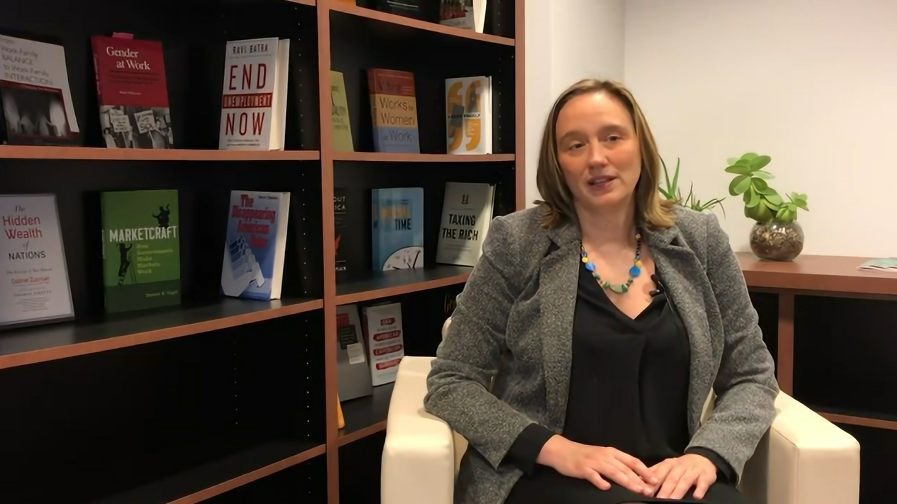
Claudia Sahm’s recession indicator is back in the conversation, and that alone is enough to make investors and workers pay attention. The Sahm Rule has one of the cleanest reputations in macroeconomics because it was designed to spot the early stage of a recession using something simple and hard to fake: a meaningful rise in the unemployment rate.
But for all the attention the measure still gets, the latest data available ahead of early February do not support a fresh trigger. That distinction matters. The debate now is less about whether the indicator has fired again and more about whether the labor market is soft enough to keep recession fears alive without yet crossing the line that historically turned a warning into something more serious.
How the Sahm Rule works
The rule itself is straightforward. It signals a recession when the three-month moving average of the national unemployment rate rises by at least 0.50 percentage points above its low from the previous 12 months. The Federal Reserve Bank of St. Louis tracks that indicator, and its series notes spell out the formula in plain language. That clarity is a big reason the rule became so influential. It does not try to predict a downturn a year in advance. It is built to recognize when labor-market deterioration is already strong enough to look like the start of a recession. Historically, that made it one of the most dependable real-time gauges in the policy world. The data feeding the indicator come from the Bureau of Labor Statistics’ monthly Employment Situation report. Before the January 2026 jobs report arrived, the latest available national jobs data were still for December 2025. The BLS had scheduled the January 2026 report for February 11, 2026. That timing matters because any claim that the indicator had just triggered again before then would be running ahead of the official numbers.
What the latest data actually showed

The latest reading available before early February came from the December 2025 data set. On FRED, the Sahm Rule indicator stood at 0.35 in December. That is elevated enough to keep the measure on economists’ radar, but it is still below the 0.50 threshold that marks a formal trigger. The underlying labor-market report told a similar story. In its January 9 release covering December 2025, the Bureau of Labor Statistics said payroll employment rose by 50,000 and the unemployment rate edged down to 4.4% from 4.5% in November. Reuters described the result as job growth stuck at stall speed, which captures the mood well: weak, but not yet an open-and-shut case for recession. That is the central point the original framing missed. A soft labor market and a triggered Sahm Rule are not the same thing. December’s reading suggested cooling, not confirmation. The indicator was close enough to stay relevant, but not high enough to justify a headline declaring it had fired again.
Sahm’s own view is more nuanced than the headline suggests
Part of what makes this topic compelling is that Claudia Sahm herself has been unusually candid about the strengths and limits of her own creation. When the rule flashed in the summer of 2024 after a weak jobs report, Sahm acknowledged the signal but also argued the economy was probably not actually in recession. Reuters later quoted her saying the rule had effectively “broke” outside of a recession in this unusual cycle. That skepticism did not mean the labor market was healthy. It meant the post-pandemic economy had become harder to read with old templates alone. Strong immigration, shifting labor-force participation, pandemic distortions, and slower hiring without a wave of mass layoffs all complicated the message coming from the unemployment rate. Sahm has consistently warned that those unusual dynamics can make clean historical rules look messier in real time. In other words, the real story is not that Sahm is disowning the indicator. It is that she is treating it the way good economists treat every model: as a useful tool that still has to be read in context.
Why policymakers are looking beyond one national threshold
The Federal Reserve has been moving in that direction too. In a January 2026 research note, Fed staff said state-level data showed pockets of risk but also said many recession indicators, including the Sahm Rule, still pointed to a low probability of an imminent national recession. That is an important shift in emphasis. A single national threshold remains useful, but it can miss how uneven slowdowns look across regions and industries. Manufacturing-heavy states can weaken before service-centered metros do. Hiring can stall nationwide even while layoffs stay relatively contained. A labor market like that may feel fragile to households without yet producing the kind of broad unemployment jump that the Sahm Rule was designed to catch. That also helps explain why the measure remains in the conversation even below 0.50. At 0.35, it is not firing, but it is not irrelevant either. It is sitting in the zone where economists start asking harder questions about whether the labor market is gradually losing altitude.
What it means for readers and investors
For households, the practical takeaway is that the latest available reading before early February did not say recession had arrived. It said the labor market had become noticeably less robust than it was at its strongest point. That is a signal to pay attention, especially in industries where hiring has cooled, but not a signal that panic is warranted. For investors, the better use of the Sahm Rule right now is as part of a broader dashboard, not as a one-number verdict. Payroll growth has slowed sharply. The unemployment rate is no longer near cycle lows. But the rule itself had not triggered again, and Fed researchers were still describing recession risk as low overall even while acknowledging softer pockets of the economy. The strongest version of this story, then, is also the most honest one. Claudia Sahm’s recession indicator is back in focus because the labor market has weakened enough to make people nervous. But as of the latest data available before early February, it had not triggered again. That keeps the rule relevant, keeps the debate alive, and keeps this from being a headline about a confirmed warning when the numbers had not yet crossed that line.

Vince Coyner is a serial entrepreneur with an MBA from Florida State. Business, finance and entrepreneurship have never been far from his mind, from starting a financial education program for middle and high school students twenty years ago to writing about American business titans more recently. Beyond business he writes about politics, culture and history.