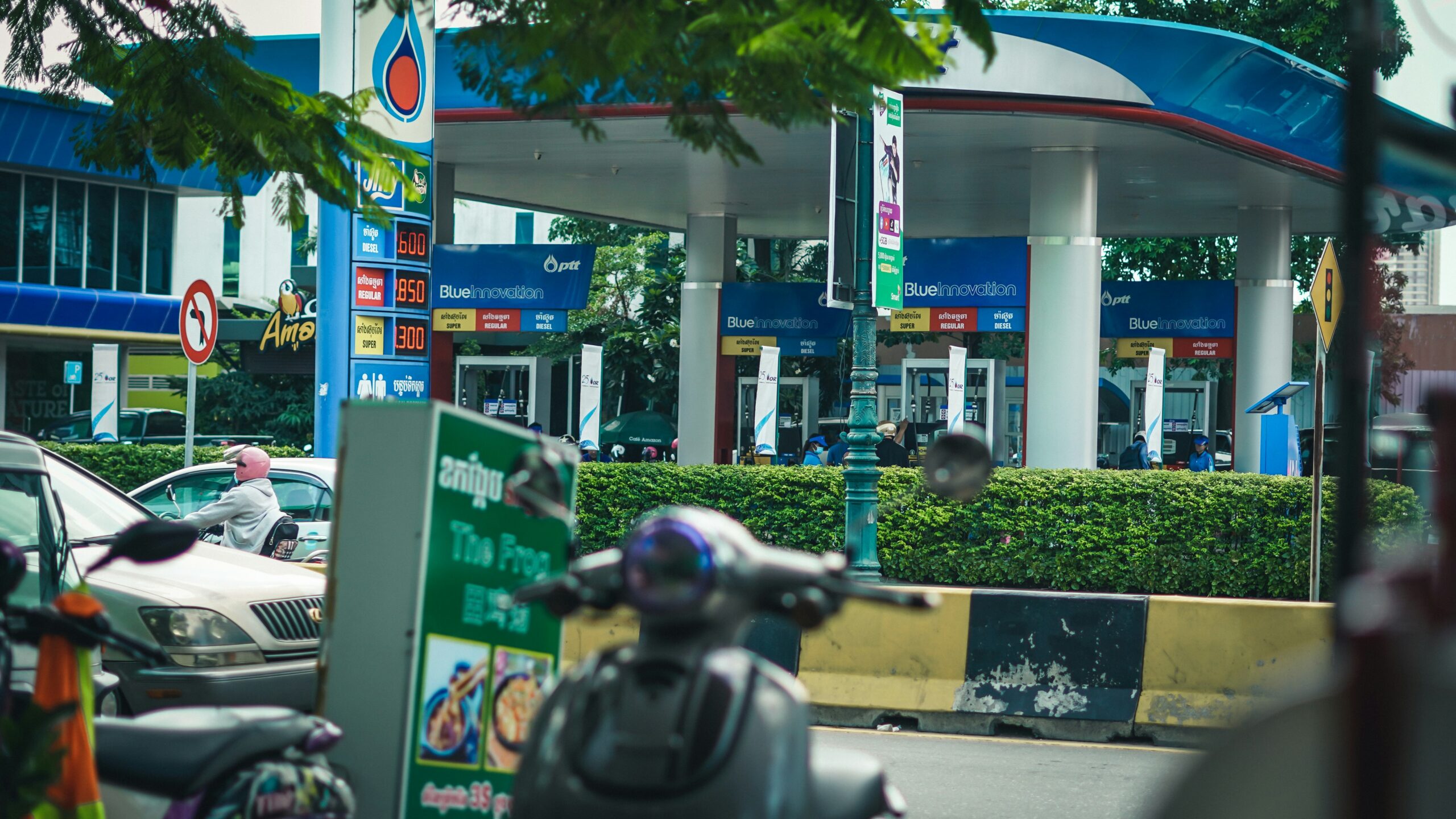
A family filling up a 15-gallon tank once a week for five straight months would save about $35 under President Trump’s proposed federal gas tax holiday. That comes to roughly $1.70 per trip to the pump, less than the price of a large coffee, and it assumes the savings actually reach consumers in full. Economists say they won’t.
The Penn Wharton Budget Model analyzed the proposal, which would suspend the 18.4-cent-per-gallon federal excise tax on gasoline from June 1 through October 1, 2026. In a modeling exercise published on its site, PWBM economists project that pump prices would drop by only about 13.2 cents per gallon, not the full 18.4 cents, because refiners and retailers historically absorb a portion of any tax cut rather than passing it all to drivers. (The 13.2-cent figure is drawn from PWBM’s analysis of the proposal; a direct link to the specific publication was not available at the time of writing.) That finding tracks with what happened when several states suspended their own fuel taxes in 2022: consumers got some relief, but less than the headline number promised.
A $17 billion hole in the road budget
The small savings for drivers come with a large cost on the infrastructure side. The Bipartisan Policy Center has estimated that a five-month suspension would drain roughly $17 billion from the Highway Trust Fund, the federal account that bankrolls road, bridge, and transit projects in every state. (The $17 billion figure has been cited in BPC’s public commentary on gas tax holiday proposals; a link to the specific report was not available at the time of writing.)
That fund was already struggling before this proposal surfaced. The federal gas tax has been frozen at 18.4 cents per gallon since 1993, never adjusted for inflation, and fuel-tax revenue has fallen short of construction costs for more than a decade. Congress has repeatedly propped up the fund with general-revenue transfers to keep payments flowing to state transportation departments. A Congressional Research Service analysis of the Infrastructure Investment and Jobs Act documents this cycle: every recent highway authorization has required lawmakers to backfill the gap with money from the Treasury.
The Federal Highway Administration’s own cash-flow tables for fiscal year 2026 already show months when outlays exceed inflows. Pulling five months of fuel-tax collections out of the equation would widen that gap and put pressure on highway, bridge, and transit projects already programmed under the IIJA.
Trucking groups push back hard
The American Trucking Associations, the industry’s largest trade group, has fought gas tax holidays for years, arguing they undermine the only dedicated funding stream for the roads that commercial fleets depend on. During the 2022 push for a federal suspension, then-ATA President Chris Spear called the idea “shortsighted” and warned it would “defund the very system that moves our economy.” Those remarks were widely reported at the time and reflected the group’s longstanding position. In congressional testimony and public statements since, ATA officials have consistently maintained that short-term pump relief is not worth the long-term damage to infrastructure spending.
Owner-operators feel the tension even more directly. A long-haul trucker burning through several hundred gallons a week would notice the per-gallon discount more than a suburban commuter, but the trade-off hits close to home: deteriorating pavement means higher maintenance bills, longer detours around weight-restricted bridges, and faster wear on tires and suspensions. The Owner-Operator Independent Drivers Association has publicly cautioned against policies that divert Highway Trust Fund revenue, arguing that such moves trade a small discount today for costlier roads tomorrow. (A link to a specific OOIDA statement was not available at the time of writing.)
What the 2022 state experiments revealed
The U.S. has recent, real-world evidence on gas tax suspensions, even though none has ever been tried at the federal level. In the summer of 2022, as gasoline prices surged past $5 per gallon nationally, states including Maryland, Georgia, and Connecticut temporarily paused or cut their fuel taxes. The results were telling.
Maryland suspended its 36-cent state gas tax for 30 days. Researchers found that roughly 60% to 70% of the tax cut showed up at the pump; the rest was absorbed by wholesalers and station operators. Georgia’s suspension followed a similar pattern. In both cases, the savings were real but smaller than the tax cut implied, and they vanished the moment the tax returned.
Those state-level results are the closest precedent for what Penn Wharton is modeling at the federal scale. They reinforce a consistent finding in tax-incidence research: pass-through is partial, and the consumer benefit is more modest than the sticker price of the tax suggests.
Big questions without answers
As of June 2026, several critical variables remain unresolved. No legislation has been introduced to replace the $17 billion the Highway Trust Fund would lose. Congress has done exactly that in prior years, but there is no guarantee a politically divided Capitol Hill would agree to another transfer of that size while the federal deficit is already under intense scrutiny.
It is also unclear how driving behavior would respond. Lower pump prices could encourage more miles traveled, which would modestly boost fuel-tax revenue through higher volumes and partially offset the loss. But if remote work continues to hold down commuting, or if the broader economy slows, gasoline demand could fall short of projections, shrinking both consumer savings and tax collections.
Then there is the question no one in Washington has answered publicly: which projects would actually be delayed? Neither the FHWA nor any state department of transportation has published a list of specific bridges, interchanges, or transit expansions that would slip if the fund loses $17 billion. The infrastructure risk is real in the aggregate, but without that detail, it is hard for voters to connect the policy to the pothole on their commute or the overpass they cross every morning.
The diesel excise tax, currently 24.4 cents per gallon, adds another layer. If the suspension covers diesel as well as gasoline, the revenue loss grows and the impact on freight costs becomes a separate calculation entirely. The White House has not clarified whether diesel is included.
$7 a month vs. $17 billion on the line
Set aside the political framing, and the arithmetic is stark. A five-month federal gas tax holiday would function as a limited rebate for American households, worth roughly $7 a month for a typical family. For people already squeezed by grocery and housing costs, $35 is not meaningless, but it is unlikely to feel like transformative relief.
On the other side of the ledger, the Highway Trust Fund would absorb a $17 billion hit at a moment when it is structurally underfunded and surviving on congressional life support. The trucking industry, which depends on functional roads more than almost any other sector, views that trade-off as a losing proposition. Whether voters and lawmakers agree may come down to a simple question: is a few dollars of immediate savings worth the slower, less visible cost of roads and bridges that don’t get fixed on time?